Images of Old Hawaiʻi

  • Home
  • About
  • Categories
    • Ali’i / Chiefs / Governance
    • American Protestant Mission
    • Buildings
    • Collections
    • Economy
    • Missionaries / Churches / Religious Buildings
    • General
    • Hawaiian Traditions
    • Other Summaries
    • Mayflower Summaries
    • Mayflower Full Summaries
    • Military
    • Place Names
    • Prominent People
    • Schools
    • Sailing, Shipping & Shipwrecks
    • Voyage of the Thaddeus
  • Collections
  • Contact
  • Follow

September 28, 2022 by Peter T Young Leave a Comment

Herman Melville

Herman Melville was born in New York City on August 1, 1819.  The family name was Melvill, and he added the “e” to the name.  His father was a merchant from New England. His mother came from an old, socially prominent New York Dutch family.

Melville lived his first 11 years in New York City.  After the collapse of the family’s import business in 1830 and Allan Melvill’s death in 1832, Herman’s oldest brother, Gansevoort, assumed responsibility for the family and took over his father’s business.

After two years as a bank clerk and some months working on the farm of his uncle, Thomas Melvill, Herman joined his brother in the business. About this time, Herman’s branch of the family altered the spelling of its name.

Inexperienced and now poor, Melville tried a variety of jobs between 1832 and 1841. He was a clerk in his brother’s hat store in Albany, worked in his uncle’s bank, taught school near Pittsfield, Massachusetts.

In 1839, at the age of 20, Melville took his first voyage across the Atlantic sea as a cabin boy on the merchant ship the St. Lawrence.  After this expedition and a year exploring the West, Melville joined the crew of the whaling ship Acushnet in January of 1841.

He later sailed for a year and a half aboard the Acushnet; Melville and a fellow seaman deserted the ship, only to be captured by cannibals in the Marquesas Islands, the Typee.  But the natives turned out to be gentle hosts.

More than five months after deserting the Acushnet, Melville’s adventures were not over.  He later joined the crew of whaler Charles and Henry, where he worked as harpooner.

When the Charles and Henry anchored in Maui Island five months later in April of 1843, Melville took up work as a clerk and bookkeeper in a general store in Honolulu.

On August 17, 1843, he enlisted as a seaman on the frigate “United States,” flagship of the Navy’s Pacific Squadron.

His four years during his twenties (1841-1845) working on whaling ships provided him with material for his first three novels.  Melville was also able to communicate the fear and terror of a whale hunt, a feat that would make his greatest work, Moby Dick, a literary tribute to the whaling industry.

Melville returned to his mother’s house determined to write about his adventures. His subsequent writings borrowed from his own experiences as well as other peoples’ fantastic stories that he heard during his travels.

The books that recounted his experiences and made his reputation were Typee (1846); Omoo (1847); Mardi (1849), a complex symbolic romance set in the South Seas; Redburn (1849) and White-Jacket (1850).

Melville then began Moby-Dick, another “whaling voyage,” as he called it, similar to his successful travel books. He had almost completed the book when he met Nathaniel Hawthorne (The Scarlet Letter, The House of the Seven Gables, etc.) Hawthorne inspired him to radically revise the whaling documentary into a novel of both universal significance and literary complexity.

Melville had a brief stay in Hawaiʻi.

In 1843, he spent four months in Hawaiʻi; at some point early in his stay he worked in a Honolulu bowling alley as a pinsetter.  He also spent time beachcombing in Lāhainā.

He describes surfing in passages of Mardi and a Voyage Thither (his first pure fiction work – reportedly based on his travels linked to his brief stay in the Islands:)
“Past the break in the reef, wide banks of coral shelve off, creating the bar where the waves muster for the onset, thundering in water bolts that shake the whole reef till its very spray trembles. And then is it that the swimmers of Ohonoo most delight to gambol in the surf.”

“For this sport a surfboard is indispensable, some five feet in length, the width of a man’s body, convex on both sides, highly polished, and rounded at the ends. It is held in high estimation, invariably oiled after use, and hung up conspicuously in the dwelling of the owner.”

“Ranged on the beach, the bathers by hundreds dash in and, diving under the swells, make straight for the outer sea, pausing not till the comparatively smooth expanse beyond has been gained. Here, throwing themselves upon their boards, tranquilly they wait for a billow that suits.”

“Snatching them up, it hurries them landward, volume and speed both increasing till it races along a watery wall like the smooth, awful verge of Niagara. Hanging over this scroll, looking down from it as from a precipice, the bathers halloo, every limb in motion to preserve their place on the very crest of the wave.”

“Should they fall behind, the squadrons that follow would whelm them; dismounted and thrown forward, as certainly would they be run over the steed they ride. ’Tis like charging at the head of cavalry; you must on.”

“An expert swimmer shifts his position on his plank, now half striding it and anon, like a rider in the ring, poising himself upright in the scud, coming on like a man in the air.”

“At last all is lost in scud and vapor, as the overgrown billow bursts like a bomb. Adroitly emerging, the swimmers thread their way out and, like seals at the Orkneys, stand dripping upon the shore.”  (Herman Melville)

Melville died September 28, 1891.  (The inspiration and information, here, is primarily from pbs-org)

© 2022 Hoʻokuleana LLC

Filed Under: Economy, Hawaiian Traditions, Prominent People, Sailing, Shipping & Shipwrecks Tagged With: Herman Melville, Hawaii, Whaling, Maui, Surfing, Lahaina

September 24, 2022 by Peter T Young Leave a Comment

Kāʻanapali

When chief Kekaulike died, his younger son Kamehamehanui (uncle to Kamehameha I) was named heir to rule Maui. In 1738, Kauhi‘aimokuakama (Kauhi,) his older brother, began to wage war to win the title of ruling chief.

Battles were fought across West Maui, from Ukumehame to Honokowai.  Kamehamehanui engaged the forces of his uncle from Hawai‘i to fight with him, whose troops numbered over 8,000, and Kauhi brought troops of warriors from O‘ahu.

The war ended with the battle Koko O Nā Moku (“Bloodshed of the Islands.”) Over several days, the blood of fallen warriors from both sides flowed from a stream into the shorebreak and caused the ocean to turn red.  (Kamehamehanui won.) (Kāʻanapali Historical Trail)

This occurred in the moku (district) of Kāʻanapali (“divided cliffs.”)  A prominent feature noted at the beach is Pu‘u Kekaʻa (“the rolling hill”) – the outcrop that separates portions of the beach (commonly known as “Black Rock.”)

It was “ka leina a ka ‘uhane” – the place where a person’s soul left the earthly realm for the afterlife (these were usually at the westernmost point of the island.)

It was also a place for “lele kawa” (cliff jumping;) Kahekili gained respect from many warriors for his leaps from Pu‘u Kekaʻa, as most were frightened of the spirits who were in the area.  (Kāʻanapali Historical Trail)

The island of Maui is divided into twelve moku; Kāʻanapali, Lāhainā, Wailuku, Hāmākuapoko, Hāmākualoa, Koʻolau, Hāna, Kīpahulu, Kaupō, Kahikinui, Honuaʻula and Kula.

An area in the moku of Kāʻanapali is referred to as Nā Hono A Piʻilani (The Bays of Piʻilani (aka Honoapiʻilani.))  In the 1500s, Chief Piʻilani (“stairway to heaven”) unified West Maui and ruled in peace and prosperity.  His territory included the West Maui bays, a place he frequented.

From South to North, six of the identified bays are Honokōwai (bay drawing fresh water), Honokeana (cave bay), Honokahua (sites bay,) Honolua (two bays), Honokōhau (bay drawing dew) and Hononana (animated bay).

In the late-1800s and early-1900s there was a horse racing track (Koko O Na Moku Horse Racing Track) at Kāʻanapali Beach that stretched from the present day Kāʻanapali Beach Hotel to the present day Westin Maui Resort. Horse races ended in 1918.

In 1860, James Campbell started the Pioneer Mill Company; sugar cultivation proved to be very profitable.  He later sold his interest in the Mill and, after subsequent transfers, in 1960, Pioneer Mill Company became a wholly owned subsidiary of American Factors (Amfac – one of Hawaiʻi’s Big 5.)

Kāʻanapali was the terminus for the plantation railroad; a landing on the northerly side of Puʻu Kekaʻa with a wharf and off-shore moorings served as the primary loading spot for shipping processed sugar from the island and bringing in supplies for the plantation camps.

After the sugar industry’s peak in 1930, production, acreage in sugar and profits declined.  Seeing hard times ahead, Amfac took 1,200-acres of Pioneer Mill Company land out of cane to develop as a visitor resort destination (in 1999, Pioneer Mill closed its sugar operations.)

Then, a few years before Hawaiʻi became a state, before Maui County even had a mayor, in 1956, Pioneer Mill’s board of directors got together for a lūʻau on the beach near Puʻu Kekaʻa. There, they sketched out the whole Kāʻanapali Beach Resort master planning venture.  (mauitime-com)

Seven years later, the grand opening for the Sheraton (the second, following the Royal Lāhianā completed the year before) put Kāʻanapali on the map as a resort area and featured celebrities like Bing Crosby, golfer Sam Snead and then-California Governor Pat Brown. It was a groundbreaking place, in more ways than one.  (mauitime-com)

The land set-aside by Amfac became Hawaiʻi’s first master-planned resort.  When it opened in 1962, it became known as the Kāʻanapali Beach Resort.

Today, along its 3-mile coastline, this self-contained resort has over 5,000 hotel rooms, condominium suites, timeshares and villas; 2-championship golf courses (in 1962, Bing Crosby took the inaugural shot on the Royal Kāʻanapali Course) and 35-tennis courts.  It accommodates over half-a-million visitors each year.

Kāʻanapali Beach was ranked “Best Beach in America” in 2003 (Dr. Beach.)  A beach walk runs parallel with the sand the entire length of Kāʻanapali interconnecting the five major resort hotels and six condominiums and timeshares, as well as the numerous recreational, shopping, dining and other activities in the area.

Twenty-five years after it started, the Urban Land Institute recognized Kāʻanapali Beach Resort with an Award of Excellence for Large-Scale Recreational Development.

In the early years, Kāʻanapali Airport, built on an old coastal road in 1961, serviced the resort first by transporting workers and materials for the new development and then it brought guests in/out.

Take-offs and landings were a thrill for pilots and passengers; the Airport’s runway (01-19) started just 30-feet from the shoreline and extended north a short 2,615-feet.  Kahekili Beach Park now sits on the former Airport site.

The Airport was used exclusively by the commuter aircraft of Royal Hawaiian, initially using Cessna 402 aircraft.  In 1987, Hawaiian Airlines built the nearby Kapalua Airport; the State took over that facility in 1993.

They must be doing something right, Maui and the visitor destinations of Lāhainā-Kāʻanapali-Kapalua continue to lead the neighbor islands in room occupancy and they lead the state in average daily room (ADR) rates and revenue per available room (ADR x occupancy rate.)

At the same time properties like the Kāʻanapali Beach Hotel are recognized as Hawaii’s Most Hawaiian Hotel for demonstrating an ongoing responsibility, commitment and dedication to honoring and perpetuating the Hawaiian culture for generations to come.

© 2022 Hoʻokuleana LLC

Filed Under: Place Names, Economy Tagged With: Kaanapali Beach Resort Association, Kamehamehanui, Kekaulike, Hawaii, Kauhi, Maui, James Campbell, Piilani, Amfac, Na Hono A Piilani, Kaanapali, Pioneer Mill

September 21, 2022 by Peter T Young Leave a Comment

Pioneer Inn – Maunalei Sugar Connection

Getting a little back into posting historical summaries, I have wanted to correct the record on a couple of the prior posts …

I previously posted a summary on the Maunalei Sugar Company on Lanai. I also did one on the Pioneer Inn in Lahaina.

I never knew of a connection between the two.

Then, Rick Towill loaned me a book and I was shocked to learn of their connection – something that never showed up in any of the research I did on each.

You can read the prior posts on each.  I’ll let Ruth Tabrah (who wrote a book on Lanai that Rick loaned me) tell the rest of the story …

“The Hayselden venture was named Lanai Sugar Company. Later, the name was changed to Maunalei Sugar Company. The lands, like much of the old Gibson holdings, were on lease. The annual ground rent on the beach portions was $10 an acre, that of the valley lands $5 an acre.”

“Fred Hayselden had renegotiated many of the Gibson leases in his own name. He 78 bought several small kuleanas outright.”

“Lanai, which had the reputation thirty years earlier of being the sheep raising center of the kingdom, still supported a population of livestock far larger than the human population.”

“There were nearly 50,000 sheep, large herds of goats and hogs, flocks of wild turkeys, but only 174 people on Lanai when Maunalei Sugar Company began.”

“Hayselden worked hard to boost the water resources and the reservoir capacity of the island. Water was the key to high sugar yield and one of the three wells advertised in the prospectus was already in operation. It produced between one and two million gallons of water a day. This was fortunate, since the other two wells did not turn out.”

“The decision was made not to build a mill, but to ship the cane to Olowalu, Maui for grinding. A wharf was built at Halepalaoa and a railroad between there and Keomuku to haul the harvested cane and plantation supplies.”

“Had Walter Murray Gibson been alive, or had Talula been consulted, the engineer would never have torn down the walls of Kahe‘a heiau to make the roadbed. The Hawaiians of Keomuku predicted that because of this, there would be trouble.”

“At first, everything prospered.”

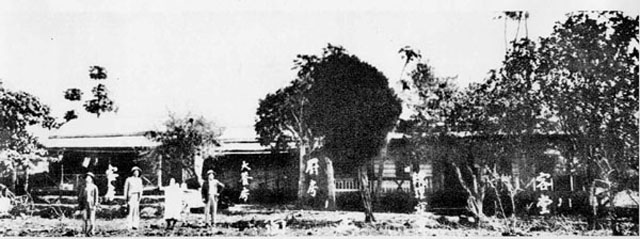
“A spacious verandahed two story building went up. The plantation offices and the company store were on the ground floor. On the second floor were rooms for visitors, a company boarding house and quasi-hotel.”

“Camp houses and barracks were built as the population of Lanai ballooned with contract laborers. Those Lanaians who applied were hired, but the majority of the work force had to be brought in.”

“There were Gilbert Islanders, the first Japanese to arrive on Lanai, and fellow countrymen of that first sugar maker of them all, Wu Tsin, who had been the first Chinese on Lanai nearly a century before.”

“By August 1899 there were 710 laborers at Maunalei. Wages varied for each ethnic group.”

“Chinese were paid either $18.75 or $20 a month depending on their jobs. Japanese field laborers were paid $15 a month for men, $10 a month for women. Cooks earned $15 a month. Carpenters were paid at the rate of $1.50 a day.”

“Since the company made all deductions for room and board in advance, and allowed workers to run up accounts at the company store, many sugar workers on Lanai like their counterparts on the other islands, were always in debt to their employer.”

“The only cash that seemed to reach and stay in working hands was that earned by the Chinese. In Honolulu the most affluent of the merchants were Chinese, and they invested their money in the Maunalei venture to such an extent that they soon owned seventy-five per cent of the shares.”

“For its first year, the company did well.”

“Then, plague flared up among the Chinese laborers.”

“The shacks they lived in were burned, but this did not stop the epidemic. The church at Keomuku was turned into a dispensary. Those who were not already too sick to do so, fled.”

“The curse predicted when the walls of Kahe’a were broken fell heavily now on the plantation. The water in the well turned brackish. The sugar content of the cane was too low to make it worthwhile to harvest.”

“By June of 1900 the payroll of Maunalei Sugar Company carried only 38 men and by March 1901, 12 were left to shut the plantation down.”

“The two-storied company store and hotel was left up until 1905 when it was carefully dismantled, a section at a time, and floated on rafts to Lahaina. There it was hammered together again to become the Pioneer Inn.” (Tabrah)

Whoa … Who knew the Pioneer Inn was originally a structure on Lanai?

All prior research did not note the Maunalei building and Pioneer Inn connection.

In fact, newspaper accounts of that time only noted the formation and construction of the hotel in Lahaina, not that it was formerly built on Lanai and floated to Lahaina and then reassembled.

A notice in the Hawaiian Star, October 9, 1901, noted “New Hotel For Lahaina. Articles of association were filed yesterday by the Pioneer Hotel Company, with the principal place of business at Lahaina, Island of Maui.”

“The object of the association is to conduct a general hotel and restaurant business, and billiard tables. … The officers and principal stockholders are J. J. Newcomb, president, twenty-five shares; A Aalberg, secretary, twenty-five shares; P. Nicklas, treasurer, two shares; George Freeland, thirty-five shares.”

Three weeks later, the newspaper reported “George Freeland, manager of the Pioneer hotel at Lahaina, is in town for the purpose of purchasing supplies and furniture for the establishment. He will return to Lahaina nest Tuesday.  (Honolulu Republican, October 31, 1901)

“Lahaina now boasts two new and up-to-date hotels. Matt. McCann has just finished and moved into his new hosterie (Lahaina Hotel,) and is not able to handle all the travel at present, consequently he is compelled to turn away guests this week.”

“The Pioneer Hotel is practically completed and under the management of Mr. Freeland, will be thrown open for the reception of guests about December 1.”  (Maui News, November 23, 1901)  Thanks, Rick.

© 2022 Ho‘okuleana LLC

Filed Under: Economy, Buildings Tagged With: Maunalei, Lahaina, Pioneer Inn, Hawaii, Maui, Lanai

September 9, 2022 by Peter T Young Leave a Comment

Kalola

Kalola, the highest tabu chiefess of the Maui court, was a daughter of Queen Kekuʻiapoiwa I (a daughter of Keawe of Hawaiʻi) and King Kekaulike of Maui.

She was thus a granddaughter of Kalanikauleleiaiwi, Queen of Hawaiʻi and sister of the King Kahekili II. She was an aunt of the King Kalanikūpule.

When Kekaulike died, Kalola’s brothers Kamehamehanui (an uncle of Kamehameha I) and Kauhi fought each other for rule of Maui in 1738. Battles were fought across West Maui; the war ended with the battle Koko O Nā Moku (“Bloodshed of the Islands;” Kamehamehanui won.

Kalola lived with two brothers, Kalaniʻōpuʻu and Keōua, both Hawai’i island niʻaupiʻo (very high rank) chiefs. From Kalaniʻōpuʻu, the older brother, she had a son, Kalanikauikeaouli Kiwalaʻo (Kiwalaʻo.) From Keōua, the younger brother, she had a daughter, Kekuʻiapoiwa Liliha.

The children, Kiwalaʻo and Kekuʻiapoiwa, had the same mother, different fathers, offspring of a naha union (brother-sister mating of niʻaupiʻo chiefs.) These two lived together, and Keōpūolani was born to them, also the offspring of a naha union. (Mookini)

Keōpūolani (granddaughter of Kalola,) who was raised in Wailuku, Olowalu and Hāmākua on Maui, was later queen of Kamehameha I (we’ll get more into that a little bit later.)

At the time of Captain Cook’s arrival (1778-1779), the Hawaiian Islands were divided into four kingdoms: (1) the island of Hawaiʻi under the rule of Kalaniʻōpuʻu, who also had possession of the Hāna district of east Maui; (2) Maui (except the Hāna district,) Molokai, Lānai and Kahoʻolawe, ruled by Kahekili; (3) Oʻahu, under the rule of Kahahana; and (4) Kauai and Niʻihau, Kamakahelei was ruler.

In 1782, following the death of Kalaniʻōpuʻu, Kiwalaʻo was briefly ruler of the island of Hawaiʻi. That year, his cousin, Kamehameha I, challenged his authority at the battle of Mokuʻōhai. Kīwalaʻō was killed in combat by Keʻeaumoku, one of Kamehameha’s officers. The victory at the battle of Mokuʻōhai was the start of Kamehameha’s rise to power

After the deaths of Kalaniʻōpuʻu and Kiwalaʻo, Kalola left for Maui, taking with her Keōpūolani. Kahekili, brother of Kalola, provided for the family and gave them his protection. After the conquest of Oahu by Kahekili he removed his court to that island, taking with him his sister and her family.

In 1785, they returned to Maui with Kalanikūpule, the son of Kahekili, who had been appointed chief of the island, and there remained, principally at Olowalu, until 1790. (Kalākaua)

At about that time, Simon Metcalf (captaining the Eleanora) and his son Thomas Metcalf (captaining the Fair American) were traders; their plan was to meet and spend winter in the Hawaiian Islands.

The Eleanora arrived in the islands first at Kohala on the island of Hawaiʻi. After a confrontation with a local chief, Simon Metcalf then sailed to the neighboring island of Maui to trade along the coast.

Kalola ruled the puʻuhonua of Olowalu and presided over Kaʻiwaloa Heiau. Kahekili, ruler of Maui, lived at Halekiʻi Heiau in Wailuku. This indicates the important spiritual, political and economic connection between ʻIao and Olowalu. Kalola was still ruling at Olowalu in 1790 when Simon Metcalf fired cannons on Honua’ula and Olowalu during the Olowalu Massacre.

Several months after the massacre at Olowalu, Kalola watched the great Battle of Kepaniwai from a panoramic flat area in the back of ʻIao Valley. Kamehameha stormed Maui with over twenty thousand men, and after several battles Maui troops retreated to ʻIao Valley.

Maui Island was conquered and its fighting force was destroyed – Kalanikūpule (Kahekili’s eldest son and heir-apparent) and some others (including Kalola and her family) escaped over the mountain at the back of the valley and made their way to Molokai and Oʻahu.

“The fugitives fled across the sharp ridges of the mountains, the mother carrying the child on her back and the kahu carrying mother and child, until they were able to escape to Molokai.” (Kamakau)

On the island of Molokai at Kalamaʻula, Kalola became ill and they could not carry out their original intention of going to Oʻahu to join Kahekili. Kamehameha followed Kalola to Molokai and asked Kalola for Keōpūolani (Kalola’s granddaughter) to be his queen.

Kalola, who was dying, agreed to give Kamehameha Keōpūolani and her mother Kekuʻiapoiwa Liliha, if he would allow the girls to stay at her death bed until she passed. Kamehameha camped on Molokai until Kalola died, and returned to Kona with his high queen Keōpūolani.

At Kalola’s death, “They wailed and chanted dirges, and some were put to sleep with the dead, and the chiefs tattooed themselves and knocked out their teeth. Kamehameha was also tattooed and had his eyeteeth knocked out, and the chiefs and commoners acted like madmen.” (Kamakau)

Kamehameha then formally took charge of and returned to Hawaiʻi with her daughter and granddaughter, not only as a sacred legacy from Kalola, but as a token of reconciliation and alliance between himself and the elder branch of the Keawe dynasty. (Kalākaua)

Later, Liholiho (Kamehameha II,) Kauikeaouli (Kamehameha III) and Princess Nahiʻenaʻena were born to Kamehameha and Keōpūolani.

© 2022 Hoʻokuleana LLC

Filed Under: Ali'i / Chiefs / Governance Tagged With: Kiwalao, Kalaniopuu, Simon Metcalf, Kekuiapoiwa, Olowalu, Kalamaula, Hawaii, Molokai, Kamehameha, Maui, Keopuolani

August 20, 2022 by Peter T Young Leave a Comment

Kūkaemoku

Maui is the second largest of the Hawaiian Islands, and covers about 730 square miles.  Maui consists of two separate volcanoes with a combining isthmus between the two.

The Mauna Kahālāwai (West Maui Mountain) is probably the older of the two; Haleakala (East Maui) was last active about 1790, whereas activity on West Maui is wholly pre-historic.

The West Maui Mountain’s highest peak, Puʻu Kukui, towers 5,788-feet; it is one of the wettest spots on earth (average yearly rainfall at the rain gage since 1928 is about 364-inches.)  The rain carved out valleys on either side, one of these, ʻĪao Valley (“cloud supreme,”) has a narrow entrance facing toward Wailuku that opens into a much larger expanse in the back.

For centuries, high chiefs and navigators from across the archipelago were buried in secret, difficult-to-access sites in the valley’s steep walls.

ʻĪao valley in the West Maui Mountain is the first place mentioned in the historical legends as a place for the secret burial of high chiefs. Kapawa, the ruling chief of Hawaiʻi about 25-30 generations ago, was overthrown by his people, assisted, perhaps, by Pāʻao.  (Westervelt)

His body was said to have been taken to ʻĪao and concealed in one of the caves of that picturesque extinct crater. From that time apparently this valley became a “hallowed burying place for ancient chiefs.”  (Westervelt)

For centuries, aliʻi (chiefs) were laid to rest in secret burial sites along the valley’s steep walls. The practice of burying aliʻi in the valley began in the eighth century and reportedly continued until 1736, with the burial of King Kekaulike.

Commoners were not permitted into ʻĪao, except during the annual Makahiki festival, which was held on the grassy plateau above the Needle.

Then, in the late-1780s into 1790, Kamehameha conquered the Island of Hawai‘i and was pursuing conquest of Maui and eventually sought to conquer the rest of the archipelago.  At that time, Maui’s King Kahekili and his eldest son and heir-apparent, Kalanikūpule, were carrying on war and conquered O‘ahu.

In 1790, Kamehameha travelled to Maui.  Hearing this, Kahekili sent Kalanikūpule back to Maui with a number of chiefs (Kahekili remained on O‘ahu to maintain order of his newly conquered kingdom.)

“Kamehameha marched overland to Hāna. His army is said to have contained 16,000 men. Nelson’s famous exhortation to his men at Trafalgar (1805) fifteen years later was:

“England expects every man this day to do his duty,” but Kamehameha’s command to his battle-scarred veterans was: “Imua e nā pōkiʻi a inu i ka wai ʻawaʻawa” (Onward brothers until you taste the bitter waters of battle.)”   (Mid-Pacific Magazine, January 1912)

After a battle in Hāna, Kamehameha landed at Kahului and then marched on to Wailuku, where Kalanikūpule waited for him.  The ensuing battle was one of the hardest contested on Hawaiian record.  The battle started in Wailuku and then headed up ‘l̄ao Valley – the Maui defenders being continually driven farther up the valley.

Kamehameha ordered his army to advance, the Maui army met the invaders, but the Maui defenders were so powerless in the face of musketry that they retreated up the valley with the Kamehameha army following them.

Kamehameha’s superiority in the number and use of the newly acquired weapons and canon (called Lopaka) from the ‘Fair American’ (used for the first time in battle, with the assistance from John Young and Isaac Davis) finally won the decisive battle at ‘Īao Valley.

The Maui troops were completely annihilated, and it is said that the corpses of the slain were so many as to choke up the waters of the stream of ‘l̄ao – one of the names of the battle was “Kepaniwai” (the damming of the waters.)  Kalanikūpule fled.

Kamehameha left for Moloka‘i to secure it under his control, and there received Keōpūolani as his wife.  Then, in 1795, Kamehameha moved on in his conquest of O‘ahu, meeting and defeating Kalanikūpule, at Nuʻuanu.

Visiting Wyoming Senator Clark once declared ʻĪao Valley to be the Yosemite of Hawaiʻi. “These words of adulation were not inspired by momentary flattery, for many others who have feasted their eyes on that famous place, thousands of miles away, were also of the same opinion.”    (Mid-Pacific Magazine, January 1912)

“In order to properly understand the significance of the Yosemite Valley or any of the well-traveled picturesque places of the mainland, there is always some historical fact attached to give added interest.”

“We all know that the Yosemite is named after an enormous grizzly bear who made his last stand against the Indians in the fastnesses about the celebrated falls. And so it is in Hawaiʻi, nearly every one of the beautiful and sometimes overpowering pieces of scenery is associated with some historical fact that gives food for thought.“ (Overland Monthly, July 1909)

A hundred years ago, visitors had the opportunity to travel to the back of the ʻĪao, “After leaving the needle, the traveler crosses the stream, and up the narrow, winding path leading to the plateau several hundred feet above. This table land is called Kaalaholo. Around its entire base gently flows streams of pure, crystal-like, mountain water.”

“When the top is reached the visitor views a scene so grand, inspiring and majestic that its equal cannot be found within the bounds of the Hawaiian Islands. It is beautiful beyond comparison.”

“Imagine oneself standing at the bottom of a huge basin four miles wide and about five miles long, and looking up with awe at the crest of the Iao mountains above, rising to a height of five thousand feet. The circumference of the ridges which encompass Iao Canyons is about twenty miles.”

“They rise up perpendicular all around and are inaccessible except in a few places. And from the summits of these tall, lofty precipices, called “Palilele-o-Koae,” or the home of the seabirds, play myriads of tiny waterfalls in mid-air, which as they reach the bottom, form part of the mighty stream.”    (Mid-Pacific Magazine, January 1912)

From the present viewing area within the State Monument at ʻĪao (and in all the photos showing the valley,) you can see Kūkaʻemoku (more commonly called ‘Iao Needle.)  From this perspective, Kūkaʻemoku appears to stick up from the valley floor like a ‘needle,’ thus its modern name.

Actually, what people see is a bump on a side-ridge on the right-side of ʻIao Valley with a large protrusion that sticks up on top; it stands about 1,200-feet tall.  It looks like a ‘needle’ of rock, but really isn’t (it’s part of the ridge.)

The Valley and volcanic rocks within it were selected to serve as a National Natural Landmark (1972.)  It also serves as a Hawaiʻi Monument operated under DLNR’s State Parks system.  It is at the end of ‘Īao Valley Road (Highway 32.)  

© 2022 Hoʻokuleana LLC

Filed Under: Ali'i / Chiefs / Governance, Place Names Tagged With: Hawaii, Wailuku, Maui, Kepaniwai, Iao Valley, Iao, Lopaka, West Maui, Puu Kukui, Kalanikupule, Kukaemoku, West Maui Mountain, Iao Needle

  • « Previous Page
  • 1
  • …
  • 11
  • 12
  • 13
  • 14
  • 15
  • …
  • 37
  • Next Page »

Images of Old Hawaiʻi

People, places, and events in Hawaiʻi’s past come alive through text and media in “Images of Old Hawaiʻi.” These posts are informal historic summaries presented for personal, non-commercial, and educational purposes.

Info@Hookuleana.com

Connect with Us

  • Email
  • Facebook
  • LinkedIn
  • Twitter
  • YouTube

Recent Posts

  • May The Forest Be With You
  • Spanish Galleons
  • Oklahoma
  • May Day
  • US Marine Hospital
  • By Horse, Car & Plane
  • John Rollin Desha

Categories

  • Hawaiian Traditions
  • Military
  • Place Names
  • Prominent People
  • Schools
  • Sailing, Shipping & Shipwrecks
  • Economy
  • Voyage of the Thaddeus
  • Mayflower Summaries
  • American Revolution
  • General
  • Ali'i / Chiefs / Governance
  • Buildings
  • Missionaries / Churches / Religious Buildings

Tags

Albatross Al Capone Ane Keohokalole Archibald Campbell Bernice Pauahi Bishop Charles Reed Bishop Downtown Honolulu Eruption Founder's Day George Patton Great Wall of Kuakini Green Sea Turtle Hawaii Hawaii Island Hermes Hilo Holoikauaua Honolulu Isaac Davis James Robinson Kamae Kamaeokalani Kameeiamoku Kamehameha Schools Lalani Village Lava Flow Lelia Byrd Liberty Ship Liliuokalani Mao Math Mauna Loa Midway Monk Seal Northwestern Hawaiian Islands Oahu Papahanaumokuakea Marine National Monument Pearl Pualani Mossman Quartette Thomas Jaggar Volcano Waikiki Wake Wisdom

Hoʻokuleana LLC

Hoʻokuleana LLC is a Planning and Consulting firm assisting property owners with Land Use Planning efforts, including Environmental Review, Entitlement Process, Permitting, Community Outreach, etc. We are uniquely positioned to assist you in a variety of needs.

Info@Hookuleana.com

Copyright © 2012-2024 Peter T Young, Hoʻokuleana LLC


Loading Comments...