Images of Old Hawaiʻi

  • Home
  • About
  • Categories
    • Ali’i / Chiefs / Governance
    • American Protestant Mission
    • Buildings
    • Collections
    • Economy
    • Missionaries / Churches / Religious Buildings
    • General
    • Hawaiian Traditions
    • Other Summaries
    • Mayflower Summaries
    • Mayflower Full Summaries
    • Military
    • Place Names
    • Prominent People
    • Schools
    • Sailing, Shipping & Shipwrecks
    • Voyage of the Thaddeus
  • Collections
  • Contact
  • Follow

August 19, 2022 by Peter T Young Leave a Comment

Lāhainā Pali Trail

“A new road had been made around the foot of the mountain, the crookedest, rockiest, ever traveled by mortals. Our party consisted of five adults and five children. We had but two horses. One of these was in a decline on starting; it gave out in a few miles.”

“The other, ‘Old Lion,’ deserves to be immortalized for the services he performed that day, in carrying three and four children at a time on his broad back up and down that unsheltered, zigzag mountain road.”

“The wind from the other shore swept across it and was cooling us a little too rapidly after the intense heat of the day. To go farther without rest or aid was impossible.”  (Laura Fish Judd, 1841)

The trail was hand-built before 1825 for horseback and foot travel between Wailuku and Lāhainā; it served as the most direct route across the steep southern slopes of West Maui Mountain.

Around 1900, the Lāhainā Pali Trail fell out of use when prison laborers built a one-way dirt road along the base of the pali. In 1911, a three-ton truck was the first vehicle to negotiate this road, having a difficult time making some of the sharp, narrow turns.

Over the years, the road was widened and straightened until 1951, when the modern Honoapiʻilani Highway cut out many of the 115 hairpin curves in the old pali road and a tunnel cleared the way through a portion of the route.

This was the first tunnel ever constructed on a public highway in Hawaiʻi – built on the Olowalu-Pali section of the Lāhainā-Wailuku Road (now Honoapiʻilani Highway,) completed on October 10, 1951. The tunnel is 286-feet long, 32-feet wide, and more than 22 feet high.  (Schmidt)

Today, a remnant of the old trail is a recreational hike – five-miles long (from Māʻalaea to Ukumehame) and climbs to over 1,600-feet above sea level.

The Lāhainā Pali Trail has been restored and is maintained with volunteer assistance by the Na Ala Hele Statewide Trail and Access Program, State Division of Forestry and Wildlife (DOFAW,) within the Department of Land and Natural Resources (DLNR.)

The trail runs from a point Kahului side of Māʻalaea Harbor, over a ridge and down to a long, sandy beach with snorkeling, surfing and picnicking facilities.

Ranging in elevation from 100-feet to 1,600-feet, the trail offers excellent scenic vistas of Kahoʻolawe and Lānaʻi islands. Whales can be observed during the winter months.

Petroglyphs, stone walls and rocky outcrops mark the spots where long ago travelers stopped to rest. The mid-point of the trail is Kealalola Ridge, the southern rift zone of the volcano that formed West Maui. Pu’u (cinder hills) and natural cuts in the ridgeline expose the dramatic geologic history of this part of Maui.

The Lāhainā Pali Trail is a historic roadway. Damage to the trail or any archaeological sites along the trail is subject to penalties, as defined in Hawaiʻi Revised Statutes Chapter 6E.

Directions: Both trail heads are accessible from Honoapiʻilani Highway. The eastern trail head is 0.2 miles south of the junction of Honoapiʻilani Highway and Kihei Road .

The western trail head lies 1- mile south of Lāhainā and 3 miles west of Māʻalaea Harbor. The parking area is accessible from Highway 30 at Manawaipueo Gulch about 0.25-mile north of the Pali tunnel.

Click Here for a brochure “Tales from the Trail” on more history and information about the Lāhainā Pali Trail.

© 2022 Hoʻokuleana LLC

Filed Under: Place Names, Economy, General Tagged With: Hawaii, Maui, Lahaina, DLNR, Lahaina Pali Trail, Na Ala Hele

July 28, 2022 by Peter T Young Leave a Comment

Haʻikū

It’s melted away;
This Buddha of snow is now
Indeed a true one
(Yamazaki Sokan (1464-1553))

A traditional Haiku is a three-line poem with seventeen syllables, written in a 5/7/5 syllable count.

Wait … that’s not what this is about.  However, this is about a place (Haʻikū) at about the time the Haiku above was written.

According to oral tradition, Piʻilani unified the entire island of Maui, bringing together under one rule the formerly-competing eastern (Hāna) and western (Wailuku) multi-district kingdoms of the Island.   In the 1500s, Chief Piʻilani (“stairway to heaven”) ruled in peace and prosperity.

Among other accomplishments, Piʻilani built interconnecting trails.  His son, Kihapiʻilani laid the East Maui section and connected the island.  This trail was the only ancient pathway to encircle any Hawaiian island (not only along the coast, but also up the Kaupō Gap and through the summit area and crater of Haleakalā.)

“Hāmākua Poko (Short Hāmākua) and Hāmākua Loa (Long Hāmākua) are two coastal regions where gently sloping kula lands intersected by small gulches come down to the sea along the northern coast line of East Maui.”

“Stream taro was probably planted along the watercourses well up into the higher kula land and forest taro throughout the lower forest zone. The number of very narrow ahupuaʻa thus utilized along the whole of the Hāmākua coast indicates that there must have been a very considerable population.”

“This would be despite the fact that it is an area of only moderate precipitation because of being too low to draw rain out of trade winds flowing down the coast from the rugged and wet northeast Koʻolau area that lies beyond.”

“It was probably a favorable region for breadfruit, banana, sugar cane, arrowroot; and for yams and ʻawa in the interior. The slopes between gulches were covered with good soil, excellent for sweet-potato planting. The low coast is indented by a number of small bays offering good opportunity for fishing.”  (Handy)

At the boundary of Hāmākaupoko and Hāmākualoa (within the Hāmākualoa moku) is the ahupuaʻa of Haʻikū (lit. speak abruptly) and Haʻikū Uka (inland.)

At the time of Captain Cook’s arrival (1778-1779), the Hawaiian Islands were divided into four kingdoms: (1) the island of Hawaiʻi under the rule of Kalaniʻōpuʻu, who also had possession of the Hāna district of east Maui; (2) Maui (except the Hāna district,) Molokaʻi, Lānaʻi and Kahoʻolawe, ruled by Kahekili; (3) Oʻahu, under the rule of Kahahana; and (4) Kauaʻi and Niʻihau, Kamakahelei was ruler.

In the battles between Kalaniʻōpuʻu and Kahekili, “Kalaniʻōpuʻu decided to go on to Koʻolau, Maui, where food was abundant.  He went to Kāʻanapali and fed his soldiers upon the taro of Honokahua….”

“At Hāmākualoa Kalaniʻōpuʻu landed and engaged in battle, but Kahekili hastened to the aid of his men, and they put up such a fierce fight that Kalaniʻōpuʻu fled in his canoes. Landing at Koʻolau he slew the common people and maltreated the captives”.

Of the wars, it was noted, “Like the fiery petals of the lehua blossoms of Pi‘iholo were the soldiers of Kahekili, red among the leaves of the koa trees of Liliko‘i or as one glimpses them through the kukui trees of Ha‘ikū.”   (Kamakau)

During Kamehameha’s later conquest of Maui at Wailuku and ʻIao Valley, his canoe fleet landed at various places along the Hāmākua coast.

A notable feature along and through Haʻikū is Maliko Gulch; it apparently had a pre-contact canoe landing at the mouth of the gulch.  (Xamanek)

“Maliko is a place with a good stream, it is also an anchorage for seafaring boats, and there is a wharf on one side. The cliff is quite steep, but the flat lands below, are beautifully adorned with groves of kukui.”  (A Journey, 1868; Maly)

By 1858, The Haʻikū Sugar Plantation was formed, at the time, there were only ten sugar companies in the Kingdom of Hawaiʻi. Five of these sugar companies were on the island of Maui, but only two were in operation. The five were: East Maui Plantation at Kaluanui, Brewer Plantation at Hāliʻimaile, LL Torbert and Captain James Makee’s plantation at ʻUlupalakua, Hāna and Haʻikū Plantation.

The Haiku Mill, on the east bank of Maliko Gulch, was completed in 1861; 600-acres of cane the company had under cultivation yielded 260 tons of sugar and 32,015 gallons of molasses. Over the years the company procured new equipment for the mill.

(In 1853, the government of the Kingdom of Hawai‘i had set aside much of the adjoining Hāmākuapoko to the Board of Education. The Board of Education deeded the Hāmākuapoko acreage which was unencumbered by native claims to the Trustees of Oʻahu College (Punahou) in 1860, who then sold the land to the Haʻikū Sugar Company (Cultural Surveys))

In 1871 Samuel T Alexander became manager of the mill. Alexander and later his partner, Henry Perrine Baldwin, saw the need for a reliable source of water, and started construction of the Hāmākua ditch in 1876.

With the completion of the ditch, the majority of Haʻikū Plantation’s crops were grown on the west side of Maliko gulch. As a result in 1879 Haʻikū mill was abandoned and its operations were transferred to Hāmākuapoko where a new factory was erected, which had more convenient access to the new sugar fields.

Other ditches were later added to the system, with five ditches at different levels used to convey the water to the cane fields on the isthmus of Maui. In order of elevation they are Haʻikū, Lowrie, Old Hāmākua, New Hāmākua, and Kailuanui ditches.   (They became part of the East Maui Irrigation system.)

Although two missionaries (Richard Armstrong and Amos Cooke) established the Haʻikū Sugar Company in 1858, its commercial success was due to a second-generation missionary descendant, Henry Perrine Baldwin. In 1877, Baldwin constructed a sugar mill on the west side of Maliko Gulch, named the Hāmākuapoko Mill.

By 1880, the Haiku Sugar Company was milling and bagging raw sugar at Hāmākuapoko for shipment out of Kuau Landing. The Kuau Landing was abandoned in favor of the newly-completed Kahului Railroad line in 1881, with all regional sugar sent then by rail to the port of Kahului.

Brothers Henry Perrine and David Dwight Baldwin laid the foundation for the company in the late-1800s through the acquisition of land.  Experimentation with hala kahiki (pineapple) began in 1890, when the first fruit was planted in Haʻikū.

In 1903 the Baldwin brothers formed Haʻikū Fruit & Packing Company, launching the pineapple industry on Maui.  Maui’s first pineapple cannery began operations by 1904, with the construction of a can-making plant and a cannery in Haʻikū.

1,400 cases of pineapple were packed during the initial run. In time, the independent farmers for miles around brought their fruit there to be processed.

Haʻikū Plantation remained in operation until 1905 when it merged with Pāʻia Plantation, to form Maui Agricultural Company. (In 1948, Maui Agricultural Company merged with HC&S (Hawaiian Commercial and Sugar Company.))

At the outbreak of WWII, the Army rented 1,600-acres from various landowners in the Haʻikū area.  Buildings went up for offices, tents for living quarters; mess halls were constructed and roads carved out. Post Exchanges opened up; movie screens and stages were built and baseball diamonds were laid out.

The 4th Marine Division was deactivated November 28, 1945.  In April 1946, the Camp Maui land was returned to the owners.  Today, the grounds are now a public park named “Kalapukua Playground” (“magical playground”;) Giggle Hill has a large children’s playground (and some claim they can still hear the laughter of Marines and their girlfriends on dark nights.)  The centerpiece of the park is the memorial to the Fourth Marine Division.

© 2022 Hoʻokuleana LLC

Filed Under: Place Names, Economy Tagged With: HP Baldwin, East Maui Irrigation, Giggle Hill, Hamakualoa, Hamakuapoko, Haiku Plantation, Piilani, Hawaii, Camp Maui, Maui, Maliko, Haiku, Samuel Alexander

July 22, 2022 by Peter T Young Leave a Comment

House of Nobles

The first Constitution of the Kingdom of Hawaiʻi adopted in 1840 replaced the informal council of chiefs with a formal legislature of the Hawaiian Kingdom and cabinet.

The Hawaiian government was a constitutional monarchy comprised of three branches: Executive (Monarch and Cabinet), Legislative (House of Nobles and Representatives) and Judicial (Supreme Court and lower courts).

The King also had a private council – the Privy Council is distinguished from a modern cabinet of the executive; in the monarchical tradition, a Privy Council lent legislative powers to the monarch and served judicial functions.

While the first official record of the Privy Council began in July 1845, the body existed previously as the council of chiefs (the House of Nobles similarly comprised of the members of the council of chiefs.)

Under the leadership of King Kamehameha III, the Privy Council was authorized by the Act to Organize the Executive Ministries on October 29, 1845.  The Kingdom of Hawai`i’s Privy Council was a body comprised of five ministers and the four governors along with other appointed members that served to advise the King.

Kingdom of Hawai‘i Constitution of 1852, Article 49 noted, “There shall continue to be a Council of State for advising the King in the Executive part of the Government, and in directing the affairs of the Kingdom, according to the Constitution and laws of the land, to be called the King’s Privy Council of State.”

The Legislative Department of the Kingdom was composed of the House of Nobles and the House of Representatives. The King represented the vested right of the Government class, the House of Nobles were appointed by the King and the House of Representatives were elected by the people.  (puhnawaiola)

The cabinet consisted of a Privy Council (officially formed in 1845) and five powerful government ministers.  Gerrit P Judd was appointed to the most powerful post of Minister of Finance; Lawyer John Ricord was Attorney General; Robert Crichton Wyllie was Minister of Foreign Affairs; William Richards Minister of Public Instruction and Keoni Ana was Minister of the Interior.

Under the 1840 Constitution the Kuhina Nui’s (position similar to “Prime Minister” or “Premier”) approval was required before the “important business of the Kingdom” could be transacted; the king and the Kuhina Nui had veto power over each other’s acts; the Kuhina Nui was to be a special counselor to the king; and laws passed by the legislature had to be approved by both before becoming law. The Kuhina Nui was ex-officio a member of the House of Nobles and of the Supreme Court.  (Gething)
The former council of chiefs became the House of Nobles, roughly modeled on the British House of Lords. Seven elected representatives would be the start of democratic government.

(The House of Lords is the upper house of the Parliament of the United Kingdom.  It is independent from, and complements the work of, the elected House of Commons – they share responsibility for making laws and checking government action.  Members of the House of Lords are appointed by the Queen on the advice of the Prime Minister.)  (parliament-uk)

The 1840 Hawaiʻi Constitution stated: “House of Nobles. At the present period, these are the persons who shall sit in the government councils, Kamehameha III, Kekāuluohi, Hoapiliwahine, Kuakini, Kekauōnohi, Kahekili, Paki, Konia, Keohokālole, Leleiōhoku, Kekūanāoʻa, Kealiʻiahonui, Kanaʻina, Keoni Ii, Keoni Ana and Haʻalilio.”

“Should any other person be received into the council, it shall be made known by law. These persons shall have part in the councils of the kingdom.”

“No law of the nation shall be passed without their assent. They shall act in the following manner: They shall assemble annually, for the purpose of seeking the welfare of the nation, and establishing laws for the kingdom. Their meetings shall commence in April, at such day and place as the King shall appoint.”

“It shall also be proper for the King to consult with the above persons respecting all the great concerns of the kingdom, in order to promote unanimity and secure the greatest good. They shall moreover transact such other business as the King shall commit to them.”

“They shall still retain their own appropriate lands, whether districts or plantations, or whatever divisions they may be, and they may conduct the business on said lands at their discretion, but not at variance with the laws of the kingdom.”

Members of its companion body, the House of Representatives, were elected by the people, with representatives from each of the major four islands. Proposed laws required majority approval from both the House of Nobles and the House of Representatives, and approval and signature by the King and the Premier.  (Punawaiola)

This body was succeeded by a unicameral legislature in 1864, which also imposed property and literacy requirements for both legislature members and voters; these requirements were repealed in 1874.  (Punawaiola)

That there even was a constitution, plus the basic outline of the government it established, clearly reflected the counsel of the American missionaries. Yet, many of the older Hawaiian traditions remained (ie the concept of the council of chiefs.)  (Gething)

The House of Nobles originally consisted of the king plus five women and ten men (women did not get the right to vote in the US until 1920).  After the overthrow and the subsequent annexation, it was renamed the Senate.

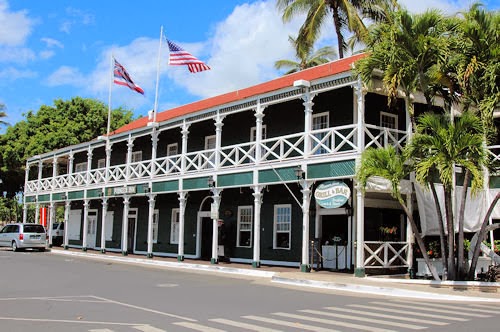
The first meeting of the House of Nobles was on April 1, 1841 in the ‘council house’ at Luaʻehu in Lāhainā.  The image shows Lāhainā at about that time.)

© 2022 Hoʻokuleana LLC

Filed Under: Ali'i / Chiefs / Governance Tagged With: Hawaii, Maui, Hawaiian Constitution, House of Nobles, Privy Council, Lahaina

July 9, 2022 by Peter T Young Leave a Comment

Keawalaʻi Congregational Church

Keawakapu is the traditional name of the bay fronting Ka‘eo, and is the ‘ili where the historical church (now known as Keawala‘i), is situated. In the present day, the place names, Ka‘eo and Keawakapu are not widely used.

The name Keawakapu is almost unknown in this area. This is because the name “Keawala‘i” for the Hawaiian Church has been generally in use since sometime in the early-1900s.   Keawakapu was the traditional name of the ‘ili on which the Church is situated. (Maly)

The traditional name of a neighboring bay, Makena actually in the ahupua‘a of Papa‘anui, is the locality name most familiar. The association of the larger area with the name Makena – formerly only a small locality name in a larger ahupua‘a of the Honua‘ula District – dates back to the late-1840s, when the bay of Makena was made the primary landing and coastal economic center of the region.

From 1800 to the 1840s (in the period prior to the Mähele ‘Äina), the land of Ka‘eo was managed for members of the Kamehameha household and supporting high chiefs by  konohiki—lesser chiefs appointed by Kamehameha III and Ulumäheihei Hoapili. (Maly)

Up to the early 1840s, land use, access, and subsistence activities in Ka‘eo remained as it had from ancient times. But by the middle 1840s, land use in Ka‘eo and in neighboring lands, transitioned from traditional subsistence agriculture to business interests, focused on ranching and plantations (the latter occurring in the cooler uplands).

Honua‘ula District was one frequented by droughts and famines. Native residents supported  themselves by cultivating in the uplands, and fishing, with some lowlands agriculture when rains fell. They also traded woven goods and other items for  kalo from Na Wai ‘Ehä (Waikapü, Wailuku, Wai‘ehu and Waihe‘e.)  (Maly)

Also, in the 1830s, just prior to the development of fee-simple property rights in the Hawaiian Kingdom, the land of Ka‘eo was selected as the center for educational and church work in the Honua‘ula District.

The first place of worship and instruction was established at Keawakapu, Ka‘eo, in 1825, as a thatched pili grass structure.

On August 1st and 8th, 1834, Ka Lama Hawai‘i published two letters from John S. Green (Garina), reporting on a visit to the various church stations of East Maui, including Honua‘ula. Green wrote to Lorin Andrews reporting that there were few children at the Honua‘ula Church (Keawakapu), but that he preached to a gathering of nearly 2,000 people, observing the people of the district were very poor.  (Maly)

In 1856, the Sunday school raised $70 which was sent to the United States to buy a bell for the church. (The bell arrived in January 1860 and was lifted to the belfry in February 1862.)

The Stone Meeting House at Keawakapu (also called Honua‘ula or Makena Church) was completed in 1858.

The land where the church now stands was purchased in 1864.  The minister asked that the property, church and deed be turned over to the mission in Boston, but the members voted to retain the property as their own and elected trustees who had charge of the worship services in the absence of ministers.

Life in Mākena was not easy a hundred years ago and it did not get easier as time went on. First, because the weather pattern for the area changed, the once fertile lands became parched and the small farmers who lived in Mākena were forced to pick up and begin their lives again elsewhere on Maui. Then came the Great Depression, then Second World War.

In 1944, the church known as the Stone House, Honuaʻula, Keawekapu, Makena and Kaʻeo was renamed Keawalaʻi – the name it retains today.

The plight of the church went virtually unnoticed until Kahu Abraham Akaka spearheaded a rededication of the church on May 25, 1952. The church structure was repaired and a new, revitalized spirit came over the small congregation. Membership rose.

When the belfry collapsed in January 1968, the church members decided to build a new one and to do repairs on the interior, including replacement of the windows and doors.

In 1975 the church building was in need of restoration and funds were raised by members and friends and the work undertaken; the old roof was removed and all damaged rafters and trusses were replaced. On May 16, 1976 a worship service was held with the rededication and a lū‘au.

The church has made a commitment to maintain Hawaiian tradition and culture, to incorporate the use of Hawaiian language, music and dance as well as to honor the various traditions and cultures represented in its membership within its ministry of worship and service. Lots of information here is from Kepa Maly and the Keawalaʻi Church website. 

© 2022 Hoʻokuleana LLC

Filed Under: Missionaries / Churches / Religious Buildings Tagged With: Hawaii, Maui, Kaeo, Makena, Keawakapu, Honuaula, Keawalai Church

June 16, 2022 by Peter T Young Leave a Comment

Boaz Mahune – Declaration of Rights (1839)

Born in the early-1800s, Boaz Mahune was a member of the lesser strata of Hawaiian nobility, subordinate to the high chiefs or aliʻi.  He was a cousin of Paul Kanoa, who served as Governor of Kauai from 1846 to 1877.

He adopted the name “Boaz” after a figure in The Book of Ruth in the Bible, after his conversion to Christianity (it was sometimes spelled Boas.)

Boaz Mahune was a member of the first class at Lahainaluna Seminary, graduating in 1835 after four years there.  His classmates included historian David Malo and royal diplomat Timothy Haʻalilio.

He was considered one of the school’s most brilliant scholars and was one of the ten chosen to remain as monitors, teachers in the children’s school and assistants in translating.

Mahune (with others from Lahainaluna) drafted the 1839 Hawaiian Bill of Rights, also known as the 1839 Constitution of Hawaiʻi.  This document was an attempt by King Kamehameha III and his chiefs to guarantee that the Hawaiian people would not lose their tenured land, and provided the groundwork for a free enterprise system.

It laid down the inalienable rights of the people, the principles of equality of between the makaʻāinana (commoner) and the aliʻi (chiefs) and the role of the government and law in the kingdom.

Many refer to that document as Hawaiʻi’s Magna Charta (describing certain liberties, putting actions within a rule of law and served as the foundation for future laws.)  It served as a preamble to the subsequent Hawaiʻi Constitution (1840.)

It was a great and significant concession voluntarily granted by the king to his people. It defined and secured the rights of the people, but it did not furnish a plan or framework of the government.  (Kuykendall)

After several iterations of the document back and forth with the Council of Chiefs, it was approved and signed by Kamehameha III on June 7, 1839 – it was a significant departure from ancient ways.

As you can see in the following, the writing was influenced by Christian fundamentals, as well as rights noted in the US Declaration of Independence.

Ke Kumukānāwai No Ko Hawaiʻi Nei Pae ʻĀina 1839 (Declaration of Rights (1839)

“God hath made of one blood all nations of men to dwell on the earth, in unity and blessedness. God has also bestowed certain rights alike on all men and all chiefs, and all people of all lands.”

“These are some of the rights which He has given alike to every man and every chief of correct deportment; life, limb, liberty, freedom from oppression; the earnings of his hands and the productions of his mind.”

“God has also established governments and rule for the purpose of peace; but in making laws for the nation it is by no means proper to enact laws for the protection of the rulers only, without also providing protection for their subjects; neither is it proper to enact laws to enrich the chiefs only, without regard to enriching their subjects also, and hereafter there shall by no means be any laws enacted which are at variance with what is above expressed, neither shall any tax be assessed, nor any service or labor required of any man, in a manner which is at variance with the above sentiments.”

“These sentiments are hereby proclaimed for the purpose of protecting alike, both the people and the chiefs of all these islands, while they maintain a correct deportment; that no chief may be able to oppress any subject, but that chiefs and people may enjoy the same protection, under one and the same law.”

“Protection is hereby secured to the persons of all the people, together with their lands, their building lots, and all their property, while they conform to the laws of the kingdom, and nothing whatever shall be taken from any individual except by express provision of the laws.  Whatever chief shall act perseveringly in violation of this Constitution, shall no longer remain a chief of the Hawaiian Islands, and the same shall be true of the Governors, officers and all land agents.”

The Declaration of Rights of 1839 recognized three classes of persons having vested rights in the lands; 1st, the Government; 2nd, the Chiefs; and 3rd, the native Tenants. It declared protection of these rights to both the Chiefly and native Tenant classes.

Mahune is more specifically credited with nearly all the laws on taxation in the introduction to the English translation of the laws of 1840, not published until 1842.

Later he was Kamehameha III’s secretary and advisor.  When the king attempted to start a sugar cane plantation at Wailuku on Maui, Mahune was the manager. The project was not a success.

Mahune returned to Lāhainā, where he acted as a judge for a time.  About 1846 he went back to his home in Honolulu to work for the government. Mahune died in March 1847.

© 2022 Hoʻokuleana LLC

Filed Under: Prominent People, Ali'i / Chiefs / Governance, Missionaries / Churches / Religious Buildings Tagged With: David Malo, Hawaii, Boaz Mahune, Maui, Lahaina, Kauikeaouli, Kamehameha III, Lahainaluna, Timothy Haalilio, William Richards, Paul Kanoa, Declaration of Rights (1839)

  • « Previous Page
  • 1
  • …
  • 12
  • 13
  • 14
  • 15
  • 16
  • …
  • 37
  • Next Page »

Images of Old Hawaiʻi

People, places, and events in Hawaiʻi’s past come alive through text and media in “Images of Old Hawaiʻi.” These posts are informal historic summaries presented for personal, non-commercial, and educational purposes.

Info@Hookuleana.com

Connect with Us

  • Email
  • Facebook
  • LinkedIn
  • Twitter
  • YouTube

Recent Posts

  • May The Forest Be With You
  • Spanish Galleons
  • Oklahoma
  • May Day
  • US Marine Hospital
  • By Horse, Car & Plane
  • John Rollin Desha

Categories

  • Hawaiian Traditions
  • Military
  • Place Names
  • Prominent People
  • Schools
  • Sailing, Shipping & Shipwrecks
  • Economy
  • Voyage of the Thaddeus
  • Mayflower Summaries
  • American Revolution
  • General
  • Ali'i / Chiefs / Governance
  • Buildings
  • Missionaries / Churches / Religious Buildings

Tags

Albatross Al Capone Ane Keohokalole Archibald Campbell Bernice Pauahi Bishop Charles Reed Bishop Downtown Honolulu Eruption Founder's Day George Patton Great Wall of Kuakini Green Sea Turtle Hawaii Hawaii Island Hermes Hilo Holoikauaua Honolulu Isaac Davis James Robinson Kamae Kamaeokalani Kameeiamoku Kamehameha Schools Lalani Village Lava Flow Lelia Byrd Liberty Ship Liliuokalani Mao Math Mauna Loa Midway Monk Seal Northwestern Hawaiian Islands Oahu Papahanaumokuakea Marine National Monument Pearl Pualani Mossman Quartette Thomas Jaggar Volcano Waikiki Wake Wisdom

Hoʻokuleana LLC

Hoʻokuleana LLC is a Planning and Consulting firm assisting property owners with Land Use Planning efforts, including Environmental Review, Entitlement Process, Permitting, Community Outreach, etc. We are uniquely positioned to assist you in a variety of needs.

Info@Hookuleana.com

Copyright © 2012-2024 Peter T Young, Hoʻokuleana LLC


Loading Comments...