Images of Old Hawaiʻi

  • Home
  • About
  • Categories
    • Ali’i / Chiefs / Governance
    • American Protestant Mission
    • Buildings
    • Collections
    • Economy
    • Missionaries / Churches / Religious Buildings
    • General
    • Hawaiian Traditions
    • Other Summaries
    • Mayflower Summaries
    • Mayflower Full Summaries
    • Military
    • Place Names
    • Prominent People
    • Schools
    • Sailing, Shipping & Shipwrecks
    • Voyage of the Thaddeus
  • Collections
  • Contact
  • Follow

September 10, 2024 by Peter T Young Leave a Comment

Hofgaard Store

Christopher Blom Hofgaard was born in Skien, Norway, on October 5, 1859. His parents were Gerhard Didrik and Didrikka (Blom) Hofgaard. He received his education at high school and at the Christiana Handelsgymnasium.

Hofgaard arrived in Hawai‘i on January 22, 1882. The first job of the newly-arrived young man in the islands was on the Wailuku sugar plantation where he worked several months, leaving to accept a clerkship in CH Dickey’s store at Haiku. Later, he was promoted to manager of the Dickey store at Paia.

In April 1885, he left Dickey’s employ to enter business for himself. He moved to Kauai and started the firm of CB Hofgaard & Co, in October of 1885.

In addition, from 1885 to 1886 he was a clerk in the post office and served as postmaster at Waimea, Kauai, from 1886 to 1918.  With respect to his postmaster role, Hofgaard wrote,

“Mrs MJ Rowell was postmaster in Waimea when I started the store in 1885, but in May 1886, she wrote to Fred Wunderberg, the postmaster general, that she desired to get rid of the postoffice and proposed to him that he appoint me postmaster.”

“Mrs Rowell turned over the postoffice and handed me the letter from the postmaster general as authority for the act, and I started to act at once.”

“Everything went on all right till some time in 1887, when I was suddenly arrested for accepting money under false pretenses. The women had started a ‘Hui Kuonoono’ and when the first installment came in, the treasurer of the hui deposited the money in the postal savings bank and I receipted for the money signing CB Hofgaard, postmaster.”

“Appeared in court the following morning and had my case postponed one week and wrote to the postmaster general to send me a commission in return mail, and date it back some six months, as I was arrested for impersonating an officer of the government.”

“By return mail I received the commission but the sheriff maintained it was a forgery.” It was an embarrassing moment, but with no apparent consequence. (SB, June 12, 1930)

The CB Hofgaard Store was so successful that he was enabled to retire from active management twelve years later, but retained the presidency of the company, which was incorporated in 1901.

For more than 30 years Mr. Hofgaard was the representative of the Equitable Life Assurance Society in the islands. In addition to the presidency of the Hofgaard firm he also was treasurer of Waimea Stables.

In addition to his business and public offices, welfare and church work drew much of Mr. Hofgaard’s attention. He was a member of the district committee of the Hawaiian Board of Missions, a member of the YMCA committee, president of the board of trustees of the Waimea foreign church society, a trustee of the Mahelona hospital, and a member of the Kauai board of child welfare. (Nellist)

Hofgaard served as auditor for the county of Kauai in 1905 and road supervisor from 1886 to 1898. He was appointed district magistrate in 1904.

Waimea’s Hofgaard Park, that narrow strip of land in Waimea that has the statue of Captain James Cook and other historical plaques is named for Hofgaard.

It seems the Hofgaard Store had a role in Hawai‘i’s banking industry … “Mr and Mrs Wilson P Cannon and little son arrived from Berkley en route to Waimea Kauai, where Mr Cannon, who is a dry goods man, will be associated with the Hofgaard store.”

“Mrs Cannon was born on Kauai and has not been in the islands for 17 years. She is the niece of Mr and Mrs CB Hofgaard of Waimea.” (SB, January 1, 1921)

The son, Wilson P Cannon Jr, was born in Berkely on August 25, 1919 and grew up on Kauai and Maui and was graduated from Maui High School in 1937.  After WWII, he worked his way through the ranks at Bank of Hawai‘i and later became Chairman and Chief Executive Officer of the bank.

American Factors (Amfac) bought the store in 1921. (SB, August 18, 1928) During WWII, the store was used by the Army as a quartermaster warehouse.

Businessman HS Kawakami bought and renovated the Hofgaard store in 1947 and moved his retail business into it. In 1966, the Hofgaard building was demolished to make way for a newer building opened by Kawakami in 1967 that would house the Bank of Hawai‘i, HS Kawakami Stores, and Big Save market. (Soboleski)

© 2024 Ho‘okuleana LLC

Filed Under: Economy, General, Buildings, Prominent People Tagged With: Kauai, Waimea, Hofgaard, Hofgaard Store, Big Save, Hawaii

September 4, 2024 by Peter T Young Leave a Comment

MacDonald Hotel

“Broad spreading trees and wide lawns gave Punahou St an air of quiet and peace and dignity. And not the least dignified of the buildings which line the street is the MacDonald hotel, which for more than 50 years has stood as a landmark in the district.” (Star Bulletin, July 21, 1934)

“The MacDonald Hotel is a stately mansion surrounded by cottages amid sub-tropical foliage. It is located at 1402 Punahou Street in the great residence district of Honolulu.”

“There are tennis courts on the grounds, and the transient as well as the permanent resident has here all the comforts of home at the reasonable rates of $3 a day or $65 a month. The guests enjoy delicious home-cooked meals, which are also served to outsiders. This hotel is near Central Union Church and Oahu College.  (Mid-Pacific Magazine, July 1927)

“Two prominent island families called this building ‘home’ before it was converted into a hotel. They were the families of Col and Mrs Charles H Judd and Judge and Mrs HA Widemann.”  (Star Bulletin, July 21, 1934)

Charles Hastings Judd, born at Kawaiaha‘o on September 8, 1835 to missionaries Gerrit and Laura Judd, was Chamberlain to King Kalākaua from 1878 until 1886, and an official in various responsible capacities during the reigns of three rulers, Kamehameha V, Lunalilo and Kalākaua.

In 1860, Judd and his brother-in-law, SG Wilder, had purchased the lands of Kualoa and Ka‘a‘awa from Judd’s father and Jacob Fox and started diversified farming with tobacco, cotton and rice were planted and the possibility of vanilla beans was discussed.

He entered into a partnership with his father and Wilder in 1863 for the growing and grinding of sugar cane at Kualoa, and in 1864, the first on the Island of O‘ahu.

In 1866 the Charles and his family settled at “Rosebank,” Nu‘uanu Valley, which had been bought from the estate of Robert C Wyllie, famous in Hawaiian history as a minister of foreign affairs. During these years Judd was engaged in ranching with John Cummins at Waimanalo. Production of sugar at Kualoa having failed for various reasons, the enterprise was abandoned in 1871. (Nellist)

Hermann Adam Widemann was born in Hanover, Germany on December 24, 1822. “After he left school where he received an excellent training he was destined for the army. His ‘pull’ was not sufficient in those days for promotion when ‘birth’ was everything and he went to sea in a merchant vessel.”

“In 1843 he arrived in Honolulu and he liked the place well and made up his mind to return to the Islands. In 1846 he landed again in Honolulu and made his home here and became a leading citizen of this little place. During the ‘gold fever’ in 1848-9 he made a trip to California but struck no ‘ore’ there.”

He later made a great success, through his ambition energy and sterling qualities, he rose to the high position in the community.  He served at one time Sheriff of Kauai, then Circuit Judge, Minister of the Interior, a Privy Councilor, a member of the Board of Health, Minister of Finance and a Noble.

“The main record of Mr Widemann will go down to posterity however as a leading and successful coffee and sugar planter. …  Although Widemann was not a trained lawyer he was a natural born jurist and at the time of his death was the oldest member of the Hawaiian Bar and for a while he occupied the position of Associate Justice of the Supreme Court.” (The Independent, Feb 7, 1899)

Back to the MacDonald Hotel property … “It was built in 1880 for Col Judd, then court chamberlain to King Kalakaua and long active in affairs of the monarchy.  Beautlful walnut and other fine woods were used in its construction, and it stands today as substantial as it was 50 years ago. The handsome stairway is of walnut, and so are the five pairs of thick folding doors.”

“The Judd family moved in late in 1880, but Col Judd left his home on January 20, 1881, to accompany King Kalakaua on his famous trip around the world. Unable to go direct from here to Japan, the party went first to San Francisco, then directly across the Pacific and on around the world. Col Judd was away from his home most of the year.”

“In 1886, following his withdrawal from the service of the king, Col Judd moved to his Leilehua ranch home, although keeping his Punahou St home for occasions when he was in the city. …” Later the house was sold.

“The new owners of the house were Judge HA Widemann, also a prominent figure in governmental affairs, and Mrs Widemann. Here the Widemann family, with its household of children lived, and even after the marriage of the younger generatlon the house remained a center of their activities.

Following the death of Widemann … “the house became the property of his daughter, Mrs Henry Macfarlane. She sold it after a few years and it became a hotel, managed by Mrs M MacDonald for many years.”

“It came under the present ownership in 1928 when Mrs Polly Ward was appointed manager. At this time its name was temporarily changed to Kalaniloohia (The Beautiful Attainment), an early name for the district; but the name MacDonald hotel was so firmly ingrained on people’s consciousness that it stuck, and later the Hawaiian name was dropped.”

“Although improvements have been made in the interior of the building it still retains the atmosphere of the hospitable old home. The Manoa breeze sweeps through its high ceilinged rooms just as it did a half century ago.”

“The exterior remains without change, and so do most of the four and a half acres of spacious grounds.  Five cottages are now in the yard, two of them dating back to the Widemann’s occupancy.”

“Another of these cottages known as ‘Little Arcadia’ has an interesting history of its own.  It was built about 1893 or 1894 by Mr and Mrs. John G Rothwell and stood, not where it is now, but on the adjoining lot mauka, just a trifle makai and Waikiki of Arcadia, the present home of Judge and Mrs. Walter F Frear.”  (It was moved to make room for the driveway to Arcadia.) (Star Bulletin, July 21, 1934)

Things changed again … “MacDonald Hotel Sold to Church for School Use .., The MacDonald hotel and property [about 3.6 acres] at 1402-1406 Punahou Street will be converted to use as an addition to the Maryknoll School.” (Star Bulletin, Dec 16, 1947)

Maryknoll was founded by a young priest and six Maryknoll Sisters. When it was blessed in 1927, there were only 93 boys and 77 girls who made up the student body. The school was a one-story, wooden-frame building containing four classrooms on Dole Street.

Within four years, the Sisters knew that expansion was necessary. In 1931, the first freshman class was enrolled and, in 1935, the first 13 graduates of the only Catholic co-educational high school in Hawaii received diplomas.

The high school division continued to operate at Dole Street until 1948, when it was moved to the former MacDonald Hotel on Punahou Street. In August 1953, the present high school facility was dedicated.  Today, Maryknoll is Hawai‘i’s largest co-ed Catholic school serving grades K-12. Fifty percent of the students are non-Catholics. (Maryknoll)

© 2024 Ho‘okuleana LLC

Filed Under: General, Buildings, Prominent People, Schools Tagged With: Charles Judd, Makiki, Maryknoll, Arcadia, MacDonald Hotel, HA Widemann, Hermann Widemann, Hawaii

September 2, 2024 by Peter T Young Leave a Comment

$25,000 Annuity

“In an interview, ex-Queen Liliuokalani said of the proposed treaty between the United States and Hawaii: ‘Fifteen hundred people are giving away my country.’”

“‘The people of my country do not want to be annexed to the United States. Nor do the people of the United States wants annexation. It is the work of 1,500 people, mostly Americans, who have settled in Hawaii. Of this number those who are not native born Americans are of American parentage.’”

“‘None of my people want the island annexed. The population of the islands is 109,000. Of this number 40,000 are native Hawaiians. The rest are Americans, Germans, Portuguese, Japanese, Chinese, English and a small proportion from other countries. The 1,500 Americans who are responsible for what was done to-day are running the affairs of the islands.’”

“‘There is no provision made in this treaty for me. In the Harrison treaty I was allowed $20,000 a year, but that treaty never went into effect. I have never received one dollar from the United States.’”

“‘No one looked after my interests in the preparation of this treaty. Yet my people, who form so large a part of the population of the islands, would want justice done me.’” (Los Angeles Herald, June 18, 1897)

Then, a couple American newspapermen (Charles L MacArthur, a former New York state senator and then editor of the local newspaper in Troy NY and William Shaw Bowen, a journalist with the New York World newspaper) independently supported an effort to arrange a $25,000 annuity to Liliʻuokalani.

In responding to questions noted in the Morgan Report, MacArthur stated, “I went to Mr. Dole. I had trouble in my own mind as to whether the Queen had not some personal rights in the crown lands, for the reason that the treasury department had never asked her to make a return on the income …”

“… which was about $75,000 a year, from these lands and which she had received, and as the treasury had never asked her for a return I thought she had an individual right in the lands.”

“I said to the people, ‘She has individual rights, and you have not asked her to make a return to the treasury of what she has received and what she did not receive.’ The President explained it all to me, the grounds of it. “

“When Mr. Neuman indicated that they were willing – I had made the suggestion and others had – that they ought to buy her out, pay her a definite sum, $25,000 or some other sum per year for her rights.”

“Her rights had been shattered, but I thought they ought to pay for them, and so I went, in accordance with Mr. Neuman’s suggestion, or by his consent, to see President Dole.”

“Mr. Neuman said he wanted to talk with President Dole about this matter, but he had not been there officially, and he could not go there publicly to his official place. I talked with Mr. Dole, and Mr Dole said he could not officially do anything without consulting his executive committee …”

“… but he said he would be very happy to meet Mr. Neuman and see what they wanted – see if they could come to any terms about this thing by which the Queen would abdicate and surrender her rights.”

“Mr. Neuman and his daughter called, nominally for the daughter to see Mrs. Dole, so that it could not get out, if they made a call, they could say it was merely a social call, not an official call.”

“Of course, I do not know what their conversation was; but Mr. Neuman, acting on that, called on the Queen. Mr. Dole and Mr. Neuman both impressed on me the importance of not having this thing get out, or the whole thing would go up in smoke. Mr. Neuman said he could bring this thing about if he could keep it from the Queen’s retainers – her people.”

“He said, ‘That is the difficulty about this thing.’ This matter went on for three or four days. Mr. Neuman saw the Queen and she agreed not to say anything about it, so Mr. Neuman tells me, and I got it from other sources there which I think are reliable. They came to some sort of understanding; I do not know what it was.”

“They went so far as to say this woman would not live over three or four years; that she had some heart trouble; and if they gave her $25,000 a year it would not be for a long time. … Mr. Neuman said she assented to it, if she could satisfy one or two of her people.”

Bowen noted in testimony in the Morgan Report, “One day while dining with Paul Neuman I said: ‘I think it would be a good thing if the Queen could be pensioned by the Provisional Government; it would make matters harmonious, relieve business, and make matters much simpler.’”

“I also said that I was aware that certain gentlemen in Washington were opposed to pensioning the Queen; that certain Senators raised that objection to the treaty that was brought from the islands because it recognized the principle of the right of a queen to a pension.”

“There was one Senator, especially, from the South, who said, without discussing the treaty, that that was objectionable to him; that his people would object to it. I said, “If there is no annexation it is a serious question; if there is, the Queen should be taken care of.”

“Neuman agreed with me. He was a strong friend of the Queen, disinterested and devoted. But he said it could not be done. I told him that I had become acquainted with the members of the Provisional Government who were high in authority, and I thought I would try to have it done.”

“Mr. Dole said he would not make any propositions himself and asked me what I thought the pension ought to be. On the spur of the moment, not having considered the matter, I said I thought the Queen ought to get a very handsome pension out of the crown lands.”

“I asked if there was any question about raising the money, and he said none whatever. He finally asked me to name the figures. He had the idea that the figures had been suggested. I said, ‘You ought to give $20,000 a year to furnish her followers with poi. That is the native dish.’ Mr. Dole said he would consider that question.”

“The result was that Mr. Dole told Mr. Neuman that if the Queen would make such a proposition to him it would receive respectful attention and intimated that he thought it would be accepted. Mr. Seaman saw the Queen and told me that he thought it would be done; that the more he thought of it the more convinced he was that it would be better all around.”

“In the meantime he (Blount) had been to the Queen, to Mr. Dole, and had done what he could to prevent the carrying out of the plan. Mr. Neuman had an interview with the Queen.”

“She told him that she would do nothing more in the matter, and asked him to give back her power of attorney, and he tore it up in her presence. This was the 22d, that he tore up his power of attorney.”

“On the 21st instant Mr. Claus Spreckels called to see me. He said that he suspected there was an effort at negotiation between the Queen and the Provisional Government, and that he had urged the Queen to withdraw her power of attorney from Paul Neumann.”

“How much or how little Mr. Spreckels knows about this matter I am unable to say, as I do not know how to estimate him, never having met him before. He promised to see me again before the mail leaves for the United States on next Wednesday, and give me such information as he could acquire in the meantime.”

“I have no doubt whatever that if Mr. Blount had not prevented, and secondarily Mr. Claus Speckels, the agent for the sugar trust, that plan would have been carried out. I have no doubt of it in my own mind.” (Bowen; Morgan Report)

“Thus Blount intervened to scuttle negotiations between the Queen and President Dole that were strongly on track toward a mutually agreeable settlement whereby the Queen would give up all claims to the throne in return for an annuity.” (MorganReport)

© 2024 Hoʻokuleana LLC

Liliuokalani_in_1917

Filed Under: Economy, General, Ali'i / Chiefs / Governance, Prominent People Tagged With: Annexation, Sanford Dole, Sanford Ballard Dole, Overthrow, Annuity, Hawaii, Liliuokalani

August 29, 2024 by Peter T Young Leave a Comment

Sam Ka‘aekuahiwi

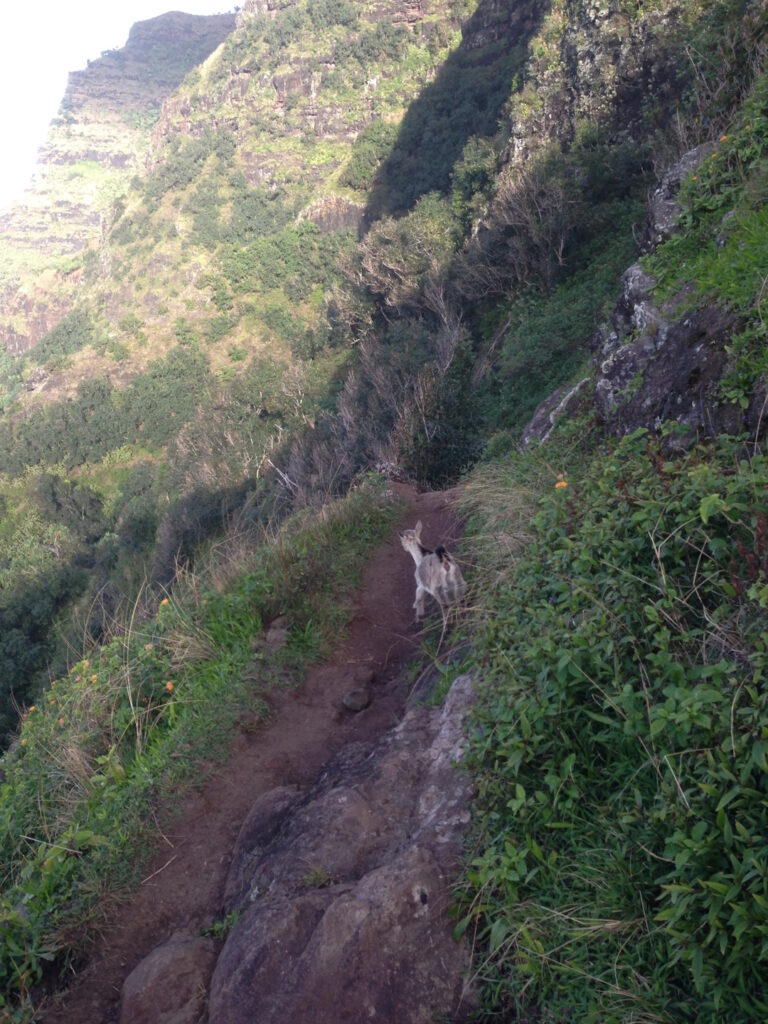
“From the lofty precipice on the south-east of Waipio, I had an enchanting view of a Hawaiian landscape of singular beauty and grandeur, embracing the varied scenery around, and the deep and charming valley below; the dwelling-place of twelve or fifteen hundred inhabitants …”

“With one hand clinging to little shrubs and strong grass, and with the other thrusting a sharpened staff into the earth to avoid sliding fatally down the steep, I attempted it. Friendly natives of the valley ascended part way to meet and assist me. Their ingenuity readily supplied a vehicle, by uniting bushes and branches of shrubs, and the ki plant for a drag.”

“Taking a seat at their order, on the top of it, I was gradually let down this wall on this basket, by six wakeful and sure-footed natives, two before, two behind, and one on each side.”

“With all their agility, one and another of them occasionally getting too much momentum, would suddenly slide forward a yard or two ahead of the others. We reached the bottom speedily and successfully.” (Bingham)

“Waipio Valley is a deep cleft six miles long reaching back into the rugged Kohala mountains.  It is the largest valley in the Hawaiian Islands.  It is almost one-half mile deep at the northern end and three-quarters of a mile deep at the [southern] end.”  (Honolulu Advertiser, June 24, 1956).

“It had five stores, four restaurants, one hotel, a post office, a rice mill, nine poi factories, four pool halls, and five churches. Also two jails.” (Honolulu Advertiser, June 24, 1956). The majority of these establishments were located in Nāpō‘opo‘o.

Nāpō‘opo‘o (‘the holes’) is located near Hi‘ilawe Falls on the Kukuihaele side of Waipi‘o valley. When Ellis visited the valley in 1823, this area was well populated. In 1870, the Chinese started rice farming in areas which were previously cultivated in taro. (DURP, 2001)

The May 1920 Hawaii Educational Review notes, Waipio School “is not on government land. The land is owned by the Bishop Estate and leased to the Hamakua Ditch Company.”

Samuel ‘Sam’ Makanoenoe Ka’aekuahiwi Sr was Principal of Waipio School 1920-1945 (possibly earlier than 1920). (Waipio: Māno Wai, Appendices)

Samuel Makanoenoe Ka’aekuahiwi Sr was born on June 28, 1882, in Kukuihaele, the son of Peter Pika Ka‘aekuahiwi Sr and Puhene Kahiwa. He married Amoy Akeao Akana Leong on December 31, 1903. They were the parents of at least 5 sons and 10 daughters. (FamilySearch)

“When I was four years old, my mother died. So my sister was keeping me, my older sister and my other sisters. … My father, yeah, he remarried. or only stay together, or what. I don’t know if really he remarried (No, only together.)” (son, Ted Ka‘aekuahiwi; Waipio: Māno Wai)

Sam Ka‘aekuahiwi “came from, actually from Maui. And he went to Maui Boarding School and he came to Hawaii. In the first place, he’s a teacher. … He taught at Kawaihae. That’s his first place he taught. Let’s say, maybe about five years I think.”

“And then he came to Kapulena. He taught over there, I don’t know how many years, but. And then he came down to Waipio. And then he met my mother down at Waipio Valley. Married. Start teaching down Waipio Valley.”  (Ted Ka‘aekuahiwi; Waipio: Māno Wai)

“The Waipi‘o School was a two room building, and at its peak may have had about one hundred students. Everything was taught in the English language, through four grades. I remember a succession of teachers, an Englishman with a red face and a moustache, then a Portuguese, then John Kealoha, Solomon Burke (a hapa haole), and Sam Ka‘aekuahiwi.”

“The kids were mostly Hawaiians, followed numerically by Hawaiian-Chinese, Hawaiian-Haole, and Chinese. We were supposed to speak only English on the school premises, but we actually used a pidgin of Hawaiian, English, and Chinese.”

“We used Baldwin Readers, first, second and third. We read about spring, summer, autumn, and winter without the slightest comprehension of the terms. We read of Jack Frost on the pumpkins, when outside were rose apple trees and the tradewinds brought the fragrance of wild ginger flowers into the classrooms.”

“We memorized the alphabet and the multiplication tables. We studied history and learned that George Washington was born in Westmoreland, Virginia – why that stuck in my head I’ll never know. All of us felt sorry for the American Indians and Negroes. We also learned something about Hawaiian history.”

“School hours were from nine to twelve and one to two. … The Chinese kids were the better students, especially in arithmetic, whereas the Hawaiian kids were good in music and singing. The teachers would write out the music in four parts and the kids sang it beautifully.”

“Every Friday afternoon for one hour we would have a work detail, repairing stone walls, dusting erasers—a general cleanup of the school.”

“The only times school was called off was when the valley was badly flooded. … At the high school [in Hilo] I met white kids for the first time.” (Herbert Mock “Akioka” Kāne; transcribed and edited by his son “Herb” Kawainui Kāne; Coffee Times)

In 1939, Waipio Valley had “a 3-room grammar school with one teacher, one principal (Sam Kaaekuahiwi), and 31 students; a Mormon church; two stores.”

“The school sponsors social affairs, dances and hula concerts. No mail delivery in the valley. Old Protestant church in ruins, Roman Catholic church falling apart. Non-Mormon services conducted in people’s homes. 4-H Club sponsors fairs. No electricity but they do have battery-run radios. Approximately 80 voters. Population of Waipio approximately 200.” (Waipio: Māno Wai, Appendices)

“I went to Waipio Valley School. My teacher was Samuel Kaaekuahiwi. He was the roughest teacher that I ever come across for the many years. But he was all right. … Well, when you don’t do your lessons right, you not interested, he pound you on the wall. That’s the kind of life we went through.” (Joseph Batalona, Waipio: Māno Wai)

“Sam Kaaekuahiwi, the last school teacher of Waipi‘o, told me that Kukuihaele Village got its name in ancient times when inhabitants of Waipi‘o could see travelers carrying lights on the pali trail. Kukui refers to kukui nut torches, and haele ‘to go.’” (Herbert Mock “Akioka” Kāne; transcribed and edited by his son “Herb” Kawainui Kāne; Coffee Times)

In 1949, “The 100 residents of Waipio valley, biggest wet-land taro producing area of the territory, still have hopes of getting a road into the valley.”

“But unlike residents of other areas, they have patience, knowing construction of a road from the pali nearly 1,000 feet to the floor of the valley, is preceded by many other proposed county projects with higher priority ratings.”

“Until then, however, they would like more attention shown their trails in the valley. They made their wishes known yesterday to County Chairman James Kealoha, who made a horseback trip around the valley.”

“Mrs Louisa Kanekoa told him the county neglected trimming brush which shoots up over the trails from the rich valley soil. She urged the hiring of Waipio women who, she said, are better workers than the men and would save money for the county.”

“Sam Kaaekuahiwi, former principal of the Waipio school … said the road was not only needed for transporting poi and taro to market but also to make it easier for students to attend school.”

“More than 10 children now must get up around 5 am to make the long hike up the steep incline to the Kukuihaele school, for some trip of more than three miles, he said.”

“On rainy mornings they reach the pali soaked to the skin and make a change in clothing before going to school. A few students live in Kukuihaele during the school year to avoid making the long walk.” (Hawaii Tribune Herald, Nov 5, 1949)

In 1951, Waipio had “a schoolhouse, but no teacher. … There is a phone line from the top to the bottom of the trail into Waipio. Before jeeps enter the trail they call down to see if a mule pack is coming up. Two mule trains go up each day, each with 7-9 mules.” (Waipio: Māno Wai, Appendices)  Sam Ka‘aekuahiwi Sr died December 12, 1961.

© 2024 Ho‘okuleana LLC

Filed Under: Place Names, Prominent People, Schools Tagged With: Sam Kaaekuahiwi, Waipio School, Hawaii, Waipio

August 26, 2024 by Peter T Young Leave a Comment

Schoenberg

“To the Emigrants for the Sandwich Islands … Contracts with those who will go to the Sandwich Islands, are drawn up and signed on Wednesday, Sept. 23, and the following days at the office of Hans P. Faye, at Drammen from 11 to 3 o’clock. The parties must be provided with good recommendations, and attestations for good and faultless behaviour.”

“Parties under obligation of military service, must bring release from service. Signature of minors must, to be valid, be confirmed by guardian.”

“The conditions are now regulated, and thus fixed: laborers over 20 years, 9 dollars; under 20 years, somewhat less, per month, with free board, or board-money and free lodgings, families may bring two children with them. Free passage and board, which is not to be worked out afterwards. … Chr. L’Orange, Agent for the Hawaiian Bureau of Immigration, Sandwich Islands” (PCA, Oct 21, 1882)

“There were about 600 Norwegians who emigrated to Hawaii, the main harbor for this organized emigration was Drammen. It was planned and executed by Hans L’Orange. L’Orange was commissioned by the king of Hawaii (King Kalakaua) to bring the Norwegians to the island. L’Orange was a Norwegian plantation owner in the islands.”  (Haakon Bjerke)

A plaque near Maalaea Maui states, “This monument commemorates the arrival of the Norwegian barque Beta which dropped anchor near this spot on February 18, 1881, and of her sister ship Musca, which arrived in Honolulu May 13, 1881.”

“They brought more than six hundred Norwegians, Swedes and Danes to work in the sugar cane fields and mills of the Hawaiian Kingdom – the first and only mass migration of Scandinavians to these islands.”

“For their contribution to the life of this land, as well as those of their countrymen who proceeded or followed, our mahalo and aloha. The Scandinavian Centennial Commission, February 14, 1981, the centennial date. This monument was restored in the year 2006, in celebration of the 125th anniversary of the Scandinavians arrival in Hawaii”.

“The Norwegians had signed a four-year contract as plantation workers. This experiment by having the Norwegians employed as plantation workers was not successful enterprise. The plantation owners soon found out they could not whip the Norwegians as they had previously done with the Asians. Soon, strikes flourished and the jails were filled up with Norwegians.”

“The Norwegian emigration to Hawaii was a failure, as soon as their four-years contract expired the majority of the Norwegians left for the US mainland to places like California, Minnesota and the Dakotas; there were only then a small number of Norwegians who remained in Hawaii.” (Haakon Bjerke)

But sugar laborers weren’t the only Norwegians to come to Hawai’i.  “A long line of seafaring ancestors were responsible for the early call to the sea of Victor [Cotta] Schoenberg (born December 5, 1885, at Bergen, Norway; son of Fredrik Christian Torp and Edle Margarete (Holm-Brock) Schoenberg).” (Nellist and Siddall)

“At the completion of his education in the Hambro School and College and the Bergen Commercial College at Bergen, Norway, M. Schoenberg began his world travels [by way of England, Egypt, Siam and Hongkong, remaining in Hongkong until June, 1906] and reached Hawaii in Aug, 1906, as an officer on a Norwegian steamship. He remained here to accept a position in a mill at Makaweli, Kauai.”

“Later he removed to Waimea, Kauai, where he was acting postmaster for a short time. From 1907 to 1909 he was bookkeeper for the Lahaina branch of H. Hackfeld & Co., and for the next seven years was manager of the Lahaina National Bank, Lahaina, Maui, going to the Waipahu branch of the Bank of Hawaii, Ltd., in 1918, as manager and cashier, a position he still occupies.”

“Mr. Schoenberg has specialized in country and branch bank organization. He organized and developed the Pearl Harbor branch of the Bank of Hawaii, Ltd., in 1921, with a collection office at Aiea, which he managed for a year in conjunction with the Waipahu branch and a collection office at Wahiawa.”

In 1910 he married Jennie Wilhelmina Hansen and they have two sons, Erling (born in Wailuku July 2, 1911) and Eyvinn Schoenberg. (Nellist)  Eyvinn was born and raised in Pearl Harbor, Hawaii, and began making model aircraft at age eleven while visiting San Leandro, California.

“On returning home to Hawaii, my room became my model shop, as I turned out all kinds of rubber-powered models, culminating in my building a successful flying Gas model ‘California Chief,’ powered with a Baby Cyclone engine, in 1939.”

“This lead to my interest in flying and I obtained a pilot’s license through the University of Hawaii’s CAAPT5 flight training course in 1940.” Schoenberg learned to fly a full-sized Piper Cub.

“Post war, living in Lima Peru, I built my first Radio Controlled model, a Walt Good ‘Rudder Bug’ design, with an English single-channel radio system and an S29 engine, with rudder only control. It flew beautifully!!”

“And while driving to the flying area 43 kilometers south of Lima, Peru, I saw the wonderful point break waves at Punta Hermosa, surfed there with my pal Hal McNicol, and changed Peruvian surfing from beach break to point break surfing thereafter …” (Schoenberg, Academy of Model Aeronautics)

Eyvinn’s son had an influence on music in the Islands. “I collaborated with Herb Ohta, Sr. (Ohta-San) on a number of songs over the years, beginning in the late 60s when I was a student at Punahou (class of 69).”

“This came about when a guest lecturer at a creative writing class mentioned that a local musician was looking for help with lyrics. That sounded interesting, so I met with Mr. Ohta at his practice studio and then went to see him perform at a club in Waikiki.”

“Initially, a song translated from French needed a little editing. Later, Ohta wrote original compositions that required lyrics. After I moved back to the mainland we continued working together by mail. He would send me sheet music, sometimes a cassette recording, or call and play a new tune over the phone.”

“Ohta was a terrific musician who could play the ukelele like a jazz guitar. Many of his recordings were instrumentals, although I still received credit as lyricist.” (The songs he collaborated with Ohta-san include, The Changing, Claustrophobia, Everything Is Real, I’m Going To Go, Love Can Be A Harmful Thing, More Than I Can Say, Sunshine, Wishes and You.)

“His music was very popular in Japan, where he was known as Ohta-San. For a while, I received annual printouts showing royalties earned, categorized in Japanese with amounts in Yen. A letter in English said they would hold onto the sum until it was enough to write a check.”  (Victor (Vic) E Schoenberg)

That wasn’t the only musical Schoenberg. Folks might recall the Vaqueros that included Cotta Schoenberg (who played regularly at the Kāneʻohe Yacht Club). Back in the day, the Long House was available for periodic teen dances (hundreds of us packed the place.)

© 2024 Ho‘okuleana LLC

Filed Under: General, Prominent People, Economy Tagged With: Bank of Hawaii, Norwegian, Schoenberg, Victor Cotta Schoenberg, Ohata-san, Herb Ohta, Hawaii

  • « Previous Page
  • 1
  • …
  • 36
  • 37
  • 38
  • 39
  • 40
  • …
  • 174
  • Next Page »

Images of Old Hawaiʻi

People, places, and events in Hawaiʻi’s past come alive through text and media in “Images of Old Hawaiʻi.” These posts are informal historic summaries presented for personal, non-commercial, and educational purposes.

Info@Hookuleana.com

Connect with Us

  • Email
  • Facebook
  • LinkedIn
  • Twitter
  • YouTube

Recent Posts

  • Nationality
  • About 250 Years Ago … Lafayette Comes to America
  • ʻŌhiʻa
  • Waiʻalae Shopping Center
  • Hoʻopuloa
  • Uncle Tom’s Cabin
  • Kanaʻina

Categories

  • Place Names
  • Prominent People
  • Schools
  • Sailing, Shipping & Shipwrecks
  • Economy
  • Voyage of the Thaddeus
  • Mayflower Summaries
  • American Revolution
  • General
  • Ali'i / Chiefs / Governance
  • Buildings
  • Missionaries / Churches / Religious Buildings
  • Hawaiian Traditions
  • Military

Tags

Albatross Al Capone Ane Keohokalole Archibald Campbell Bernice Pauahi Bishop Charles Reed Bishop Downtown Honolulu Eruption Founder's Day George Patton Great Wall of Kuakini Green Sea Turtle Hawaii Hawaii Island Hermes Hilo Holoikauaua Honolulu Isaac Davis James Robinson Kamae Kamaeokalani Kameeiamoku Kamehameha Schools Lalani Village Lava Flow Lelia Byrd Liberty Ship Liliuokalani Mao Math Mauna Loa Midway Monk Seal Northwestern Hawaiian Islands Oahu Papahanaumokuakea Marine National Monument Pearl Pualani Mossman Quartette Thomas Jaggar Volcano Waikiki Wake Wisdom

Hoʻokuleana LLC

Hoʻokuleana LLC is a Planning and Consulting firm assisting property owners with Land Use Planning efforts, including Environmental Review, Entitlement Process, Permitting, Community Outreach, etc. We are uniquely positioned to assist you in a variety of needs.

Info@Hookuleana.com

Copyright © 2012-2024 Peter T Young, Hoʻokuleana LLC

Loading Comments...