Images of Old Hawaiʻi

  • Home
  • About
  • Categories
    • Ali’i / Chiefs / Governance
    • American Protestant Mission
    • Buildings
    • Collections
    • Economy
    • Missionaries / Churches / Religious Buildings
    • General
    • Hawaiian Traditions
    • Other Summaries
    • Mayflower Summaries
    • Mayflower Full Summaries
    • Military
    • Place Names
    • Prominent People
    • Schools
    • Sailing, Shipping & Shipwrecks
    • Voyage of the Thaddeus
  • Collections
  • Contact
  • Follow

September 16, 2022 by Peter T Young Leave a Comment

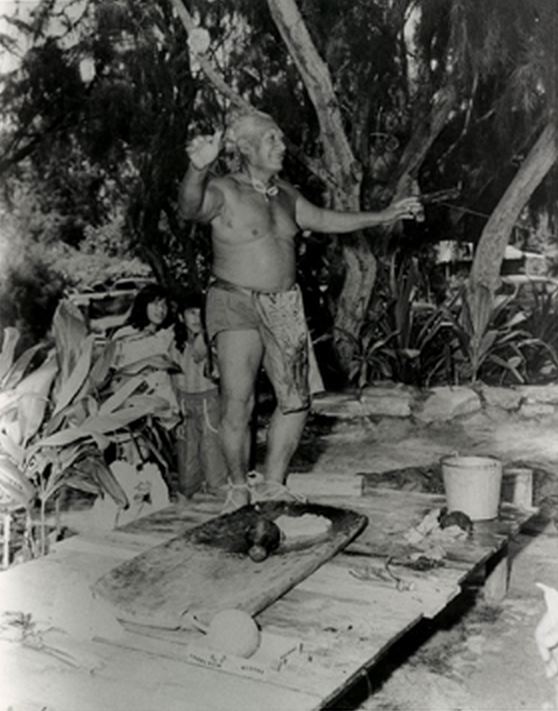
Hula

“Hula is not just a dance, but a way of life, an ancient art that tells of Hawaiʻi’s rich history and spirituality.” (this is attributed to many)

Hula combines dance and chant or song to tell stories, recount past events and provide entertainment for its audience.  With a clear link between dancer’s actions and the chant or song, the dancer uses rhythmic lower body movements, mimetic or depictive hand gestures and facial expression, as part of this performance. (ksbe-edu)

As hula is the dance that accompanies Hawaiian mele, the function of hula is therefore an extension of the function of mele in Hawaiian society. While it was the mele that was the essential part of the story, hula served to animate the words, giving physical life to the moʻolelo (stories.)  (Bishop Museum)

Today, we typically divide hula into two different forms, the hula kahiko (ancient dance) and the hula ʻauana, (also spelled ʻauwana – modern dance.)

Although the terms hula kahiko (ancient) and hula ʻauana (modern) are used to divide styles of traditional dance, these terms are a relatively recent classification of a practice with a very long history.  The dance has also undergone evolutions throughout its history, often being influenced by the political leaders and situations of the time.  (Bishop Museum)

“In the hula, the dancers are often fantastically decorated with figured or colored kapa, green leaves, fresh flowers, braided hair, and sometimes with a gaiter on the ancle, set with hundreds of dog’s teeth, so as to be considerably heavy, and to rattle against each other in the motion of the feet.”  (Hiram Bingham)

“They had been interwoven too with their superstitions, and made subservient to the honor of their gods, and their rulers, either living or departed and deified.” (Hiram Bingham)

A common misrepresentation of history suggests that the American missionaries banned hula – they could not have, they did not have the authority.

However, it is true that they openly disapproved of hula (as well as other forms of dance and activities) as immoral and idle pastime.

As Bingham notes, they “were wasting their time in learning, practising, or witnessing the hula, or heathen song and dance.”

“Missionary influence, while strong, never wiped out the hula as a functional part of the Hawaiian society. Faced with this undeniable fact, the authorities sought to curb performances by regulation.”  (Barrere, Pukui & Kelly)

Despite efforts to eliminate hula, many of the ancient chants and dances were kept alive within families and passed to descendants.  (Bishop Museum)

In 1830, Kaʻahumanu issued an oral proclamation in which she instructed the people, in part: “The hula is forbidden, the chant (olioli), the song of pleasure (mele), foul speech, and bathing by women in public places.” (Kamakau)

Although it was apparently never formally rescinded, the law was so widely ignored, especially after Kaʻahumanu died in 1832, that it virtually ceased to exist.

In 1836, it is reported the French consul for Manila visited Honolulu, and attended a state banquet hosted by the King. Part of the festivities was a formal hula performance.

In 1850, the Penal Code required a license for “any theater, circus, Hawaiian hula, public show or other exhibition, not of an immoral character” for which admission was charged.

“No license for a Hawaiian hula shall be granted for any other place than Honolulu.”  (The law did not regulate hula in private, so the dance continued to be practiced and enjoyed throughout the islands.)

King David Kalākaua’s 1883 coronation included three days of hula performances and his 1886 jubilee celebrations had performances of ancient and newly created dances.

Reviewing older drawings of hula, it is clear that the attire of the dancers is different than what we generally associate with hula attire today (and throughout the last century.)

Men and women were topless in the original hula attire. Women wore a pāʻū, which is a wrap made of tapa cloth. Men wore malos, or loincloths, and other kapa wraps.

Hula attire was expanded with lei and decorations for dancers’ wrists and ankles. Originally, some of these decorations were made of whale bone or dogs’ teeth.

So, when and where did the grassy/leafy skirt that we know today come from?

Reportedly, the grass skirt was introduced to Hawaiʻi by immigrants from the Gilbert Islands (small atolls that are today part of the Pacific Island nation of Kiribati) in the 1870s and 1880s.

“Hawaiian hula during and after that period (Kalākaua era) influenced and was influenced by the dance styles of other Islanders, such as the incorporation of Kiribati-style grass skirts.”  (Kealani Cook, PhD dissertation)

By the early 1900s, hula performers in Hawaiʻi and the US continent wore grass skirts. Some hula performers still wear grass skirts today.

Today, grass skirts function as the international symbol for hula dancing.  The grass skirts sway with the dancers as they move their hips, creating a fluid movement.  Dancers also wear a variety of other apparel.

© 2022 Hoʻokuleana LLC

Filed Under: Hawaiian Traditions Tagged With: Auana, Hawaii, Hula, Mele, Oli, Kahiko

August 27, 2022 by Peter T Young Leave a Comment

Judd Trail

Road making as practiced in Hawaiʻi in the middle of the 19th-century was a very superficial operation, in most places consisting of little more than clearing a right of way, doing a little rough grading and supplying bridges of a sort where they could not be dispensed with.    (Kuykendall)

The absence of roads in some places and the bad condition of those that did exist were common causes of complaints which found expression in the newspapers. But in spite of the complaints, it is clear that in the 1860s the kingdom had more roads and on the whole better ones than it had twenty or even ten years earlier.  (Kuykendall)

At its May 23, 1849 meeting, the Privy Council of the Kingdom of Hawaiʻi (a private committee of the King’s closest advisors to give confidential advice on affairs of state) sought to “facilitate communication between Kailua, the seat of the local government, and Hilo, the principal port.”

They resolved “that GP Judd and Kinimaka proceed to Kailua, Hawaiʻi, to explore a route from that place to Hilo direct, and make a road, if practicable, by employing the prisoners on that island and if necessary taking the prisoners from this island (Oʻahu) to assist; the government to bear all expenses”. (Privy Council Minutes, Punawaiola)

(In 1828, Dr Gerrit Parmele Judd came with the Third Company of missionaries to Hawaiʻi.  A medical missionary, Judd had originally come to the islands to serve as the missionary physician; by 1842, he left the mission and served in the Hawaiian government.)

(He first served as “translator and recorder,” then member of the “treasury board,” then secretary of state for foreign affairs, minister of the interior and minister of finance (the latter he held until 1853, when by resignation, he terminated his service with the government.))

In planning the road, the words of the Privy Council’s resolution were taken literally, and the route selected ran to the high saddle between Mauna Kea and Mauna Loa on a practically straight line between the terminal points.

What became known as the “Judd Road” (or “Judd Trail”) was constructed between 1849 and 1859; construction began at the government road in Kailua (what is now known as Aliʻi Drive) and traversed through a general corridor between Hualālai and Mauna Loa.  (Remnants of perimeter walls can still be seen at Aliʻi Drive.)

“This was the road that Dr. Judd … would have built from Kona in a straight line across the island of Hawaii. It was meant, of course, as a road for horsemen and pack animals. In the generation of Dr. Judd it was a great work, and the manner of its building showed that he meant it to be a monument to him for all time.”  (Ford, Mid-Pacific, 1912)

When the road had been built about 12-miles from Kailua into the saddle between Hualālai and Mauna Loa, the project was abandoned – a pāhoehoe lava flow from the 11,000 foot-level of Mauna Loa crossed its path.

Though incomplete (it never reached its final destination in Hilo,) people did use the Judd Road to get into Kona’s mauka countryside.

“Up the long slope of Hualālai we ascended to Kaʻalapuali, following the old Judd trail through fields of green cane, through grass lands, through primeval forests, over fallen monarchs, finally out on that semi-arid upland which lies between Hualālai and Mauna Loa.  Here we turned up the slope of Hualālai, climbing through a forest cover of ʻōhiʻa lehua and sandalwood carpeted with golden-eyed daisies – another picture of Hawaii, never to be forgotten.”

“And then the summit with its eight or more great craters and that strange, so-called bottomless pit, Hualālai, after which the mountain is named, and the battle of the Kona and trade wind clouds over the labyrinthean volcanic pits, gray-white spectres of vapor—all these linger in retrospection as we cast our mind’s eye back to that experience of one year ago.”

“Here on this weird summit, where the sun played hide and seek with the tumultuous clouds, the ʻiʻiwi, ʻelepaio, and ʻamakihi birds flitted and twittered from puʻu kiawe to mamani. Down the long southeast slope, beneath the white vapors, beautifully symmetrical cones arose from slopes, tree-clad and mottled by shifting clouds and sun.”

“Farther up the Judd trail, we came to that unique “Plain of Numbering”, where King ʻUmi built his heiau over four centuries ago and called his people together from all the Island of Hawaii. There is a romantic glamor hanging around those heaps of rocks which numbered the people who gathered at Ahua ʻUmi that will remain as a fond memory throughout eternity.”  (Thrum, 1924)

(ʻUmi took a census at about 1500; for this census, each inhabitant of the Island of Hawaiʻi was instructed to come to a place called the “Plain of Numbering” to put a rock on the pile representing his own district. The result, still visible today, was a three-dimensional graphic portrayal of population size and distribution.   (Schmitt))

“It is a wonderful setting up there on that arid plateau with Hualālai to the left and Mauna Loa rising majestically and deceptively to the right, with lofty Mauna Kea, snow-patched and beckoning from the distance before us. There is something sublimely massive, rugged, uplifting about that arid, wild region of the “plain of numbering-‘ hidden away from the ordinary walks of men, off to the right and near the end of the old Judd trail.”  (Thrum, 1924)

This road was not the only attempt of linking East and West Hawaiʻi.  About 100-years after the Privy Council’s resolution to connect East with West, the US military completed the link by building a vehicular access route to its Pōhakuloa Training Area during World War II.

Like earlier roads in Hawaiʻi it was not originally designed to State highway standards.  Surfacing and nominal repairs over the subsequent decades left a roadway that island rental car companies banned its customers from use.

Today, route 200, known locally as Saddle Road, traverses the width of the Island of Hawaiʻi, from downtown Hilo to its junction with Hawaii Route 190 near Waimea.  It “represent(s) both literally and symbolically … the physical bridging together of East and West Hawaii and the bridging of the bonds between people.”  (SCR 43, 2013)

Saddle Road is the shortest and most direct route across the island of Hawai‘i, linking the historical main population centers of the island in East Hawai‘i with the growing West side, where the economy is anchored by tourism.

With realignment of portions and reconstruction starting in 2004, in 2013, the Hawaiʻi Department of Transportation (DOT) opened the last improved segment and renamed the 41-mile upgraded length of Hawaiʻi Saddle Road the Daniel K Inouye Highway (the renaming occurred on Inouye’s birthday, September 7 (Inouye died December 17, 2012.))

© 2022 Hoʻokuleana LLC

Filed Under: General, Hawaiian Traditions, Prominent People Tagged With: Hawaii, Hawaii Island, Daniel Inouye, Privy Council, Judd, Gerrit Judd, Saddle Road, Judd Trail

August 13, 2022 by Peter T Young 1 Comment

Kūʻīlioloa Heiau

The ancient name for the place was Neneʻu.  It was also known as Māʻalaea.  It’s at Waiʻanae, on the western coast of Oʻahu.

Pōka‘ī Bay (“night of the supreme one,”) named for Chief Pōka‘ī, has been the center of activity for the Waiʻanae Coast since pre-contact days.

Pōka’ī was reputed to have been a voyaging chief of Kahiki (Tahiti) who is credited with bringing the versatile and valuable coconut palm to the Islands.

A great grove of coconuts, Ka Uluniu o Pōkaʻī, lined the back shore of the entire bay and provided shelter and a vast array of materials for the village.

“In very ancient times, when the great Hawaiian chiefs and navigators sailed across the vast Pacific between Hawaiʻi and Kahiki, a legend arose about a voyaging chief named Pōkaʻī. It said that he brought and planted at Waiʻanae the first coconut tree in Hawai`i, from which grew in time a famous grove, Ka Ulu Niu o Pōkaʻī. The grove stretched from the site of the present police station to that of the Sacred Hearts Church…the bay makai of the grove, formerly known as Māʻalaea, eventually took the name of the legendary planter”.  (Shefcheck, Spear)

Prior to contact with the western world the bay was the site of a famous fishing village with double-hulled canoes going in and out of the bay.

The south end of Pōkaʻī Bay is formed by Kaneʻilio Point (Kane’s dog’”,) a pointed peninsula that juts out into the sea. On this finger of land are remains of Kūʻīlioloa Heiau (“The long dog form of Kū”.)

Kūʻīlioloa was a kupua, a demigod, who could assume the form of a man or dog. He was a protector of the navigators.  The names and symbolism related to the heiau incorporate the Hawaiian’s four primary gods: Kū, Kāne, Lono and Kanaloa.

The heiau name, Kūʻīlioloa, incorporates the god Kū; the name of the point, Kaneʻilio, incorporates the god Kāne; one of the major functions of this heiau is for navigation which incorporates the realm of Lono through the clouds and the heavens; and Kūʻīlioloa is also the only heiau in Hawaiʻi that is bordered on three sides by the ocean, which is the domain of Kanaloa.

Kūʻīlioloa is said to have been constructed by Lonokaeho who came to Hawai’i from Raiatea in the Society Islands in the 11th or 12th century.

One of the primary functions of the Heiau was as a training center and lighthouse for all navigation between Hawaiʻi and Tahiti. The location of this site allows specialists in astronomy to study the stars and celestial features.

In 1793, Vancouver described the area as desolate and barren, “From the commencement of the high land to the westward of Opooroah [Puʻuloa] was. . .one barren rocky waste, nearly destitute of verdure, cultivation or inhabitants, with little variation all to the west point of the island…. Nearly in the middle of this side of the Island is the only village we had seen westward of Opooroah… The shore here forms a small sandy bay. On its southern side, between the two high rocky precipices, in a grove of cocoanut and other trees, is situated the village. … The face of the country did not, however, promise an abundant supply.”   (Shefcheck, Spear)

After 1819, when the kapu system was overthrown, Kūʻīlioloa was one of the few heiau which was still used by the community.

Prior to WWII the US government decided to utilize Kaneʻilio point by building a concrete bunker on the site of Kūʻīlioloa.  Later, in the late-1970s, the Waiʻanae community rebuilt the heiau.

The Royal Order of Kamehameha, Moku O Kapuāiwa Chapter has a goal to turn the Heiau back into a training facility for kids and adults to learn about Hawaiian culture while being trained in ocean navigation.

© 2022 Hoʻokuleana LLC

Filed Under: Hawaiian Traditions, Place Names Tagged With: Heiau, Waianae, Pokai, Kuilioloa Heiau, Kaneilio, Hawaii

July 27, 2022 by Peter T Young Leave a Comment

Kukuiho‘olua

Kukuiho‘olua (which means “oven-baked candlenut”) islet is located in Lā‘ie Bay, just offshore from Laniloa (meaning “tall majesty”) Point. The calcareous islet is about 2 acres in size and reaches a height of about 20 ft. It is part of the Hawai‘i Offshore Islet Seabird Sanctuary System.

Vegetation on the islet is made up of a single native species, akulikuli, which seems to be doing well on its own; it is was common on slopes where the ocean did not wash over too severely. Previously, ohelo kai and button mangrove were observed these plants likely come and go on this high energy islet. (HEAR)

In addition to Kukuiho‘olua, there are four other small islands in the vicinity of the point. To the north, the northernmost island is Kihewamoku, with Mokuaia Island (locally known as “Goat Island”) and Pulemoku Island lying between Kihewamoku and Kukuiho’olua. To the southeast of Kukuiho’olua and directly east of Laniloa Point is another islet named Mokualai Island.  (Jordan)

The offshore islets on O‘ahu’s eastern side are comprised of several small calcareous islands, tuff cones, and lava cones. These predator free isles, part of the Hawaii State Seabird Sanctuary, provide refuge for numerous seabirds and native coastal plants. The islets offer a unique opportunity for restoration due to their isolation, small size, and harsh oceanic conditions. (HEAR)

The O‘ahu Offshore Islets are a series of geological features off the windward coast of O‘ahu.   These islets are a lone refuge for many native seabirds, plants, and insects.   Because of their ecological importance, the islets are part of the Hawaii State Seabird Sanctuary system. (HEAR)

The islands and islets are refuge for many native seabirds, plants, and insects, as well as for Hawaiian Monk seals and other protected and endangered ocean species.

The O‘ahu Offshore Island Seabird Sanctuaries include Mokuauia, Popoia, Kapapa, the Mokulua Islands, Kihewamoku, Pulemoku, Kukuihoolua, Mokualai, Kekepa, Moku Manu, Mokulea, Manana, and Kaohikaipu.

The islands are under the jurisdiction of the DLNR Division of Forestry and Wildlife, which manages the State Seabird Sanctuary System for the protection and management of native Hawaiian coastal ecosystems.

What folks now call Lā’ie Point was originally called Laniloa Point, and the beach south of the point was called Laniloa Beach.  Locally, it has been called Clissold’s Beach for decades because one of the first beach estates along here was built by Edward LaVaun Clissold in about 1951.

Clissold had been a Mormon missionary to Hawai‘i and was fluent in the language; he was also the stake president, temple president, mission president, and manager of Zion’s Securities, the predecessor of Hawai‘i Reserves, thereby earning him the title of “second most powerful man in the Church.”  (BYUH)

In Hawaiian mythology, Laniloa Point and the nearby islands formed when a great warrior, named Kana, set out to kill a mo‘o or giant lizard (Laniloa), which had killed many people in the area.

Kana easily defeated the mo‘o and chopped it into five pieces and tossed them into the sea. Kukuiho’olua Island as considered the head because it had large sea caves on the north and south sides that resembled eye sockets.  (Rice, Jordan)

In the great epic told about Hi‘iaka’s journey from Hawai‘i Island to Kauai, she initially traveled along the windward side of O‘ahu. When she stopped in Lā‘ie, Hi‘iaka extolled the beauty of the place in a traditional chant.

This chapter of her journey is recalled by Ho‘oulumāhiehie in the Hawaiian language newspaper, Ka Na‘i Aupuni:

They did continue along, and Hi‘iaka eventually saw Laniloa, that long point of land extending out from Lā‘ie, at which time she offered this kau.

Laniloa soars, peacefully calm

A roaring sea below

I am cleansed by the salt spray.

They arrived at the places called Lā‘iemalo‘o and Lā‘iewai. When they had passed the ridged boundaries of these lands, they went on through the next district Mālaekahana, and on to Kahuku. (Ho‘oulumāhiehie 2006:156)

At the time of initial western contact, that is, during the period following Kamehameha I’s conquest of O‘ahu, the warrior chief from Hawai‘i Island placed Lā‘ie (Lā‘iewai and Lā‘iemalo‘o) in the hands of his half-brother Kalaimamahū.

This Kalaimamahū was “the grandfather of [future king] Lunalilo, who later formally received the land in the Māhele of 1848, under the rule of Kamehameha III.” (McElroy)

Before the tsunami of April 1, 1946, there was no ‘arch’ at Kukuiho‘olua; instead, there were two large, but shallow, sea caves on either side of Kukuiho‘olua.  The “April Fools Earthquake and Tsunami” punched through the caves.

Over subsequent decades, continued erosion of the caves led to collapse and a joining of the caves to form a sea arch, with a boulder in the middle of the arch. (Jordan)

During February 24-26, 2016 storm, large storm waves, resulting from the unique El Niño conditions washed out the large boulder that had lain within the arch since its initial formation, significantly increasing the open area beneath the arch.

The large boulder, consisting of the same cemented dune material as the Kukuiho‘olua Island sea arch and lying beneath it had been moved from beneath the arch and had fallen into the sea. (Jordan)

DLNR rules close or restrict access to the Offshore Islets for the protection of the biological, geological, or cultural resources of the area or the safety and welfare of persons or property.  Online rules indicate public access to Kukuiho‘olua is closed.

© 2022 Ho‘okuleana LLC

Filed Under: General, Hawaiian Traditions, Place Names Tagged With: Laie Arch, Laie, Laniloa, Kukuihoolua

July 26, 2022 by Peter T Young Leave a Comment

Evolution of Ancient Trails to Roads and Streets

Although the canoe was a principal means of travel in ancient Hawai`i, extensive cross-country trail networks enabled gathering of food and water and harvesting of materials for shelter, clothing, medicine, religious observances and other necessities for survival. 
 
Ancient trails, those developed before western contact in 1778, facilitated trading between upland and coastal villages and communications between ahupua‘a and extended families.
 
These trails were usually narrow, following the topography of the land.  Sometimes, over ‘a‘ā lava, they were paved with water-worn stones.
 
Before 1778, land travel was only foot traffic, over little more than trails and pathways.
 
The missionaries, who arrived in April 1820, selected their key stations and localities based on their accessibility via the ala loa (long trail) and smaller ala hele (paths) from neighboring ahupua‘a.
 
The mission stations generally coincided with the traditional chiefly centers, which by that time, were also developing as trade points with foreign vessels.
 
Various archaeologists note the following evolution of Hawai‘i trails:
 
•  Pre-contact/Early historical … Single-file footpath … Follow contours of coast
•  1820-1840 … Widened for one horse … Coastal – curbstones added
•  1820-1840 … Built in straight lines, inland
•  1841-1918 … Widened for two horses … Straight, leveled
•  Late-1800s-early 1900s … Widened for horse cart … Straight, leveled
 
Bridges also became necessary.  Perhaps the first was a footbridge across the Wailuku River in Hilo, described in 1825. The first important span on O‘ahu was the Beretania Street bridge built over Nu‘uanu Stream in 1840.
 
By the 1830s, King Kamehameha III initiated a program of island-wide improvements on the ala loa, and in 1847, a formal program for development of the alanui aupuni (government roads) was initiated.
 
Sidewalks were constructed, usually of wood, as early as 1838.  The first sidewalk made of brick was laid down in 1857 by watchmaker Samuel Tawson in front of his shop on Merchant Street.
 
Until the 1840s, overland travel was predominantly by foot and followed the traditional trails.  By the 1840s, the use of introduced horses, mules and bullocks for transportation was increasing, and many traditional trails – the ala loa and mauka-makai trails within ahupua‘a – were modified by removing the smooth stepping stones that caused the animals to slip.
 
Eventually, wider, straighter trails were constructed to accommodate horse drawn carts.  Unlike the earlier trails, these later trails could not conform to the natural, sometimes steep, terrain.
 
They often by-passed the traditional trails as more remote coastal villages became depopulated due to introduced diseases and the changing economic and social systems.
 
By the early 1850s, specific criteria were developed for realigning trails and roadways, including the straightening of alignments and development of causeways and bridges.
 
This system of roadwork, supervised by district overseers, and funded through government appropriations – with labor by prisoners and individuals unable to pay taxes in another way – evolved over the next 40 years.
 
Paved streets were unknown until 1881.  In that year, Fort Street was macadamized (a paving process using aggregate layers of stone with a cementing agent binder – a process named after Scotsman John Loudon McAdam,) followed by Nu‘uanu Avenue.
 
In 1892, Queen Lili`uokalani and the Legislature of the Kingdom of Hawai`i signed into law an “Act Defining Highways, and Defining and Establishing Certain Routes and Duties in Connection Therewith,” to be known as The Highways Act, 1892.
 
Through this act, all roads, alleys, streets, ways, lanes, courts, places, trails and bridges in the Hawaiian Islands, whether laid out or built by the Government or by private parties were declared to be public highways; ownership was placed in the Government (typically, under the control of the Department of Land and Natural Resources.)
 
The pioneering highway in Hawai‘i was the Mauka Arterial (later christened Lunalilo Freeway).  The three ‘Ewa-bound lanes, extending one mile between Old Wai‘alae Road and Alexander Street, were opened to traffic November 9, 1953.  The Kaimuki-bound lanes along the same stretch were opened and the highway was formally dedicated on January 5, 1954.
 
© 2022 Ho‘okuleana LLC

Filed Under: Hawaiian Traditions Tagged With: Hawaii, Trails

  • « Previous Page
  • 1
  • …
  • 37
  • 38
  • 39
  • 40
  • 41
  • …
  • 101
  • Next Page »

Images of Old Hawaiʻi

People, places, and events in Hawaiʻi’s past come alive through text and media in “Images of Old Hawaiʻi.” These posts are informal historic summaries presented for personal, non-commercial, and educational purposes.

Info@Hookuleana.com

Connect with Us

  • Email
  • Facebook
  • LinkedIn
  • Twitter
  • YouTube

Recent Posts

  • The 5th Gate
  • James Walker Austin
  • Hoʻomana Naʻauao
  • Jack Roosevelt Robinson
  • Plantation Camps
  • Voyaging … and Returning
  • Three Rivers

Categories

  • Economy
  • Voyage of the Thaddeus
  • Mayflower Summaries
  • American Revolution
  • General
  • Ali'i / Chiefs / Governance
  • Buildings
  • Missionaries / Churches / Religious Buildings
  • Hawaiian Traditions
  • Military
  • Place Names
  • Prominent People
  • Schools
  • Sailing, Shipping & Shipwrecks

Tags

Albatross Al Capone Ane Keohokalole Archibald Campbell Bernice Pauahi Bishop Charles Reed Bishop Downtown Honolulu Eruption Founder's Day George Patton Great Wall of Kuakini Green Sea Turtle Hawaii Hawaii Island Hermes Hilo Holoikauaua Honolulu Isaac Davis James Robinson Kamae Kamaeokalani Kameeiamoku Kamehameha Schools Lalani Village Lava Flow Lelia Byrd Liberty Ship Liliuokalani Mao Math Mauna Loa Midway Monk Seal Northwestern Hawaiian Islands Oahu Papahanaumokuakea Marine National Monument Pearl Pualani Mossman Quartette Thomas Jaggar Volcano Waikiki Wake Wisdom

Hoʻokuleana LLC

Hoʻokuleana LLC is a Planning and Consulting firm assisting property owners with Land Use Planning efforts, including Environmental Review, Entitlement Process, Permitting, Community Outreach, etc. We are uniquely positioned to assist you in a variety of needs.

Info@Hookuleana.com

Copyright © 2012-2024 Peter T Young, Hoʻokuleana LLC


Loading Comments...