Images of Old Hawaiʻi

  • Home
  • About
  • Categories
    • Ali’i / Chiefs / Governance
    • American Protestant Mission
    • Buildings
    • Collections
    • Economy
    • Missionaries / Churches / Religious Buildings
    • General
    • Hawaiian Traditions
    • Other Summaries
    • Mayflower Summaries
    • Mayflower Full Summaries
    • Military
    • Place Names
    • Prominent People
    • Schools
    • Sailing, Shipping & Shipwrecks
    • Voyage of the Thaddeus
  • Collections
  • Contact
  • Follow

December 21, 2021 by Peter T Young Leave a Comment

1821

Napoleon I, French Napoléon Bonaparte, original Italian Napoleone Buonaparte, byname the Corsican or the Little Corporal, French byname Le Corse or Le Petit Caporal, (born August 15, 1769, Ajaccio, Corsica—died May 5, 1821, St. Helena Island), French general, first consul (1799–1804), and emperor of the French (1804–1814/15), one of the most celebrated personages in the history of the West.

He revolutionized military organization and training; sponsored the Napoleonic Code, the prototype of later civil-law codes; reorganized education; and established the long-lived Concordat with the papacy.  (Britannica)

After seizing political power in France in a 1799 coup d’état, he crowned himself emperor in 1804. Shrewd, ambitious and a skilled military strategist, Napoleon successfully waged war against various coalitions of European nations and expanded his empire.

After a streak of victories, France secured a dominant position in continental Europe and Napoleon maintained the French sphere of influence through the formation of extensive alliances. 

However, after a disastrous French invasion of Russia in 1812, Napoleon abdicated the throne two years later and was exiled to the island of Elba.

In 1815, he briefly returned to power in his Hundred Days campaign. After a crushing defeat at the Battle of Waterloo, he abdicated once again and was exiled to the remote island of Saint Helena. (History-com)

Napoleon Bonaparte died (apparently of stomach cancer) at 5:49pm on May 5, 1821, at Longwood on the island of Saint Helena.

Napoleon’s rise and prominence in power was concurrent with George Washington, and … Kamehameha.

George Washington (February 22, 1732 – December 14, 1799)

The first president of the United States, George Washington, serving from 1789 to 1797, is often referred to as the Father of Our Country.

He led the American victory over Great Britain in the American Revolutionary War as commander-in-chief of the Continental Army from 1775 to 1783.

After victory had been finalized in 1783, Washington resigned rather than seize power, proving his opposition to dictatorship and his commitment to the emerging American political ideology of republicanism.  Washington was elected as the first president in 1789, and re-elected 1792.

Dissatisfied with the weaknesses of Articles of Confederation, in 1787, Washington presided over the Constitutional Convention that drafted the United States Constitution. 

Kamehameha I (ca. 1758 – May 8, 1819)

Kamehameha was initially known as Paiʻea, which means “hard-shelled crab;” Kamehameha means “The Lonely One.” Raised in the royal court of his uncle, Kalaniʻōpuʻu, Kamehameha achieved prominence in 1782, upon Kalaniʻōpuʻu’s death.

While the kingship was inherited by Kalaniʻōpuʻu’s son Kiwalaʻo, Kamehameha was given the prominent position of guardianship of the Hawaiian god of war, Kūkaʻilimoku.

In 1785, Kamehameha married Ka‘ahumanu, the daughter of one of his most trusted advisors.  In 1790, he attained control of Hawai‘i Island, then he successfully invaded the Islands of Maui, Lāna‘i, Molokai and O‘ahu, by 1795.

Ultimately, in 1810, Kauai’s Kaumuali‘i decided to peacefully yield and unite with Kamehameha and join the rest of the Kingdom of Hawaiʻi.

Kamehameha instituted the Kānāwai Māmalahoe, the Law of the Splintered Paddle.  The law, “Let every elderly person, woman and child lie by the roadside in safety,” is enshrined in the state constitution, Article 9, Section 10, and has become a model for modern human rights law regarding the treatment of civilians and other non-combatants.

In the Islands …

1821 Wood Frame House

The wood-framed Mission House, built in 1821, was one of the first wood-framed buildings built in Hawai‘i. The frame house stands on the grounds of the Hawaiian Mission Houses, near Kawaiahaʻo Church on the makai side of King Street.

It is the oldest wood frame structure and the oldest intact Western structure still standing in the Hawaiian Islands.

The timbers of Maine white pine were cut and fitted in Boston in 1819 and came around the Horn on the brig Thaddeus with the first mission company in April 1820, arriving first in Kona.  The frame of the house arrived in Honolulu on Christmas morning of that year on board the ship Tartar.

Since the lumber for this New England plan type was actually pre-cut prior to shipment, it could also be considered in a broad sense a very early example of prefabrication.

Architecturally, it has a simple and straight-forward design; the relatively low ceilings, and basement are strong evidence of its New England concept, foreign to the temperate climate of Honolulu.

The Frame House was used as a communal home by many missionary families who shared it with island visitors and boarders.  It served as a residence for various missionaries, including Hiram Bingham, Gerrit Parmele Judd and Elisha Loomis.

Today the frame house is maintained by the Hawaiian Mission Children’s Society as a memorial to the early missionary effort in the Hawaiian Islands.

Liholiho Moves Royal Center from Kailua-Kona to Honolulu

Early in 1821, Liholiho moved his court from Kailua-Kona, Hawai‘i Island to Honolulu. The royal siblings, Kauikeaouli and Nahiʻenaʻena, together with their mother, Keōpūolani and her husband Hoapili, journeyed with the chiefs to Oʻahu.

As was traditional, one of the first acts of the new mōʻī was to make a royal progression around Oʻahu to visit the people. Lilholiho’s selected route took him from Honolulu through the Koʻolau region to Waialua to “enjoy the fat mullet of Ukoʻa and to catch aholehole fish” and then by way of “Kaʻena point to Waiʻanae and then to Honolulu.” He then went to Kauai (McGregor and MacKenzie)

Liholiho Buys Cleopatra’s Barge for 1-million Pounds of Sandalwood

In the central Pacific, practically every vessel that visited the North Pacific in the closing years of the 18th century stopped at Hawai‘i for provisions and recreation; then, the opening years of the 19th century saw the sandalwood business became a recognized branch of trade.

Sandalwood, geography and fresh provisions made the Islands a vital link in a closely articulated trade route between Boston, the Northwest Coast and Canton, China.

At the same time, the Hawaiian demand for American goods was rapidly increasing, owing to the improved standards of living.  The central location of the Hawaiian Islands brought many traders, and then whalers, to the Islands.

For a while, sandalwood was a medium of exchange in the Islands.

A boat named Cleopatra’s Barge arrived at Lāhainā, Maui, on November 6, 1820; the very next day Liholiho (Kamehameha II) was welcomed aboard along with some family members and attendants.

Liholiho’s father Kamehameha had loved foreign ships; over time he had collected a sizable fleet of Western vessels, which, with guns and training by the foreigners, were a major asset in unifying and maintaining his kingdom across the islands.

Liholiho inherited his father’s love of ships; one of his childhood companions remembered seeing Liholiho frequently sailing a boat model “like a real man-of-war” on a pond and also recalled that their favorite boyhood pastime was drawing ships in the sand at the beach.

Just ten days after his first visit to the ship, Liholiho purchased Cleopatra’s Barge and her cargo for 1.07-million pounds of sandalwood, worth $80,000 at the time.

On January 4, 1821, King Liholiho took formal possession of Cleopatra’s Barge, appointing his personal secretary, Frenchman Jean-Baptiste Rives, as temporary captain.

Liholiho then renamed the yacht ‘Ha‘aheo O Hawai‘i’ (Pride of Hawaiʻi.)

© 2021 Hoʻokuleana LLC

Filed Under: General, Ali'i / Chiefs / Governance, Prominent People, Sailing, Shipping & Shipwrecks Tagged With: 1821 Frame House, Haaheo O Hawaii, Cleopatra's Barge, Napoleon, Timeline Tuesday, Timeline, 1821, Kamehameha, Liholiho, Kamehameha II

December 7, 2021 by Peter T Young Leave a Comment

1st Big Ships into Pearl Harbor

Over the years, the face of Pearl Harbor has changed dramatically. When the first Westerner, British seafarer Captain James Cook, came to the islands in 1778, a coral reef barred the entrance of the place known as Wai Momi, making it unsuitable as a port for deep-draft shipping. At that time, nearby Honolulu Harbor was an infinitely more hospitable destination.

It wasn’t until 1826 that the US Navy had its first contact with the Hawaiian Islands, when the schooner USS Dolphin sailed into port. After that, it took more than 13 years for the Navy to begin to recognize the potential of Pearl Harbor.

During a routine survey of the area in 1840, an enterprising naval officer determined that the deep inner harbor could be accessed by completely removing the obstructing reef.

Despite gaining exclusive rights to Pearl Harbor in 1887, the US did not make any attempt to take advantage of their claim on this strategic estuary until well after the turn of the century.

It wasn’t until the capture of Manila during the Spanish-American War, when the US needed to establish a permanent way station in the Pacific to maintain control of the Philippines.

Then, for the first time, the American government began to understand the strategic importance of O‘ahu. Annexation soon followed, but even then, little was done to fortify the area or capitalize on the vast potential of Pearl Harbor.

Finally, beginning in 1902, the entry channel was dredged, deepened, and widened to clear an opening at the entrance of the Harbor. Congress did not officially create a naval base at Pearl Harbor until 1908. (NPS)

“Cutting the channel through the reef that has for so many years closed Pearl Harbor to navigation, is a task so quietly and withal so speedily done, that half the people of Honolulu have come to think of the great work in that section of the island as a part of the day’s routine.”

“What effect this new harbor will have on the future events of the world no one can exactly forecast. But we do know that this harbor will be a pivotal point about which great incidents of the world’s history will revolve.”

“Pearl Harbor will be the assembling place for great fleets of warships. Let us hope that never during the present century will these fleets be called upon to go forth to battle, but whether they do or not, may they at all times be the barrier of protection for an ever-increasing American influence and an ever-expanding American commerce carried in American merchant ships.” (Evening Bulletin, December 14, 1911)

“Upon the completion of the dredging operations of Pearl Harbor bar, December 14, 1911, an official entry into the lochs was made by Rear Admiral Thomas in the flagship California, Captain Harlow, and the occasion of joyful recognition of the important event, the end of a great work.” (Thrum, 1912)

On board the California on December 14, 1911 was the first and last President of the Republic of Hawaii Sanford Dole, and Queen Lili‘uokalani the last monarch of the Kingdom of Hawaii. (Neuman)

“The Queen is delighted over the prospect of a trip on the flagship and is looking forward with deep interest to seeing the waterway really open to the navigation of big ships of war, for it was during the reign of her brother, King Kalākaua, that the cession of Pearl Harbor to the United States was made by treaty.” (Pacific Commercial Advertiser, December 13, 1911; Van Dyke)

“Queen Lili‘uokalani, accompanied by, Colonel ʻIaukea, Mrs ʻIaukea and Mr and Mrs ED Tenney, arrived shortly after 9 o’clock. Her Majesty looked well and seemed to take an eager interest in the proceedings. She was met at the head of the gangway by Admiral Thomas, who graciously took the aged hand and assisted her on to the deck of the warship.”

“The queen was led to a seat, and then the officers of the man-of-war and the guests were presented to her. The queen chatted of the trip about to be taken and contrasted it with some she had made to Pearl Harbor many years ago.” (Hawaiian Star, December 14, 1911)

Also along for the ride was Sun Fo, eldest son of Sun Yat-Sen – who eventually lead the revolution in China which ended two-thousand years of imperial rule. Sun Yat-Sen would be elected the first President of the Republic of China two weeks later on December 29. (Neuman)

The USS California transited the channel entrance to Pearl Harbor and effectively opened the historic port to the world. The ship that took center stage on that morning should not be confused with the battleship California, or BB-44, which found herself on Battleship Row in 1941.

This California was an armored-cruiser weighing in at about 14,000 tons and laden with eight, six and three-inch guns. Her entrance into Pearl Harbor was historic because she was the first large warship to enter the harbor following extensive dredging of the channel. (Neuman)

From the early days of the 20th century, it was clear that Japan was taking her place as a world power. This shift led the US to move a significant portion of her naval forces to the Pacific. Pearl Harbor was a focal point of the transition, becoming the home port for much of the Pacific Fleet.

And so the pieces of this historic puzzle came together. In a matter of time, the very action taken to protect America from this potential threat would be the thing that made her vulnerable to it.

Throughout its history, Pearl Harbor has been revered as a place of great value. In the beginning, it physically yielded sustenance for the Hawaiian people. Later, it empowered America to conquer her enemies.  (NPS)

Japan’s method of declaring war on the US was a four-wave air attack on installations in Hawaiʻi on the morning of December 7, 1941. It was executed in what amounted to five phases.

Phase I: Combined torpedo and dive bomber attack lasting from 7:55 am to 8:25 am; Phase II: Lull in attacks lasting from 8:25 am to 8:40 am; Phase III: Horizontal bomber attacks between 8:45 am to 9:15 am; Phase IV: Dive bomber attacks between 9:15 am and 9:45 am and Phase V: General attack. Raid completed at 9:45. (Maj Gen Green)

© 2021 Hoʻokuleana LLC

USS-California-Pearl Harbor-Dec 14, 1911
Queen Liliuokalani seated in the front row-ceremony of 1st major ship to enter Pearl Harbor-1911
Pearl Harbor-PP-66-4-003-00001
Pearl Harbor Dredging-PP-66-4-015-00001
Pearl Harbor-Luke Field-Ford Island-PP-66-5-016-00001-1924
California at anchor Pearl Harbor-Dec 14, 1911
Pearl Harbor-PP-66-5-005-00001-1920s
Pearl Harbor-PP-66-4-004-00001-1911
USS California - Pearl Harbor-Dec 14, 1911
USS California – Pearl Harbor-Dec 14, 1911
USS California being escorted into Pearl Harbor-Dec 15, 1911

Filed Under: General, Ali'i / Chiefs / Governance, Military, Place Names, Prominent People, Sailing, Shipping & Shipwrecks Tagged With: Liliuokalani, Queen Liliuokalani, Pearl Harbor, Sanford Dole, Sanford Ballard Dole, Hawaii

December 5, 2021 by Peter T Young 1 Comment

Foreign Interest in Hawai‘i

Polynesia is a region of the Pacific Ocean and forms, together with Melanesia and Micronesia, one of the three cultural areas of Oceania.

Polynesia extends from the Hawaiian Islands in the north to New Zealand in the south, and from Tuvalu in the west to Rapanui (Easter Island) in the east. The region includes Samoa, Tonga, Tahiti, and the Cook and Marquesas Islands.

The name Polynesia derives from Greek words meaning many islands and refers to the numerous islands of the region. (The-Crankshaft Publishing)

In Polynesia, as in North America – New France (Canada to Louisiana (1534,)) New Spain (Southwest and Central North America to Mexico and Central America (1521)) and New England (Northeast US (1585, 1607, 1620)) – there was foreign interest.

Since the first contact with Westerners, starting with the Spanish and Portuguese explorers, the Polynesian islands have been colonized by various European and Asian countries.

In the central Pacific, practically every vessel that visited the North Pacific in the closing years of the 18th century stopped at Hawai‘i for provisions and recreation; then, the opening years of the 19th century saw the sandalwood business became a recognized branch of trade.

Sandalwood, geography and fresh provisions made the Islands a vital link in a closely articulated trade route between Boston, the Northwest Coast and Canton, China.

At the same time, the Hawaiian demand for American goods was rapidly increasing, owing to the improved standards of living.  The central location of the Hawaiian Islands brought many traders, and then whalers, to the Islands.

“And so for forty years Hawaiians wanted everything on every ship that came.  And they could get it; it was pretty easy to get. Two pigs and … a place to live, you could trade for almost anything.”  (Puakea Nogelmeier)

Centuries of experience taught Great Britain that having fortified stations all over the world is the only way to protect her commerce in peace or in war.

Other foreign nations were not slow to grasp this idea. France, Germany, Holland, Spain and Russia are second only to Great Britain in the possession of such stations. (Harman)

Hawai‘i is the strategic point of control for the whole northern Pacific.

Any foreign power occupying Hawai‘i would have an impregnable base from which to strike at any part of the Pacific coast and destroy the Pacific commerce. Not only this, but Hawai‘i is the only base in the Pacific from which this could be successfully done.

The British, Russians, French, Americans and others were all interested in Hawai‘i.  At various times, different countries took or demonstrated ‘control’ of Hawai‘i.

Here are just a few examples: Russia – Fort in Honolulu – 1815; US – The Battle of Honolulu – 1826; French – Catholic Protests Resulting in the Edict of Toleration – 1839; Belgian Company of Colonization – 1843; Britain – Paulet Affair – 1843; French Invasion of Honolulu – 1849; US – Protectorate Proclamation – 1851; US – Attempt at Annexation – 1854; US – Annexation – 1898.

Hawaiian Kingdom Request for American and British Troops to Land in the Islands

At the time of the overthrow, the Committee of Public Safety felt “the public safety is menaced and lives and property are in peril, and we appeal to you and the United States forces at your command for assistance.”

“(A) small force of marines and sailors was landed from the United States ship Boston, as a precautionary step for the protection of American life and property, and as a safeguard against night incendiarism stimulated by the hope of plunder, greatly feared by many of the best citizens.” (Stevens, The North American Review, December 1893)

That wasn’t the only time American Troops landed to keep the peace and/or restore order.  It happened a couple of times; and, … it was requested by the Monarchy.

Election Riot of 1874: On February 12, 1874, nine days after the death of King Lunalilo, an election was held between the repeat candidate David Kalākaua and Queen Emma, widow of King Kamehameha IV.

The election was held by the members of the legislature, not the public.  The election was held in a special session of the Legislature at the old Courthouse on Queen Street (it was almost the last official action to take place in the courthouse.)  When the vote was tallied, Kalākaua won by a count of 39 – 6.

Emma’s supporters (referred to as the “Queenites,” “Emmaites” or the “Queen Emma party”) were unhappy with the decision – an angry mob of about 100 of the Queen’s followers gathered. 

“The only alternative, in this emergency, was to seek aid from the war vessels in port. About half-past 4 pm, a written request was sent by Charles R Bishop (the Minister of Foreign Affairs for the Hawaiian Kingdom,) on behalf of the Government, to the American Minister Resident, for a detachment to be landed from the US ships Tuscarora and Portsmouth, lying in the harbor. And a similar request was transmitted to the British Consul General.” (Hawaiian Gazette – March 4, 1874)

A force of 150 American marines and sailors under Lieutenant Commander Theodore F. Jewell were put ashore along with another seventy to eighty Britons under a Captain Bay from the sloop HMS Tenedos.

The Wilcox Rebellion – 1889: Americans landed another time.  “On the 30th of July, 1889, an insurrection was set on foot by Robert W. Wilcox and Robert Boyd (to overthrow the present Government of Hawaii and depose the King) on the afternoon of the same day, together with their adherents, about 100 in number, were defeated. The ringleader, with about 60 of his followers, was imprisoned.”

“About 6 o’clock am a message from the King informed me that an armed party, led by Mr. Wilcox, was in possession of the palace grounds, and soon thereafter it was learned that insurgents were in charge of the building containing the Government offices.”

“As soon as possible I had communication with Commander Woodward of the USS Adams, and at once all necessary preparations were made to land a force, if found necessary for protection of the people and property interests.” (Merrill, American Legation; Blount Report)

“About 70 sailors and marines from the USS Adams, then in the harbor, were landed by permission with a machine gun to protect life and property at the legation and in the city, and their appearance on the streets had a favorable effect on the populace.”

“The members of the cabinet and many prominent residents expressed much commendation of the prompt landing of the men, and remarked upon the very salutary effect their presence seemed to have among the people on the streets.”  Merrill, American Legation, Blount Report)

“Remaining over night, quartered at the armory, they returned on board the next morning when tranquility was restored.”  (Blount Report)

Click he following link for more information on Foreign Interests in Hawai’i.

https://imagesofoldhawaii.com/wp-content/uploads/Foreign-Interest-in-Hawaii.pdf

© 2021 Hoʻokuleana LLC

Filed Under: Economy, Ali'i / Chiefs / Governance, Sailing, Shipping & Shipwrecks Tagged With: Pacific, Foreigners, Strategic Location, Hawaii, Polynesia

November 6, 2021 by Peter T Young 1 Comment

Portlock

Recent work that I have been involved with in the Portlock area on O‘ahu, reminded me of the namesake for the place, explorer and fur trader Nathaniel Portlock.

Nathaniel Portlock was born in about 1748 in Norfolk, Virginia, where his grandfather had emigrated, probably from the English south-west, around 1685. Nathaniel’s father died in 1752, leaving his wife Rebecca (formerly Ballard, who had previously been a widow with a daughter from a previous marriage).

Nathaniel’s father’s will left his property, and stay and board, to “my Daughter in Law Nancey Ballard a Negro … said children [Paul and Nathaniel] [and] their mother”.

After Portlock’s father’s death, his mother Rebecca quickly remarried a third time to a Richard Scott, who became guardian to her three surviving Portlock children and had others with her.

At about the age of 24, Nathaniel Portlock entered the British Royal Navy and was one of the loyal colonists of America, known as the “American Loyalists;” he later left that country on the close of the War of Independence.

(It is not clear what relationship a certain John Portlock had with Nathaniel; but John was born in 1765 in Shenandoah Co., Virginia and in 1781 volunteered to serve in the Virginia Regiment and fought and was “slightly wounded’ in the American Revolutionary War. It is an interesting situation if they are related.)

On March 30, 1776, he served as master’s mate on Captain James Cook’s third Pacific voyage aboard the Discovery. Portlock was transferred to the Resolution, also on the expedition, in August 1779.

Cook’s third and final voyage (1776-1779) of discovery was an attempt to locate a North-West Passage, an ice-free sea route which linked the Atlantic to the Pacific Ocean. Cook commanded the Resolution while Charles Clerke commanded Discovery. (State Library, New South Wales)

“Cook had chosen his subordinates well or had been lucky. The officers of the third voyage were a remarkably intelligent group of men.” (Captain Cook Society)

“All the great remaining voyages of the eighteenth century drew on Cook’s officers. Bligh, Portlock, Vancouver, Colnett, Riou, and Hergest all got their commands and served with great distinction. These men then passed on their skills to a second generation of men such as Flinders and Broughton.” (Mackay, Captain Cook Society)

Nathaniel Portlock and George Dixon, observed the commercial benefits that the development of the fur trade in the region could bring. In 1785, a group of London merchants formed the “King George’s Sound Co” (also known as Richard Cadman Etches and Company).

They proposed to carrying on the fur trade from the western coast of America to China, bringing home cargoes of tea from Canton for the East India Company. They bought two boats; Portlock and Dixon were selected to sail them (Dixon also previously sailed with Cook to Hawai‘i) and they set off on an expedition to North America to establish a foothold for fur trappers.

Portlock commanded the 1785-1788 expedition from the ship King George, while Dixon captained the Queen Charlotte. The purpose of the expedition was to investigate the potential of the Alaskan fur trade and to resume Cook’s search for a Northwest Passage through the continent.

The pair left England on August 29, 1785, and took nearly a year to reach Alaska, rounding Cape Horn and touching at Hawaiʻi on the way, first arriving off the coast of Kaʻū, May 24, 1786.

These were the first English ships to reach Hawai‘i following Captain Cook’s first arrival there in 1778. During the course of their 3-year expedition, they made three trips to Hawaiʻi.

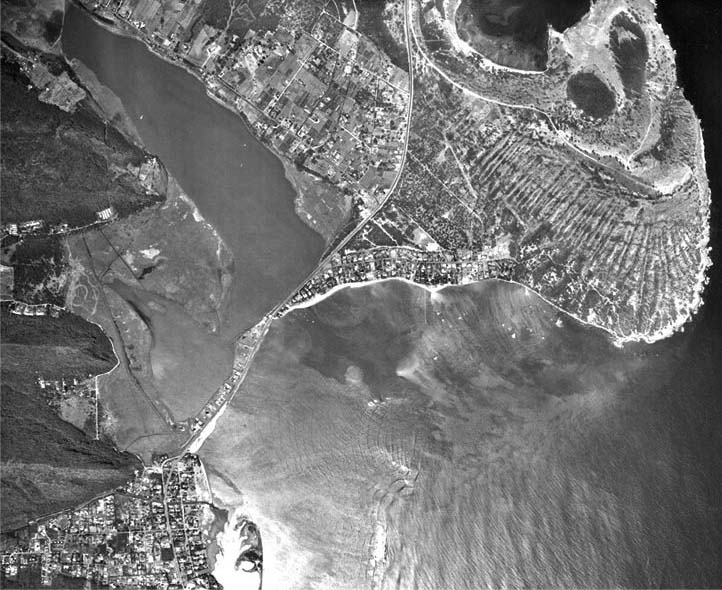
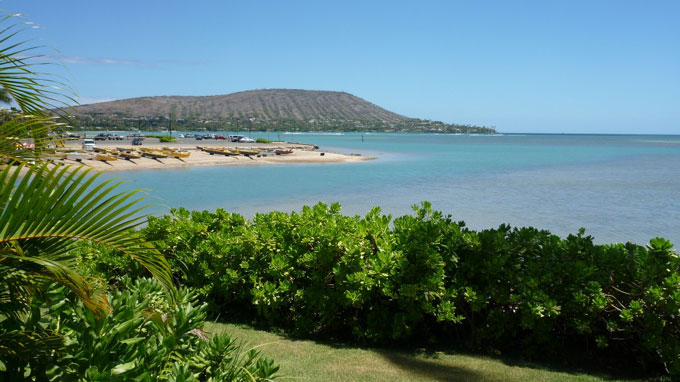
A favorite anchorage on Oʻahu for Portlock was at Maunalua Bay (which Portlock named King George’s Bay). He named the Waikiki area (Diamond Head to Honolulu) Queen Charlotte’s Bay.

The East point of the Maunalua Bay (Koko Head) Portlock named Point Dick, “in honour of Sir John Dick, the first patron of this voyage,”) and the West point (Diamond Head) that Portlock named “Point Rose, after George Rose Esq. secretary of the treasury, the second worthy patron of our undertaking.” (Portlock)

Portlock also mentioned what is probably Kuapā Pond that he described as, “a little salt water river that has a communication with King George’s Bay.”

Portlock wrote about the early challenges of getting fresh drinking water in the region as they “found that we could not water at this place without an infinite deal of trouble …”

“… besides the danger of losing our casks, getting the boats dashed to pieces against the rocks, and the inconvenience of carrying our casks so far amongst a multitude of Indians, which would make it necessary to have an armed force on shore.”

“Towards evening the surgeon returned on board with the convalescents, and informed me, that the inhabitants had behaved in a very quiet inoffensive manner, though they were rather incommoded by the multitudes which curiosity brought about them.”

“By this time all our water from the ground tier was got to hand, and the cables coiled down. The inhabitants now brought us water in such plenty, that by noon on the 4th all our empty casks were filled”.

He noted, “As good water in any quantity may be procured at this island with the greatest facility for small nails and buttons, it undoubtedly must be the safest and most expeditious method any person can adopt who may chance to touch here, to barter for their water in the manner we did.” (Portlock)

“No chiefs of consequence paid us a visit as yet: the inferior chiefs indeed came on board without any scruple, and some of them slept with us every night. Amongst rest I had a daily visit from an old priest, who always brought by way of present, a small pig, and a branch of the cocoa-nut·tree.” (Portlock)

Maunalua was thought to be well-populated in ancient times. Maunalua was known for its offshore fishing resources, a large fishpond, and sweet potato cultivation. Taro was farmed in wet areas, sweet potato was grown in the drier regions and a series of fishing villages lined the coast. (McElroy) Part of that area now carries the Portlock name.

© 2021 Hoʻokuleana LLC

Filed Under: Prominent People, Sailing, Shipping & Shipwrecks, Economy Tagged With: Portlock, Nathaniel Portlock, Maunalua, Hawaii, Kamehameha Schools, Oahu, Captain Cook, Leahi, Diamond Head, Maunalua Bay

November 2, 2021 by Peter T Young Leave a Comment

Fifteen Days in the Islands

In January, 1778, Captain Cook was travelling from Christmas Island (“As we kept our Christmas here, I called this discovery Christmas Island” (Cook,)) heading across the north Pacific to the Oregon coast of North America, he wasn’t looking for Hawai‘i.

“On the 2d of January, at day-break, we weighed anchor (at Christmas Island,) and resumed our course to the north; having fine weather, and a gentle breeze at east, and east-south-east …”

“We continued to see birds every day … sometimes in greater numbers than others; and between the latitude of 10° and 11% we saw several turtle.”

“All these are looked upon us signs of the vicinity of land.”

“However, we discovered none till day-break, in the morning of the 18th, when an island made its appearance, bearing northeast by east (O‘ahu;) and, soon after, we saw more land bearing north (Kauai,) and entirely detached from the former. Both had the appearance of being high land.”

“On the 19th, at sunrise, the island first seen, bore east several leagues distant. This being directly to windward, which prevented our getting near it, I stood for the other, which we could reach; and not long after discovered a third island (Ni‘ihau) in the direction of west north-west, as far distant as land could be seen.”

“We had now a fine breeze at east by north; and I steered for the east end of the second island ; which at noon extended from north, half east, to west northwest, a quarter west, the nearest part being about two leagues distant.”

“At this time, we were in some doubt whether or no the land before us was inhabited; but this doubt was soon cleared up, by seeing some canoes coming off from the shore, toward the ships.”

“I immediately brought-to, to give them time to join us.” … Contact.

“They had from three to six men each; and, on their approach, we were agreeably surprised to find, that they spoke the language of Otaheite, and of the other islands we had lately visited. It required but very little address, to get them to come alongside ; but no intreaties could prevail upon any of them to come on board.”

“I tied some brass medals to a rope, and gave them to those in one of the canoes, who, in return, tied some small mackerel to the rope as an equivalent.”

“This was repeated; and some small nails, or bits of iron, which they valued more than any other article, were given them. For these they exchanged more fish, and a sweet potatoe; a sure sign that they had some notion of bartering; or, at least, of returning one present for another.”

“Seeing no signs of an anchoring place at this eastern extreme of the island, I bore away to leeward, and ranged along the south east side, at the distance of half a league from the shore.”

“As soon as we made sail, the canoes left us; but others came off, as we proceeded along the coast, bringing with them roasting pigs, and some very fine potatoes, which they exchanged, as the others had done, for whatever was offered to them.”

“Several small pigs were purchased for a sixpenny nail; so that we again found ourselves in a land of plenty; and just at the time when the turtle, which we had so fortunately procured at Christmas Island, were nearly expended.”

For the next 15-days, Cook and his crew effectively took the time to barter for provisions – water and food.

“The very instant I leaped on shore, the collected body of the natives all fell flat upon their faces, and remained in that very humble posture, till, by expressive signs, I prevailed upon them to rise.”

“They then brought a great many small pigs, which they presented to me, with plantain-trees, using much the same ceremonies that we had seen practised, on such occasions, at the Society and other islands …”

“… and a long prayer being spoken by a single person, in which others of the assembly sometimes joined. I expressed my acceptance of their proffered friendship, by giving them, in return, such presents as I had brought with me from the ship for that purpose.”

“As soon as we landed, a trade was set on foot for hogs and potatoes, which the people of the island gave us in exchange for nails and pieces of iron, formed into something like chisels.”

“We met with no obstruction in watering; on the contrary, the natives assisted our men in rolling the casks to and from the pool; and readily performed whatever we ‘required.”

Cook was concerned about his men infecting the Hawaiian women with venereal disease, “(The women) would as readily have favoured us with their company on board as the men; but I wished to prevent all connection, which might, too probably, convey an irreparable injury to themselves, and through their means, to the whole nation.”

“Another necessary precaution was taken, by strictly enjoining, that no person, known to be capable of propagating the infection, should be sent upon duty out of the ships … I had been equally attentive to the same object, when I first visited the Friendly Islands; yet I afterward found, with real concern, that I had not succeeded.”

“(A)bout seven o’clock in the evening the anchor of the Resolution started, and she drove off the bank. As we had a whole cable out, it was some time before the anchor was at the bows; and then we had the launch to hoist up alongside, before we could make sail.”

“By this unlucky accident, we found ourselves, at daybreak next morning, three leagues to the leeward of our last station; and foreseeing that it would require more time to recover it than I chose to spend, I made the signal for the Discovery to weigh and join us.”

“This was done about noon; and we immediately stood away to the northward, in prosecution of our voyage.”

“Thus, after spending more time about these islands than was necessary to have answered all our purposes, we were obliged to leave them before we had completed our water and got from them such a quantity of refreshments as their inhabitants were both able and willing to have supplied us with.”

“But, as it was, our ship procured from them provisions, sufficient for three weeks at least; and Captain Clerke, more fortunate than us, got of their vegetable productions, a supply that lasted his people upward of two months.” The Discovery and Resolution left Hawai‘i on February 2, 1778.

© 2021 Hoʻokuleana LLC

An Inland View of Atooi-Webber

Filed Under: General, Ali'i / Chiefs / Governance, Place Names, Prominent People, Sailing, Shipping & Shipwrecks Tagged With: Oahu, Captain Cook, Resolution, Kauai, Discovery, Contact, Hawaii

  • « Previous Page
  • 1
  • …
  • 23
  • 24
  • 25
  • 26
  • 27
  • …
  • 52
  • Next Page »

Images of Old Hawaiʻi

People, places, and events in Hawaiʻi’s past come alive through text and media in “Images of Old Hawaiʻi.” These posts are informal historic summaries presented for personal, non-commercial, and educational purposes.

Info@Hookuleana.com

Connect with Us

  • Email
  • Facebook
  • LinkedIn
  • Twitter
  • YouTube

Recent Posts

  • Kiribati
  • “Great and Good Friend”
  • Nonopapa Landing
  • Johnny Naumu
  • Grace Stevens
  • Kapihe’s Prophecy
  • Math’s Life Lessons

Categories

  • Schools
  • Sailing, Shipping & Shipwrecks
  • Economy
  • Voyage of the Thaddeus
  • Mayflower Summaries
  • American Revolution
  • General
  • Ali'i / Chiefs / Governance
  • Buildings
  • Missionaries / Churches / Religious Buildings
  • Hawaiian Traditions
  • Military
  • Place Names
  • Prominent People

Tags

Albatross Al Capone Ane Keohokalole Archibald Campbell Bernice Pauahi Bishop Charles Reed Bishop Downtown Honolulu Eruption Founder's Day George Patton Great Wall of Kuakini Green Sea Turtle Hawaii Hawaii Island Hermes Hilo Holoikauaua Honolulu Isaac Davis James Robinson Kamae Kamaeokalani Kameeiamoku Kamehameha Schools Lalani Village Lava Flow Lelia Byrd Liberty Ship Liliuokalani Mao Math Mauna Loa Midway Monk Seal Northwestern Hawaiian Islands Oahu Papahanaumokuakea Marine National Monument Pearl Pualani Mossman Quartette Thomas Jaggar Volcano Waikiki Wake Wisdom

Hoʻokuleana LLC

Hoʻokuleana LLC is a Planning and Consulting firm assisting property owners with Land Use Planning efforts, including Environmental Review, Entitlement Process, Permitting, Community Outreach, etc. We are uniquely positioned to assist you in a variety of needs.

Info@Hookuleana.com

Copyright © 2012-2024 Peter T Young, Hoʻokuleana LLC


Loading Comments...