Images of Old Hawaiʻi

  • Home
  • About
  • Categories
    • Ali’i / Chiefs / Governance
    • American Protestant Mission
    • Buildings
    • Collections
    • Economy
    • Missionaries / Churches / Religious Buildings
    • General
    • Hawaiian Traditions
    • Other Summaries
    • Mayflower Summaries
    • Mayflower Full Summaries
    • Military
    • Place Names
    • Prominent People
    • Schools
    • Sailing, Shipping & Shipwrecks
    • Voyage of the Thaddeus
  • Collections
  • Contact
  • Follow

December 29, 2023 by Peter T Young Leave a Comment

Kūpikipikiʻō

An eruption from a vent southeast of Lēʻahi (Diamond Head) poured dense lava into the sea to build a headland. The Hawaiians called it Kūpikipikiʻō (rough (sea) or agitated (wind or storm)) because of its turbulent waters.

The waves attack the headland directly, but the shore on either side of it is protected by a reef. (MacDonald)  The black lava that formed there prompted its modern name, Black Point.

When Kamehameha and his warriors made their attack in Oʻahu in 1795, they landed from Waikīkī to Maunalua – right in this area.  More than 100-years later, around 1901, one of Black Point’s first houses was built by developer Fred Harrison.  (Star-Bulletin)

In January 1905, President Teddy Roosevelt instructed Secretary of War William H. Taft to convene the National Coast Defense Board (Taft Board) “to consider and report upon the coast defenses of the United States and the insular possessions (including Hawai‘i.)”

Based on recommendation of the Secretary of War, on January 18, 1906, President Teddy Roosevelt signed Executive Order 395-A, setting aside public lands at Kūpikipikiʻo Point for military purposes.

“From Kūpikipikiʻo Point to Waipiʻo Peninsula the line of defense is to be strengthened with field fortifications, batteries and searchlights, and as soon as the money becomes available the dirt will begin to fly and the concrete to take form, under the supervision of the army engineers.”  (Star-Bulletin, February 4, 1914)

Fort Ruger Military Reservation was established at Lēʻahi in 1906.  The Reservation was named in honor of Major General Thomas H Ruger, who served from 1871 to 1876 as the superintendent of the United States Military Academy at West Point.

The fort included Battery Harlow (1910-1943); Battery Birkhimer (1916-1943); Battery Granger Adams (1935-1946); Battery Dodge (1915-1925); Battery Mills (1916-1925); Battery 407 (1944); Battery Hulings (1915-1925) and Battery Ruger (1937-1943.)

Battery Mills was built on a 3-acre tract in the Kūpikipikiʻo Point Reservation.   Battery Mills was not technically part of Fort Ruger, but was administered by it.  The battery was armed with two 5-inch Seacoast guns.

There was a reinforced magazine for munitions, a plotting room/command bunker and an underground power room which had a generator. Those guns were later eliminated from the Army’s inventory, so the Battery was decommissioned.

Battery Granger Adams (1933 and 1935) replaced Battery Mills and consisted of two 8-inch railway guns on either side of a protected powder and shell magazine, along with a Commander’s Station and power room (it was felt that there was still a need for a gun battery at that location – it was later decommissioned in 1946.)

The conclusion of World War II and the advent of nuclear and missile warfare made the coastal batteries obsolete. Thus, in December 1955 the majority of the land was turned over to the State of Hawai‘i.

Nearby Kaʻalāwai Beach lies at the base of Diamond Head’s eastern slope, between Kuilei Cliff Beach Park (“lei stringing”) to the west and Black Point to the east.

Kaʻalāwai (“the watery rock”) is a narrow, white-sand beach with a shallow reef offshore, which makes for generally poor swimming conditions. There are only a few scattered pockets of sand on the nearshore ocean bottom.

Freshwater bubbles up between the rocks of the reef. The beach is mainly used by surfers, who paddle out to the surf spot called Brown’s, which is located just behind the reef.

An old Beach Road fronted the Kaʻalāwai oceanfront properties.  In 1959, owners of the abutting properties claimed the ownership of the old beach road; after a series of lawsuits, many of them obtained declaratory judgments which allowed them to buy the road right-of-way.

At the east end of the beach near Black Point is Shangri-La, a mansion turned museum, built by Doris Duke, the daughter of James Buchanan Duke, the founder of the American Tobacco Company, and her husband, James Cromwell, in 1937.

Upon her father’s death, Doris Duke received large bequests from her father’s will when she turned 21, 25, and 30; she was sometimes referred to as the “world’s richest girl.”

In the late 1930s, Doris Duke built her Honolulu home, Shangri La, on 5-acres overlooking the Pacific Ocean and Diamond Head.  Shangri La incorporates architectural features from the Islamic world and houses Duke’s extensive collection of Islamic art, which she assembled for nearly 60 years.

Today, Shangri La is open for guided, small group tours and educational programs. In partnership with the Doris Duke Foundation for Islamic Art – which owns and supports Shangri La – the Honolulu Museum of Art serves as the orientation center for Shangri La tours.

To get to Kaʻalāwai Beach and Cromwell’s Cove take Diamond Head Road east and turn right on Kulamanu Street and park curbside.  The beach access is at the end of Kulamanu Place.

A later building boom by the wealthy turned Black Point into one of the world’s most exclusive and expensive community.

© 2023 Hoʻokuleana LLC

Filed Under: General, Buildings, Place Names, Economy Tagged With: Diamond Head, Shangri La, Doris Duke, Kaalawai, Kupikipikio, Fort Ruger, Black Point, Hawaii, Oahu, Leahi

December 27, 2023 by Peter T Young Leave a Comment

Suiter Field

In 1779, Captain Cook explored the North Kohala area and noted:  “The country, as far as the eye could reach, seemed fruitful and well inhabited … (3 to 4-miles inland, plantations of taro and potatoes and wauke are) neatly set out in rows.”

“The walls that separate them are made of the loose burnt stone, which are got in clearing the ground; and being entirely concealed by sugar-canes planted close on each side, make the most beautiful fences that can be conceived …”  (Cook Journal)

Fast forward 150-years to a property in this area within two traditional Hawaiian ahupuaʻa (land divisions.) The eastern half of the property is located within the ahupuaʻa of Kealahewa (wrong way) and the western half is located within the ahupuaʻa of Opihipau (opihi (limpets) all gone.)  The property was used by the Hawi Mill and Plantation Company in its sugar operations.

Later, on June 25, 1927, an Executive Order set aside nearly 38-acres of the property for an airplane landing field for the US Air Service to be under the management and control of the War Department.

The airfield is about three miles northwest of the town of Hawi on the northern tip of the coast of the Big Island of Hawaiʻi.  In 1933, the Army named it Suiter Field, in honor of 1st Lieutenant Wilbur C Suiter who was killed in action serving in 135th Aero Squadron.

Suiter was posthumously issued the Distinguished Service Cross and Silver Star Citation for extraordinary heroism in action.  He and his observer (Guy E Morse) fearlessly volunteered for the perilous mission of locating the enemy’s advance unit in the rear of the Hindenburg line.

Disregarding the hail of machine gun fire and bursting anti-aircraft shell, they invaded the enemy territory at a low altitude and accomplished his mission, securing information of the greatest importance.

They at once returned to the lines and undertook another reconnaissance mission, from which they failed to return.  (Morse Field, the military’s air field that was once at South Point was named after 2nd Lieutenant Guy E Morse.)

Suiter Field was first licensed in 1928.  It was also alternatively referred to as Upolu Point Military Reservation, Upolu Landing Field, Upolu Airplane Landing Field and Upolu Airport.

In the early days of aviation in Hawaiʻi, the US Signal Corps maintained a communication station at Suiter Field.  Inter-Island Airways (later known as Hawaiian Air,) which began passenger service in 1929, used the field as an emergency stop on its route to Hilo, as well as to provide air service to the district of Kohala.

On June 26, 1929, Governor’s Executive Order No. 363 added 57-acres to Upolu Airplane Landing Field to be under the control and management of the War Department.  Shortly thereafter, December 16, 1929, the Territorial Aeronautics Commission sought to have the property returned to the Territory for the Upolu aeroplane landing field.

In January 1930, the War Department granted the Territory concurrent use of the Army landing field for official and commercial aviation use.  Within 7-months later, about 97-percent of the land was restored to the Territory.  A couple of months later, about 95 acres were dedicated to establish the Upolu Airport under control of the Territory.

Upolu field was grass on a sandy soil and partially graded.  The Army maintained a barracks and radio station at the field on Federal property. The Upolu Point Airport consisted of one large runway in the shape of an hour glass 3,500 feet long.

Before the bombing of Pearl Harbor on December 7, 1941, a contract had been let and work was ready to start on the new airport – the war stopped that.

During World War II, the Navy occupied Upolu Airport establishing a weather and communication station there.  The facility was used as an auxiliary field to the Naval Air Station, Hilo, for field-carrier-landing practice and other training of carrier pilots.

The Upolu Point Military Reservation included facilities for naval purposes and for the operation and maintenance of military airplanes and airships. These facilities included a 150-foot-wide by 4,000-foot long surfaced runway, an aircraft parking area, a catapult deck, administration buildings, personnel quarters and a bunch of support buildings.

A simulated deck of an aircraft carrier was installed and air-group pilots completed their training by qualifying in day and night deck landings before going aboard the carriers for combat duty.  From July 1944 to May 1947 the facility was used exclusively for naval and other military purposes.

Upolu Airport was returned to the Territory after the war, and air service was provided by scheduled and non-scheduled operators.  Buildings formerly occupied by the Navy were rehabilitated for use as a terminal and for other purposes.

It was used for a time by Inter-Island Airways, Ltd. for small Sikorsky amphibians, but could not be used for large aircraft.  A 1946 Master Plan for Upolu included a 4,000 foot by 150 foot runway.  By 1948, the paved runway was 4,000 feet in length and Upolu was the only airport in that part of the island which met the requirements for scheduled airline operation.

Hawaiian Airlines was the principal user of the airport and made one stop a day en route from Honolulu to Hilo, and one stop en route from Hilo to Honolulu.

A new Master Plan was completed in March 1999. The airfield included a single runway (7-25), taxiway and an aircraft parking apron.  Runway 7-25 was 3,800 feet long and 75 feet wide and aligned in an east-northeast to west-southwest direction.

There has been no scheduled commuter service at the airport since 1986.  There are no cargo facilities at Upolu Airport, no control tower, and no aircraft rescue and firefighting facilities (nor fuel storage facility.)  There are only infrequent aircraft at Upolu Airport; airport management is under the Kona International Airport manager.  (Lots of info here from hawaii-gov.)

© 2023 Hoʻokuleana LLC

Filed Under: Economy, Military Tagged With: Hawi, Suiter Field, Upolu Airport, Upolu Point, Hawaii, Hawaii Island, Kohala, North Kohala

December 22, 2023 by Peter T Young Leave a Comment

Honolulu Harbor in the Early Years of Young Brothers

In January 1900, Herb and Will Young started Young Brothers. They purchased a small launch, the Billy, and made a business running lines for the ships, delivering foodstuffs to the crews, and ferrying passengers. They were joined in October by their younger brother, Jack Young.

“Honolulu, which for so many years had served sailing vessels with rowboats and native canoes, was quick to take up the power launch, and we went in and out of the harbor with passengers, meat, mail and the Customs men.”

“The Honolulu waterfront of thirty years ago was known throughout the Pacific. Ships from around the Horn were loaded with general merchandise, railroad and sugar mill supplies; the vessels from California had live stock on the decks and were full of farm produce from the Coast; ships from Newcastle, Australia, held cargoes of coal for the sugar plantations.”

“Here they would discharge their cargoes, and take full loads of sugar for California, or around the Horn to Delaware Water Gap.”

“The finest ships afloat came into Honolulu, everything from the trimmest bark to the full-rigged ships. There were not enough loading wharves for them all, and many were forced to anchor in Rotten Row inside the harbor until their turn came.”

“Sailors coming ashore always had a payroll. They went to live in boarding houses until putting out to sea again, and invariably demanded and got advance wages, always spent before they left.”

“The town, of perhaps ten thousand, was always active. Rum and gin and whiskey flowed freely. Native liquors were as popular with many as whole shiploads of gin from Holland.”

“Kanaka women could drink the gin down just like water, and frequently did. The square-bodied gin bottle was as well known on the waterfront wharves as the brown-skinned Kanakas, and cases of gin would be stacked as high as the wharf roofs.”

“The boarding-house men saw to it that sailors were kept supplied with liquor, so that by the time their shore leave was up a fine bill held them ashore as hostages. Captains cordially hated the boarding-house keepers, for when sailing time came, blood money at so much per head was the only sure way to retrieve their sailors, drunk or sober.”

“Our tug, loaded with outward bound crews, made short work of delivering its hilarious cargo to the ships, where, in a few hours, the men would wake with big heads. But a fair wind soon blew the cobwebs out of their brains.”

“Young Brothers’ Boathouse, where we lived, near the harbor entrance, was the center of information along the waterfront. From this point of vantage, everything going in or out, or approaching, was seen by those of us on duty at the Boathouse.”

“Two or three launchmen and a couple of deckhands were sure to be found about the place besides ourselves, and we were on twenty-four-hour service with the Customs people and Immigration Service.”

“In front were moored our boats, the Fun, the Billy, the Brothers and the Huki Huki. Alongside was warped the Water Witch, a fifty-footer used for Customs work. This boat, brought down by Archie Young, for whom we went to work at first on Oahu, is still in service after thirty-two strenuous years.”

“Before the advent of radio, it was our six-inch telescope atop the lookout on the Boathouse which kept the harbor informed of incoming steamers as far away as Pearl Harbor.”

“From the first, our telephone was constantly ringing; the newspapers, hotel guests, Customs men, wanting information of every sort.”

“While we were carrying on our various waterfront activities, delivering supplies to all ships at anchor every day we had an opportunity of making friends with all the captains who came to Honolulu, and slowly became a part of the life of the harbor.”

Then, “A change had come over the firm of Young Brothers”.

“Herb, independent and capable, had been involved in so many differences of opinion that he found it best suited to his own interests and those of the business to get out. He went to California, becoming associated with the growing tuna fishing industry around San Diego, where he was captain of the big power schooner Elsinore for eight or ten years.”

“Honolulu by this time was no longer the town of our early days, and Big Business was making itself felt even in the towboat business.”

“Young Brothers was incorporated [1913], and for the first time someone outside the family directed activities. As there seemed to be no immediate need for me among my old associates, I began to cast about for an opportunity to realize my hopes that shark hides could be made commercially useful.”

Will preferred to pursue his fascination with sharks and eventually left the islands for good in 1921 to become a well-known international shark hunter.

William left Young Brothers in the hands of Jack, the last founding member of the company to remain in Hawai‘i. (Lots of information here is from William Young’s book Shark Shark, Young Brothers: 100 Years of Service, and a Young family background and genealogy.)

© 2023 Ho‘okuleana LLC

Filed Under: Economy, General, Place Names, Prominent People, Sailing, Shipping & Shipwrecks Tagged With: Edgar Young, William Young, Herbert Young, Hawaii, Jack Young, Young Brothers, Honolulu Harbor

December 18, 2023 by Peter T Young Leave a Comment

Shoreline Certifications – Some Interesting Issues

In prior posts, I previously discussed some aspects of shorelines and their impact on shoreline access and shoreline hardening (i.e. seawalls and revetments.)
 
Today, I want to bring up an interesting quirk about shoreline certifications – the impact of ancient fishponds and other artificial structures on certifying where a “shoreline” should be.
 
Remember, shorelines are “certified” for County setback purposes; they do not determine ownership. They serve as points of reference in determining where improvements may be placed on coastal property.
 
When the State surveyor is satisfied with the location of the shoreline, after reviewing the public comments, the maps and photos prepared by the private surveyor and site inspection, he forwards the shoreline maps to the Chairperson of DLNR, for final review and approval.
 
When I was Chair at DLNR, I signed each of the maps and certified the shorelines.
 
Certified shorelines also serve as managerial and jurisdictional dividing lines. Issues mauka of the certified shoreline fall under the County jurisdiction (zoning, SMA and setback regulations;) lands makai of the line are under control of the State (and are automatically “conservation”.)
 
Consistent with the overarching purpose behind shoreline certifications, certified shorelines sometimes deviate from the CZMA definition (HRS §205A-1) of “shoreline.”
 
Example where “shoreline” is makai of boundary line: State law (HRS §205A-42(a)) provides that where legally constructed artificial structures are involved, the shoreline is certified not at the upper reaches of the wash of the waves, but, instead at the “interface between the shoreline and the structure,” i.e., at the seaward edge of the artificial structure.
 
“Artificial structures” include such things as seawalls, piers, boat ramps, groins, revetments and harbor facilities. When such structures are placed on state lands with the State’s permission and consent, but are for private use, the State charges the private user for the use of state lands.
 
Thus, even though the certified shoreline may be makai of the artificial structure, the State’s property boundary, as acknowledged by the State and the private user, is somewhere mauka of the certified shoreline.
 
Example where “shoreline” is mauka of boundary line: On the other end of the spectrum, the lands makai of the upper reaches of the wash of the waves are not always the property of the State.
 
Some coastal fishponds, although on submerged lands makai of the upper reaches of the wash of the waves, are privately owned. Nevertheless, the certified shoreline is at the natural shore and not the artificial wall of the fishpond.
 
Hawai’i Administrative Rule §13-222-16(7) states: “Where an artificial wall seaward of the natural shore is used to create a fishpond, the shoreline shall be at the natural shore and not at the artificial outer wall.”
 
That is because the existence of a coastal fishpond does not alter the rationale for not allowing developments too close to the coast. In these cases, therefore, the certified shoreline is mauka of the property boundary line.
 
To illustrate this, I am using a Google Earth image of the coastal area from our old neighborhood on Kaneohe Bay, where I grew up as a kid. There is a former fishpond fronting some of the lots.
 
In the image, the parcel boundaries are shown; note the boundary line (blue arrow) of the parcels goes out to the end of the seawall of the old fishpond.
 
The “shoreline” in this case, would be along the coast (white arrow,) rather than at the fishpond wall.
 
(BTW, this image also shows the two properties that I grew up in on Kaneohe Bay; both houses that I grew up in have been replaced.)
 
© 2023 Ho‘okuleana LLC

Filed Under: Economy, General Tagged With: Shoreline, Certified Shoreline, Hawaii, DLNR, Fishpond

December 17, 2023 by Peter T Young 1 Comment

Queen’s Surf

“Hamohamo is justly considered to be the most life-giving and healthy district in the whole extent of the island of Oʻahu; there is something unexplainable and peculiar in the atmosphere of that place, which seldom fails to bring back the glow of health to the patient, no matter from what disease suffering.” (Queen Liliʻuokalani)

The Queen “derived much amusement, as well as pleasure: for as the sun shines on the evil and the good, and the rain falls on the just and the unjust, I have not felt called upon to limit the enjoyment of my beach and shade-trees to any party in politics … While in exile it has ever been a pleasant thought to me that my people, in spite of differences of opinions, are enjoying together the free use of my seashore home.”

Because of her nearby homes, they called the coastal area in this part of Waikīkī Queen’s Surf Beach.

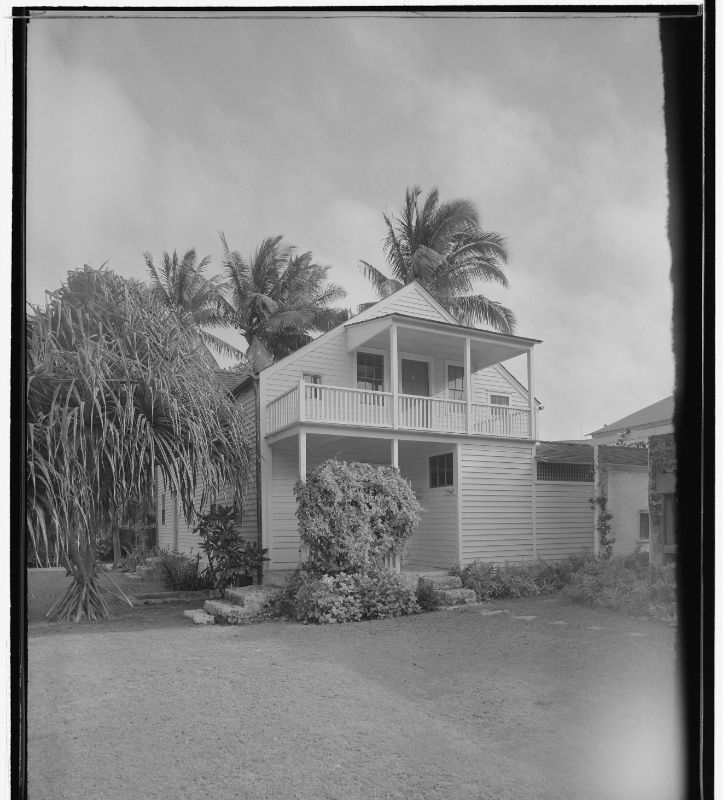
In 1914, Mr & Mrs WK Seering of the International Harvester Co in Illinois built a home there.  A couple decades later, Fleischman’s Yeast heir, Mr CR Holmes, bought the home (he also had other Hawaiʻi property, including Coconut Island in Kāneʻohe Bay.) (ilind)

During WWII, the house was used for military retreats and other military uses.  Admiral Nimitz, General Douglas McArthur and staffs spent time there.

After World War II (and following Holmes’ death,) the City & County of Honolulu bought the property and leased it to the Spencecliff Corporation restaurant chain; it became their flagship property and operated it as the hugely popular Queen’s Surf Restaurant and Nightclub.

Sterling Edwin Kilohana Mossman (February 3, 1920 to February 21, 1986) headlined at its upstairs Barefoot Bar.  A man as versatile as he was talented, literally led a double life. A detective with the Honolulu Police Department during the day, after dark he was one of Hawaiʻi’s most popular entertainers. His diversified careers earned him the nickname “Hula Cop”. (TerritorialAirwaves)

The Barefoot Bar was ground zero for this new brand of local comedy. Mossman was the ringleader, along with the likes of Lucky Luck, a zany radio personality, and Kent Bowman, known as KK Kaumanua.  They told stories, sang songs and, when a celebrity from the Mainland happened to come by (and they did a lot), they became part of the show.  (HonoluluMagazine)

Mossman sang and did comedy and included a lot of others in the evening’s entertainment.  The footprints of many of these Island and internationally known entertainers lined the stairway up to the second floor bar.

For a while, downstairs, at the Surf Lanai, Kuiokalani (Kui) Lee sang for the crowds – inside and out of the restaurant.  During the day, the beach was crowded with sun bathers; at night it was full of Island residents listening in on Kui Lee’s long list of local favorites (he’d turn to the ocean and sing a final song to the folks on the beach.)

Born in Shanghai, China, the third child and only son of Hawaiian entertainers Billy and Ethel Lee, Kui Lee was a prolific songwriter.  Folks like Don Ho, Elvis, Tony Bennett and Andy Williams recorded and performed his songs: “I’ll Remember You,” “One Paddle, Two Paddle”, “She’s Gone Again”, “No Other Song”, “If I Had To Do It All Over Again”, “Yes, It’s You”, “Rain, Rain Go Away”, “Get On Home”, “The Days Of My Youth” and “Lahainaluna.”

“Kui was very brash, very positive about his songs,” said Kimo McVay, owner of Duke Kahanamoku’s nightclub from 1961 to ’71 and manager/promoter of Don Ho from 1963 to ’66. “He gave them to Don, and Don, of course, made them hits. When Don became a star because of that material, a national star, that’s what launched Kui. And Kui became the star of Queen’s Surf.” (star-bulletin)

Here is Kui Lee singing Days of My Youth (a reminder for me of growing up in the Islands, and the one time I was able to sit on the beach and listen to Kui Lee perform – unfortunately, Kui Lee died of cancer at the age of 34 in 1966.)  Click HERE for a YouTube for one of Kui Lee’s songs.

Queen’s surf also offered a regular lūʻau on the property.

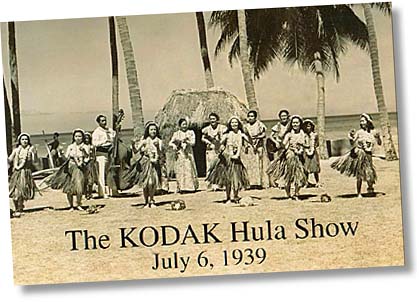
The stories vary on the cause, but later there was a lease dispute with the City and the Queen’s Surf and the neighboring Kodak Hula Show were evicted, the Queen’s Surf was torn down (1971) and the Waikīkī beachfront area was turned into a public park.

© 2023 Hoʻokuleana LLC


Filed Under: Economy, Buildings Tagged With: Oahu, Queen Liliuokalani, Spencecliff, Hamohamo, Queen's Surf, Hawaii, Waikiki

  • « Previous Page
  • 1
  • …
  • 58
  • 59
  • 60
  • 61
  • 62
  • …
  • 238
  • Next Page »

Images of Old Hawaiʻi

People, places, and events in Hawaiʻi’s past come alive through text and media in “Images of Old Hawaiʻi.” These posts are informal historic summaries presented for personal, non-commercial, and educational purposes.

Info@Hookuleana.com

Connect with Us

  • Email
  • Facebook
  • LinkedIn
  • Twitter
  • YouTube

Recent Posts

  • Likelike
  • Possibly the Last Human Sacrifice
  • Piggly Wiggly
  • About 250 Years Ago … Shot Heard Round the World
  • The 5th Gate
  • James Walker Austin
  • Hoʻomana Naʻauao

Categories

  • Sailing, Shipping & Shipwrecks
  • Economy
  • Voyage of the Thaddeus
  • Mayflower Summaries
  • American Revolution
  • General
  • Ali'i / Chiefs / Governance
  • Buildings
  • Missionaries / Churches / Religious Buildings
  • Hawaiian Traditions
  • Military
  • Place Names
  • Prominent People
  • Schools

Tags

Albatross Al Capone Ane Keohokalole Archibald Campbell Bernice Pauahi Bishop Charles Reed Bishop Downtown Honolulu Eruption Founder's Day George Patton Great Wall of Kuakini Green Sea Turtle Hawaii Hawaii Island Hermes Hilo Holoikauaua Honolulu Isaac Davis James Robinson Kamae Kamaeokalani Kameeiamoku Kamehameha Schools Lalani Village Lava Flow Lelia Byrd Liberty Ship Liliuokalani Mao Math Mauna Loa Midway Monk Seal Northwestern Hawaiian Islands Oahu Papahanaumokuakea Marine National Monument Pearl Pualani Mossman Quartette Thomas Jaggar Volcano Waikiki Wake Wisdom

Hoʻokuleana LLC

Hoʻokuleana LLC is a Planning and Consulting firm assisting property owners with Land Use Planning efforts, including Environmental Review, Entitlement Process, Permitting, Community Outreach, etc. We are uniquely positioned to assist you in a variety of needs.

Info@Hookuleana.com

Copyright © 2012-2024 Peter T Young, Hoʻokuleana LLC


Loading Comments...