Images of Old Hawaiʻi

  • Home
  • About
  • Categories
    • Ali’i / Chiefs / Governance
    • American Protestant Mission
    • Buildings
    • Collections
    • Economy
    • Missionaries / Churches / Religious Buildings
    • General
    • Hawaiian Traditions
    • Other Summaries
    • Mayflower Summaries
    • Mayflower Full Summaries
    • Military
    • Place Names
    • Prominent People
    • Schools
    • Sailing, Shipping & Shipwrecks
    • Voyage of the Thaddeus
  • Collections
  • Contact
  • Follow

March 21, 2023 by Peter T Young 2 Comments

Shaka

“Shaka” is not a Hawaiian word (it’s not clear when or how it came into use) – but it is believed it started as a Hawaiian hand gesture and has grown to universal acceptance.

It has many meanings

Originally it means to “hang loose”, or to chill and be laid back. It can be used as a positive reinforcement. If somebody did something good, cool, or righteous, you can give them a shaka as a sign of approval or praise. It can also be used as a welcome/goodbye sign.

Most people would give the shaka as a sign of howzit, wassup or hello, use it as a way of saying goodbye, and even use it as a thank you.  (UrbanDictionary)

Most point to Hamana Kalili (June 18, 1882 – December 17, 1958) as its originator.

In 1985, 550 people signed a petition giving credit to Hamana Kalili, a big man on Lāʻie beach and in the Mormon Church during the 1920s and 1930s. Kalili was a folk hero — fisherman, tug of war champion and hukilau organizer of the community.  (Krauss)

Beatrice Ayer Patton (Mrs. George S Patton – Patton was stationed on Oʻahu during the mid-1920s) described Kalili as “a magnificent example of the pure Hawaiian. A man in his sixties, with white hair and a deeply carven face, he had the body and reactions of a teenager.”

“He lived and fished on the windward side of the island. … We went to several luaus … they were the real thing”.  (Patton-Totten)

When fellow Mormons in Lāʻie planned a hukilau to raise funds to replace their chapel that had burned down, they turned to Kalili, a renowned fisherman, for help; Kalili supplied the nets for fishing.  He also portrayed King Kamehameha during the entertainment portion of the hukilau.

To make a simple Shaka: make a fist (not a tight fist;) extend both your pinky and your thumb and lightly shake your hand.  (The Shaka sign resembles the American Sign Language letter for Y.)  There are multiple variations on the finger extension, speed of shake, etc.

Kalili’s Shaka didn’t start this way.

Prior to 1937, Hamana Kalili had lost his second, third and fourth fingers of one hand in an accident. 

Kalili’s grandnephew Vonn Logan explained that Kalili’s job was to feed sugar cane into the rollers at the sugar mill, which would squeeze out the juice. He lost his fingers when his hand got caught in the rollers.  (Star-Bulletin)

“..he had lost three fingers on his hand.  So, you know since we were making fun of him, but we would wave to him … (gestures waving with three middle fingers folded down) And we folded our fingers on our hand to show what his hand look like.”

“And we would wave to him, and he would wave back at us.  And we would laugh, because he would wave back to us without his fingers. … he was always like a father to us in the community.”  (Roland Maʻiola “Ahi” Logan; Kepa Maly)

“One of his jobs was to keep all the kids off the train.  All the kids would try to jump the train to ride from town to town. So they started signaling each other. Since (Kalili) lost his fingers, the perfect signal was what we have now as the ‘shaka sign.’ That’s how you signaled the way was clear.”  (Logan; Star-Bulletin)

In the late 60s. we put a lot of effort, and was able to convince Mayor Fasi and other people about the ‘shaka’ sign.  And Mayor Fasi took it upon himself to declare that Hamana Kalili was the originator.  And we were all in the Mayor Fasi’s office to take credit for my granduncle.”  (Logan; Maly)

A local car salesman, David “Lippy” Espinda, picked up on the Shaka sign and used it and his pidgin language in his TV commercials.   He emceed his own show, “Lippy’s Lanai Theater.”

Much sought after as a benefit auctioneer and banquet speaker, he appeared in “Hawaii Five-O” and “Brady Bunch” segments and had minor parts in some movies.

“Shaka, Brah,” was his trademark and he popularized the “Shaka” sign.  (Star-Bulletin)

Politicians used the “Shaka,” as well.  Frank Fasi used it while campaigning for Mayor of Honolulu in the mid-seventies.

In a 1999 Star-Bulletin interview, Fasi credited the late Bill Pacheco with using the sign and saying “shaka brother.”  “I think he meant shake it up, buddy. How’s it going? Aloha. Have a good day. All those good meanings. It just meant a world of goodness”.

© 2023 Hoʻokuleana LLC

Filed Under: General, Hawaiian Traditions, Prominent People Tagged With: Hawaii, Oahu, Laie, Shaka, Lippy Espinda, Hamana Kalili

March 11, 2023 by Peter T Young Leave a Comment

Kānāwai Māmalahoe (Law of the Splintered Paddle)

In old Hawai‘i, people knew their place in life; some were born to be ali‘i (chiefs,) others were maka‘āinana (commoners.)
 
Each followed protocols, traditions and kapu.
 
The Ali‘i were descended from the gods and had strong mana (spiritual power.)
 
Maka‘āinana were workers (farmers, fishers, crafters and laborers.)
 
Even though kapu and traditions guided people on how to behave, sometimes innocent people got caught in the middle of feuding chiefs.
 
A story suggests that on one occasion, Kamehameha I was fighting in Puna.
 
While chasing two fishermen (presumably with the intention to kill them), his leg was caught in the reef and, in defense, one of the fisherman hit him on the head with a paddle, which broke into pieces.
 
Kamehameha was able to escape (because the fisherman fled, rather than finishing him off.)
 
The story continues that Kamehameha learned from this experience and saw that it was wrong to misuse power by attacking innocent people.
 
Years later, Kamehameha summoned the two fishermen.  When they came, he pardoned them and admitted his mistake by proclaiming a new law, Kānāwai Māmalahoe – Law of the Splintered Paddle.
 
The original 1797 law:
 
Kānāwai Māmalahoe (in Hawaiian:):
 
E nā kānaka,
E mālama ‘oukou i ke akua
A e mālama ho‘i ke kanaka nui a me kanaka iki;
E hele ka ‘elemakule, ka luahine, a me ke kama
A moe i ke ala
‘A‘ohe mea nāna e ho‘opilikia.
Hewa nō, make.
 
Law of the Splintered Paddle (English translation:)
 
Oh people,
Honor thy gods;
Respect alike [the rights of]
People both great and humble;
See to it that our aged,
Our women and our children
Lie down to sleep by the roadside
Without fear of harm.
Disobey, and die.
 
Kamehameha’s Law of the Splintered Paddle of 1797 is enshrined in the State constitution, Article 9, Section 10:
 
“Let every elderly person, woman and child lie by the roadside in safety”.
 
It has become a model for modern human rights law regarding the treatment of civilians and other non-combatants.
 
Kānāwai Māmalahoe appears as a symbol of crossed paddles in the center of the badge of the Honolulu Police Department.
 
A plaque, facing mauka on the Kamehameha Statue outside Ali‘iōlani Hale in Honolulu, notes the Law of the Splintered Paddle (it is the image noted here.)
 
© 2023 Ho‘okuleana LLC
 

Filed Under: Ali'i / Chiefs / Governance, Hawaiian Traditions Tagged With: Kamehameha, Law of the Splintered Paddle, Kanawai Mamalahoe, Hawaii

March 8, 2023 by Peter T Young Leave a Comment

Naha Stone

The legend of King Arthur (Le Morte Darthur, Middle French for “the Death of Arthur” (published in 1485)) speaks of King Arthur, Guinevere, Lancelot and the Knights of the Round Table (and foresees “Whoso pulleth out this sword of this stone is the rightwise born king of all England.”)

Many tried; many failed.

Legendary Arthur later became the king of England when he removes the fated sword from the stone. Legendary Arthur goes on to win many battles due to his military prowess and Merlin’s counsel; he then consolidates his kingdom.  (The historical basis for the King Arthur legend has long been debated by scholars.)

In Hawaiʻi, a couple legends and prophecies relate to a stone, Naha Pōhaku (the Naha Stone.)

Its weight is estimated to be two and one-half tons (5,000-pounds.)  The stone was originally located in the Wailua River, Kauai; it was brought to Hilo by chief Makaliʻinuikualawaiea on his double canoe and placed in front of Pinao Heiau.  (NPS)

The stone was reportedly endowed with great powers and had the peculiar property of being able to determine the legitimacy of all who claimed to be of the royal blood of the Naha rank (the product of half-blood sibling unions.)

As soon as a boy of Naha stock was born, he was brought to the Naha Stone and was laid upon it – one faint cry would bring him shame.  However, if the infant had the virtue of silence, he would be declared by the kahuna to be of true Naha descent, a royal prince by right and destined to become a brave and fearless soldier and a leader of his fellow men.  (NPS)

In another instance, Kamehameha traveled from Kohala to Hilo with Kalaniwahine a prophetess, who advised him that there was a deed he must do.  Although not of Naha lineage, Kamehameha came to conquer the Naha Stone.

Kalaniwahine proclaimed that if he succeeded in moving Naha Pōhaku, that he would move the whole group of Islands. If he changed the foundations of Naha Pōhaku from its resting place, he would conquer the whole group and he would prosper and his people would prosper.

Kamehameha said, “He Naha oe, a he Naha hoi kou mea e neeu ai. He Niau-pio hoi wau, ao ka Niau-pio hoi o ka Wao.” (”You are a Naha, and it will be a Naha who will move you. I am a Niaupio, the Niaupio of the Forest.”)

With these words did Kamehameha put his shoulders up to the Naha Stone, and flipped it over, being this was a stone that could not be moved by five men.  (Hoku o Hawaiʻi, November 1, 1927)

When Kamehameha gripped the stone and leaned over it, he leaned, great strength came into him, and he struggled yet more fiercely, so that the blood burst from his eyes and from the tips of his fingers, and the earth trembled with the might of his struggling, so that they who stood by believed that an earthquake came to his assistance.  (NPS)

The stone moved and he raised it on its side.

And, the rest of the history of the Islands has been pretty clear about the fulfillment of the prophecy and unification of the Islands under Kamehameha.

The Naha Stone is in front of Hilo Public Library at 300 Waiānuenue Avenue between Ululani and Kapiʻolani Street (the larger of the two stones there.)

The upright stone sitting to the makai side of the Naha Stone is associated with the Pinao Heiau, one of several that once stood in Hilo. Some of the stones that built the first Saint Joseph church and other early stone buildings in town likely came from Pinao heiau.  (Zane)

© 2023 Hoʻokuleana LLC

Filed Under: Ali'i / Chiefs / Governance, Hawaiian Traditions Tagged With: Hawaii, Hawaii Island, Hilo, Kamehameha, Pinao Heiau, Naha Stone

March 7, 2023 by Peter T Young Leave a Comment

Kumukahi

Mai ka hikina a ka Ia i
Kumukahi a ka welona a ka Iā i Lehua.

From the sunrise at Kumukahi to
the fading sunlight at Lehua.

From sunrise to sunset. Kumukahi, in Puna, Hawai‘i, was called the land of the sunrise and Lehua, the land of the sunset. This saying also refers to a life span-from birth to death.  (Pukui, #258)

Kumukahi is a place of importance and a place of healing. Practitioners of la‘au lapa‘au often prayed to Kumukahi and his brother Palamoa as “deities of healing” when gathering and applying traditional Hawaiian herbal medicine. These practitioners would face the Hikina (East) and chant their prayers at sunrise from where ever they were living in the islands. (Lopes)

Kumukahi is translated as the ‘beginning/first source, chief, or teacher,’ in reference to the “first source” of wisdom, knowledge or of knowing.

This is because of its location in relation to the sun, Kānehoalani (an akua who is, in one story, Pele’s father) and what the sun represents, as the easternmost point of Hawaiʻi.

It is the beginning of our collective consciousness as people of Hawaiʻi, which establishes Kumukahi as a wahi pana (living and celebrated place) and a wahi moʻolelo (a storied place). (Hawai‘i County)

Kumukahi was also noted as a “leina a ka uhane,” a place where the soul of a person would leap from this world into the next after death. (Lopes)

Kumukahi was named for a migratory hero from Kahiki (Tahiti) who stopped here and who is represented by a red stone. Two of his wives, also in the form of stones, manipulated the seasons by pushing the sun back and forth between them. One of the wives was named Ha‘eha‘e. Sun worshipers brought their sick to be healed here. (Pukui)

In some accounts, Kumukahi is a kolea bird and is referred to as “the messenger of the gods.” According to Pukui, Kumukahi was the name of a “kanaka aiwaiwa,” a divine being who loved sports, especially holua sledding.

For this reason Pele, the akua wahine of the volcano, was fond of him. Kumukahi often produced sporting events in which his people participated. Pele often joined in on these particular festivities in the form of an attractive woman.

However, on one such occasion, Pele, disguised as an old woman, requested to participate and was denied. In her anger, she chased Kumukahi to the sea where she covered him with her lava. (Lopes)

At the tip of Cape Kumukahi were a number of stone cairns, built of the rough lava from the surrounding flow, which are said to have been built by the various monarchs of the Hawaiian kingdom upon assuming the throne. Some reference them as Ki‘i Pōhaku Ali‘i – King’s Pillars.

In 1823, William Ellis and members of the ABCFM toured the island of Hawai‘i seeking out community centers in which to establish church centers for the growing Protestant mission.

Settlement patterns in Puna tend to be dispersed and without major population centers. Villages in Puna tended to be spread out over larger areas and often are inland, and away from the coast, where the soil is better for agriculture.  (Escott)

This was confirmed on William Ellis’ travel around the island in the early 1800s, “Hitherto we had travelled close to the sea-shore, in order to visit the most populous villages in the districts through which we had passed.”

“But here receiving information that we should find more inhabitants a few miles inland, than nearer the sea, we thought it best to direct our course towards the mountains.”  (Ellis, 1823)

Ellis noted, “The population of this part of Puna, though somewhat numerous, did not appear to possess the means of subsistence in any great variety or abundance; and we have often been surprised to find the desolate coasts more thickly inhabited than some of the fertile tracts in the interior …”

“… a circumstance we can only account for, by supposing that the facilities which the former afford for fishing, induce the natives to prefer them as places of abode; for they find that where the coast is low, the adjacent water is generally shallow.”

When the Lighthouse Board assumed control of Hawai‘i’s lighthouses in 1904, it began work on a plan to erect major lights to better mark approaches to the islands. Funds for Makapu‘u Lighthouse were secured in 1906, money for Molokai lighthouse was obtained in 1907, and Congress made an appropriation for Kilauea Point Lighthouse in 1908.

These aids to navigation were seen as “material benefit to the business .community, to shipping interests, insurance interests and mercantile interests. … [T]he next one we have recommended is for a first order light at Cape Kumukahi, the easternmost point on the Island of Hawaii.”  (PCA, Nov 4, 1908)

“There is at present no landfall light for vessels bound to Hawaii by way of Cape Horn. Several vessels have within recent years gone ashore on Kumukahi Point. This is the first land sighted by vessels from the southward and eastward.”

“The shipping from these directions now merits consideration, and with the improvement of business at Hilo the necessity for a landfall light on this cape grows more urgent. It is estimated that a light at this point can be established for not exceeding $75,000, and the Board recommends that an appropriation of this amount be made therefor.” (Report of the Lighthouse Board, 1908)

On December 31, 1928, the US government purchased fifty-eight acres on Cape Kumukahi from the Hawaiian Trust Company for the sum of $500. During the following year, a thirty-two-foot wooden tower capped with an automatic acetylene gas light was built at the cape for local use.  It was replaced in 1933 by a 125-foot pyramidical galvanized steel tower. (Lighthouse Friends)

“Life was peaceful for several years along the Puna coastline until a lava flow threatened Kapoho in 1955. [Kumukahi lightkeeper Joe] Pestrella stayed at his post to watch over the lighthouse as the lava advanced.” 

“The following year, he received the “Civil Servant of the Year” award from the U.S. Coast Guard for his bravery in staying at his post. At the time, Ludwig Wedemeyer, leader of the Hilo Coast Guard station, noted it was the first time a Hawai‘i Island resident had received such an award from the Coast Guard.” (Laitinen)

On January 12, 1960, over 1,000 earthquakes were recorded near Kapoho Village, just above Kumukahi. The earthquakes grew in size and frequency, creating large fractures along the Kapoho Fault overnight.  The 1960 Kīlauea eruption began on the night of January 13.

For the first two weeks, Kapoho village remained virtually intact except for a blanket of pumice and ash that covered everything. The lava flow issuing from the growing cinder cone was moving in the opposite direction of town.

Things changed on January 27th when very fluid lava poured from the vents and fed massive ‘a‘ā flows that moved southwestward through the streets of town. By midnight, most of Kapoho had been destroyed.

By January 28, lava destroyed Coast Guard residences near Cape Kumukahi, but the lighthouse was spared. The Koa‘e Village fell victim to lava flow progression, losing the community hall, a local church and one residence.  The eruption stopped February 19. (USGS)

“After the 1960 eruption ended, an electric line was run from Kapoho Beach Lots to the lighthouse to restore power, and the light became automated. Joe was transferred to a lighthouse on O‘ahu, and when he retired in 1963, he was the last civilian lighthouse keeper in Hawai‘i.”  (Laitinen)

With prevailing NW trade winds and nothing between it and the America continents, except thousands of miles of open ocean, Kumukahi has some of the cleanest air in the Northern Hemisphere.

The Kumukahi light tower is also used as a monitoring station to test air quality. Since 1993, scientists have been taking ambient air samples every week for chemical analysis.

The long-term data records supplied by these samples are fundamental to understanding changes in atmospheric composition of gases affecting stratospheric ozone, climate and air quality, and provide an avenue to detect unexpected changes in these chemicals.

The 2018 eruptions interrupted the sampling efforts and NOAA scientists have undertaken novel development of an uncrewed aircraft system (UAS) “hexacopter” that will enable the lab to not only recommence a long-standing mission that was recently forced to halt, but paves the way toward enhanced operations in the future.  (NOAA)

© 2023 Ho‘okuleana LLC

Filed Under: Hawaiian Traditions, Place Names, Economy Tagged With: Hawaii, Hawaii Island, Cape Kumukahi, Kumukahi

March 6, 2023 by Peter T Young Leave a Comment

Six Main Styles of Hawaiian Fishponds

A fishpond symbolized a rich ahupua‘a (major land division), which reflected favorably on the ali‘i as well as on the people living in the ahupua‘a.

There are two general types of fishponds, saltwater and freshwater, with six main styles. The style of fishponds constructed is closely related to the topographical features of an area.

The salinity of the water served as an important element determining type of construction as well as what types of food that could be raised and their level of productivity.

The six main styles of fishponds as identified by Kikuchi include: Loko Kuapā, Loko Pu‘uone, Loko Wai, Loko I‘a Kalo, Loko ‘Ume‘iki and Kāheka / Hāpunapuna.

The first three types of coastal fishponds – Loko Kuapā, Loko Pu‘uone, and Loko Wai – belonged to royalty. These ponds, between 10 and 100 acres in size, were considered a symbol of high social and economic status.

Loko Kuapā

A fishpond of littoral water whose side or sides facing the sea consist of a stone or coral wall usually containing one or more sluice grates.

Loko kuapā (Figure 1, Type 1) were strictly coastal fishponds whose characteristic feature was a kuapā (seawall) of lava or coral rubble. They were usually built over a reef flat, with the wall extending out from two points on the coast in an enclosed semicircle.

These ponds usually had one or two ‘auwai (channels) that were used mainly for water flushing or inflow, depending on the rising and ebbing of the tides, but were also used during harvesting and stocking.

Loko kuapā, because they were enclosed reef flats, had all the marine aquatic sea life that would be expected to be found on a reef flat including kala, palani, and manini.

Less common fish sometimes found in these fishponds were the kāhala, kumu, moano, weke ula, uhu, various species of hīnālea, surgeonfish, crevally, goatfish, and even puhi.

Loko Pu‘uone

An isolated shore fishpond usually formed by the development of barrier beaches building a single, elongated sand ridge parallel to the coast and containing one or more ditches and sluice grates.

Loko pu‘uone contained mostly brackish water, with inputs from both freshwater and saltwater sources.  Fresh water from streams, artesian springs, and percolation from adjacent aquifers was mixed with seawater that entered through channels during incoming tides.

This mixing produced a highly productive estuarine environment. The most characteristic feature of this type of fishpond was a sandbar, coastal reef structure, or two close edges of landmass that could be connected to enclose a body of water.

Typical of these ponds were fish that were able to handle fluctuations of salinity. These fish include ‘ama‘ama, awa, āholehole, pāpio or ulua, ‘ō‘io, nehu, awa ‘aua, ‘o‘opu, kaku, moi, and weke.

Loko Wai

An inland freshwater fishpond which is usually either a natural lake or swamp, which can contain ditches connected to a river, stream, or the sea, and which can contain sluice grates.

It was typically made from a natural depression, lake, or pool whose water was mainly from diverted streams, natural groundwater springs, or percolation from an aquifer. Various ‘o‘opu were commonly found in these ponds.

Loko I‘a Kalo

An inland fishpond utilizing irrigated taro plots.  These “kalo fishponds” combined aquaculture with flooded agriculture. Kalo lo‘i were used to raise ‘o‘opu, ‘ama‘ama, and āholehole.

Research has suggested that diversion of stream runoff for the irrigation of kalo eventually led to fish aquaculture. Irrigated agriculture in lo‘i was enhanced by including fish (loko i‘a kalo), and this led to pure fishpond aquaculture  – loko pu‘uone.

Loko ‘Ume‘iki

Loko ‘ume iki were not actually fishponds but rather fish traps. Like the loko kuapā, they were constructed on a reef flat, but loko ‘ume iki had “fish lanes,” corridors used to net or trap fish going onto or off the reef.

Each loko ‘ume iki had many fish lanes with fishing rights usually assigned to a family. The traps operated without the use of gates and relied on natural movements of fish.

The lanes were usually tapered, with the wide end facing either inward or outward, and anywhere from 10 to 40 feet long.

Kāheka and Hāpunapuna

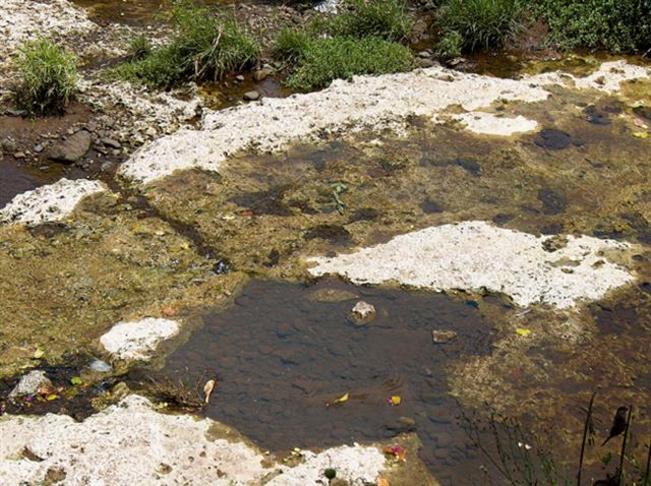
A natural pool or holding pond.  These fishponds are also referred to as anchialine ponds. They have no surface connection to the sea, contain brackish water and show tidal rhythms. Many have naturally occurring shrimp and mollusks.

Most Hawaiian anchialine ponds are in the youngest lava areas of the Big Island of Hawaiʻi and Maui. They exist in inland lava depressions near the shore and contain brackish (a mixture of freshwater and saltwater) water.

Freshwater is fed to the ponds from ground water that moves downslope and from rainwater. Ocean water seeps into the ponds through underground crevices in the surrounding lava rock.  (Lots of information here is from DLNR and Farber.)

© 2023 Ho‘okuleana LLC

Filed Under: Ali'i / Chiefs / Governance, Hawaiian Traditions Tagged With: Loko Umeiki, Kaheka, Hapunapuna, Hawaii, Fishpond, Loko Puuone, Loko Kuapa, Loko Wai, Loko Ia Kalo

  • « Previous Page
  • 1
  • …
  • 32
  • 33
  • 34
  • 35
  • 36
  • …
  • 101
  • Next Page »

Images of Old Hawaiʻi

People, places, and events in Hawaiʻi’s past come alive through text and media in “Images of Old Hawaiʻi.” These posts are informal historic summaries presented for personal, non-commercial, and educational purposes.

Info@Hookuleana.com

Connect with Us

  • Email
  • Facebook
  • LinkedIn
  • Twitter
  • YouTube

Recent Posts

  • James Walker Austin
  • Hoʻomana Naʻauao
  • Jack Roosevelt Robinson
  • Plantation Camps
  • Voyaging … and Returning
  • Three Rivers
  • Laupāhoehoe

Categories

  • Mayflower Summaries
  • American Revolution
  • General
  • Ali'i / Chiefs / Governance
  • Buildings
  • Missionaries / Churches / Religious Buildings
  • Hawaiian Traditions
  • Military
  • Place Names
  • Prominent People
  • Schools
  • Sailing, Shipping & Shipwrecks
  • Economy
  • Voyage of the Thaddeus

Tags

Albatross Al Capone Ane Keohokalole Archibald Campbell Bernice Pauahi Bishop Charles Reed Bishop Downtown Honolulu Eruption Founder's Day George Patton Great Wall of Kuakini Green Sea Turtle Hawaii Hawaii Island Hermes Hilo Holoikauaua Honolulu Isaac Davis James Robinson Kamae Kamaeokalani Kameeiamoku Kamehameha Schools Lalani Village Lava Flow Lelia Byrd Liberty Ship Liliuokalani Mao Math Mauna Loa Midway Monk Seal Northwestern Hawaiian Islands Oahu Papahanaumokuakea Marine National Monument Pearl Pualani Mossman Quartette Thomas Jaggar Volcano Waikiki Wake Wisdom

Hoʻokuleana LLC

Hoʻokuleana LLC is a Planning and Consulting firm assisting property owners with Land Use Planning efforts, including Environmental Review, Entitlement Process, Permitting, Community Outreach, etc. We are uniquely positioned to assist you in a variety of needs.

Info@Hookuleana.com

Copyright © 2012-2024 Peter T Young, Hoʻokuleana LLC


Loading Comments...