Images of Old Hawaiʻi

  • Home
  • About
  • Categories
    • Ali’i / Chiefs / Governance
    • American Protestant Mission
    • Buildings
    • Collections
    • Economy
    • Missionaries / Churches / Religious Buildings
    • General
    • Hawaiian Traditions
    • Other Summaries
    • Mayflower Summaries
    • Mayflower Full Summaries
    • Military
    • Place Names
    • Prominent People
    • Schools
    • Sailing, Shipping & Shipwrecks
    • Voyage of the Thaddeus
  • Collections
  • Contact
  • Follow

October 31, 2021 by Peter T Young 12 Comments

Kona Inn

During the 1920s, the Waikīkī landscape was transformed when the construction of the Ala Wai Drainage Canal, begun in 1921 and completed in 1928, resulted in 625-acres of wetland being drained and filled. With the San Souci, Moana and Royal Hawaiian in place, more hotel construction followed.

Except for Waikīkī, Hawaiʻi was largely undeveloped for tourism, other than small places like the Big Island’s Volcano House, which started to welcome guests in 1866.

In order for the Islands to attract even greater numbers of visitors, it was obvious that the neighbor islands would have to provide accommodations comparable to those on Oʻahu. (Allen)

With several smaller business-oriented hotels downtown Honolulu and spotted across the neighbor islands, on November 1, 1928, the Kona Inn in Kailua-Kona, the first neighbor island visitor-oriented resort hotel, opened with great fanfare. (Hibbard, Schmitt)

The Inter-Island Steam Navigation Co originally intended to build the Kona Inn on the site of Huliheʻe Palace. The idea was met with considerable opposition and the Territory bought the Palace and the company erected its new hotel on a 4-acre parcel adjoining the former Royal Residence. (Hibbard)

A reported Star-Bulletin editorial noted on February 7, 1928, “The land of the first Kamehameha; the land which cradled the old Federation of the Hawaiian Islands; the storied land where an English ship’s captain was worshipped before natives found him human and slew him there, is to be opened at last to the comfort-loving tourists of the world. Soon after the completion of the hotel, the territory will have cause to be grateful to the foresight and enterprise of Inter-Island.”

When it opened, a description noted that “every room is equipped with connecting bath and toilet or connecting shower and toilet with hot and cold water.” (Shared facilities disappeared from most hotels soon after World War II.) (Schmitt)

Like many of the other early visitor-oriented accommodations, it was owned by a transportation company, Inter-Island Steam Navigation Company, under the guidance of Stanley Kennedy. In part, hotels served to increase their passenger load revenues.

He informed the newspapers, “We have the Volcano House in the Kilauea locality, and our new hotel in the Kona district on the end of the island makes an ideal (automobile) stopping place, to say nothing of the historical interest.”

This institutionalized tourism in Kona. It was an example of a ‘pioneer hotel;’ it was built at high standards and became an attraction in its own right and became “the spot in all Hawaiʻi where you can utterly, completely relax in surroundings of modern comfort.” (Thrum, Butler)

But the decision to build a visitor resort there was not without its cynics; numerous skeptics suggested it as “Kennedy’s Folly.”

They were wrong; it was a success.

Kona, and the Kona Inn, offered the opportunity for visitors to experience the “Kona Way of Life” – ambiance at almost a spiritual level. It became known as “a place to get a quiet rest amid soothing tropic surroundings but if you feel a bit lively one can find plenty to do.” (DeVisNorton, Butler)

Within two years, designer CW Dickey prepared plans to double its size. With that, the Advertiser reportedly noted, “It is expected that Kona Inn will have a capacity to accommodate even the heaviest weeks of travel. Since its opening, Kona Inn has proved to be a valuable asset to Inter-Island and the addition is a result of continuous patronage of tourists and local people.” (Hibbard)

The early success of the Kona Inn was short lived; like other businesses across the Islands and the continent, the Great Depression and then World War II decimated the operations at the Kona Inn. It was two-decades before any major hotels were built; however, after the war, recovery accelerated at an unimaginable and spectacular pace. (Hibbard)

In the late-1940s, Inter-Island Steam Navigation Co became the target of a federal anti-trust suit. The government won its case and broke the company into four companies: Inter-Island Steam, Overseas Terminals, Hawaiian Airlines and Inter-Island Resorts. (GardenIsland)

In the early-1950s, Walter D Child Sr became a director of Inter-Island Resorts, Ltd and later acquired the controlling interest in the company.

Child first came to the Islands in the early-1920s and worked with the Hawaiʻi Sugar Planters Association. Following a decade at HSPA, he left sugar and entered the visitor industry, first acquiring and operating the Blaisdell Hotel in downtown Honolulu in 1938; then, he formed a Hui and purchased the Naniloa in Hilo.

The fortunes of the company rose along with the growth in the visitor industry, and Inter-Island Resorts began to grow into a chain, starting with the Naniloa, the Kona Inn and the Kaua‘i Inn (at Kalapaki Beach.) In those early days of Hawai‘i tourism, Inter-Island Resorts became a pioneer in selling accommodations on the neighbor islands. (hawaii-edu)

When Walter Sr. suffered a debilitating stroke in 1955, Dudley Child succeeded his father as president, at age 26. Dudley was no stranger to the visitor industry; at age seven, he was running switch boards and elevators and later studied hotel management at Cornell University.

Dudley’s first big move came on July 1, 1960 with the opening of the Kauai Surf on beachfront property on Kalapakī Beach. Child at the time called the Surf a “whole new philosophy in Neighbor Island hotels.” This led to the Islands-wide “Surf Resorts” joining the Kona Inn under the Inter-Island banner. (The company later opened the Kona Surf (Keauhou) in 1960 and the Maui Surf (Kāʻanapali Beach in 1971.) In 1971, the company formed the “Islander Inns,” in a 3-way partnership of Inter-Island Resorts, Continental Airlines and Finance Factors.)

In the mid-1970s, growing competition from the big hotel chains affected their business; direct flights to Hilo from the continent stopped, killed the occupancy rates at the Naniloa; later, a United Airlines strike sent Islands-wide occupancy levels plummeting; an economic downturn added to the woes. The high-leveraged Inter-Island Resorts had to sell.

In 1976, the Kona Inn, forerunner to the Inter-Island chain, was sold and overnight guest accommodations were stopped; it was converted into a shopping center in 1980. Chris Hemmeter bought the Maui and Kauai Surf resorts; ultimately, piece by piece, all properties were sold. (All photos in this album are from Hawaiʻi State Archives and are all from the 1930s.)

© 2022 Hoʻokuleana LLC

Filed Under: Buildings, Prominent People, Economy Tagged With: Inter-Island Steam Navigation, Hulihee Palace, Hawaiian Airlines, Inter-Island Resorts, Dudley Child, Big Island, Surf Resorts, Naniloa, Hawaii, Kona Inn, Hawaii Island, Kona

October 5, 2021 by Peter T Young 2 Comments

Kalama Beach Park

“Hardware is one of the best businesses there is. I like that line, I was brought up in it. Axes and hammers don’t go out of style like so many other things.” This quotation was published in the Rocky Mountain News in April of 1934, when Charles Boettcher’s business enterprises had turned him into a national figure.

Charles was born into the hardware business; his parents, Frederick and Susanna Boettcher, ran a hardware store in Kolleda, Germany. When Charles finished Gymnasium (secondary school) his parents sent him to America to visit his older brother Herman, who was working in a hardware store in Cheyenne, Wyoming.

Once in America, Charles admired the western landscapes and was soon working alongside Herman at Hoyer & Company Hardware. As a fringe benefit, he was allowed to sleep under the store counter. Charles figured out early that he was better off saving his money than spending it foolishly in the town saloons.

Charles as his partner, and in the summer of 1871 the brothers acquired another new store, this time in Evans, Colorado, just four miles from Greeley. Less than a year later, Charles moved to the new agricultural colony, Fort Collins. In Fort Collins, Charles met and married Fannie Augusta Cowan.

During their first year of marriage the couple moved south, to Boulder, where Charles opened the first hardware store in his own name. The Boulder store was so prosperous that Charles was able to build a large new building at 12th and Pearl, in the young town’s central commercial district (it’s still there).

By the end of the 1880s Charles Boettcher owned multiple hardware businesses and had his hand in mining, electricity, ranching, and banking.

In 1892, two years after the Boettchers moved to Denver, Henry C. Brown, along with two partners, Maxcy Tabor and William Bush, turned a triangular cow pasture at Seventeenth and Champa into the finest hotel in the West, the Brown Palace.  Unfortunately for the partners, only a year after construction was complete the Silver Panic of 1893 hit.

In 1922, Horace Bennett and his associates, including Charles Boettcher, purchased the still-struggling hotel. After the crash of 1929, Bennett was forced to liquidate his interest, and Charles and Claude Boettcher became the hotel’s sole proprietors.

In the 1890s his interests would grow to include a meat packing company, a railroad, and Capitol Life Insurance. He started Colorado’s first sugar beet factory and formed Great Western Sugar.

The second generation of Colorado pioneers came of age in the 1890s. Claude graduated from Harvard and returned to

Denver and dedicated himself to expanding his father’s enterprises.

In 1908, Denver witnessed the completion of its first reinforced concrete building at the corner of Seventeenth and Champa, built by Charles Boettcher to promote the use of cement.

After two decades of progress Ideal Cement had plants all over the West and the cement industry had led Charles and his son Claude into a variety of other industries, most importantly, potash. After Charles’ death, Ideal merged with Potash of America and became Ideal Basic Industries.

As Claude’s only child, Charles Boettcher II grew up with all the advantages wealth brings. After completing his education, Charles too returned to Denver and began participating in the management of the family’s empire.

Charles II became a partner in Boettcher & Company in the 1920s, was involved in the Ideal Cement Company, and eventually inherited most of the offices formerly held by his father and grandfather at many Boettcher enterprises.

Then, one evening in 1933 (occurring the year after the Lindbergh kidnapping), Charles II and his wife, Anna Lou Boettcher, returned home from a dinner party and were accosted in their garage.

Charles II was held at gunpoint while another man passed a ransom note to Mrs. Boettcher. The kidnappers then sped away with

Charles II.  Charles II was held for two weeks while Claude tried to make contact with the kidnappers. After Claude paid the $60,000 ransom, Charles was released.  (Boettcher Foundation)

Needless to say, it was unsettling for everyone in the family. Apparently Charles and his wife, Mae, then started looking for a place that was far away from and far different than their surroundings in Denver.

So in 1935 they found the property in Hawaii – 4 acres of prime land on Kailua Beach. It was to be their get-away-from-it-all vacation home. (Cheever)

Charles II commissioned Vladimir Ossipoff to build him a house; it was designed by Ossipoff and built by contractor M. Kiuchi.  (HHF)

Ossipoff came to Hawaii in late 1932. The Russian-born architect was educated at the University of California at Berkeley and had worked in San Francisco prior to moving to Hawaii.

Ossipoff started his architectural career in the islands as the head of the Home Building Department of Theo H. Davies. He also worked in architect C.W. Dickey’s office prior to starting his own practice in 1936.

Ossipoff’s work is characterized by its mixture of Hawaiian influenced design and more modern trends, such as the ranch style of house for domestic commissions. (National Register)

The one-story house has a distinctive steeply-pitched, cross-hip, “Hawaiian-style” roof, covered with shakes. The building’s U-shaped plan wraps around an in-set lanai supported by coral stone columns. The open side of the U faces the mountains, protecting the lanai from the prevailing onshore winds.

The home’s design combines many elements of indoor/outdoor living associated with the architecture of Hawaii during this period. The bath and dressing rooms open directly to the exterior, and the large lanai has a fireplace. (HHF)

The Boettcher family lived in Colorado and came to Hawaii for their holidays. During World War II, the family opened their home to the US Navy to use as Officers’ Quarters for the Waves. (National Register)

In September 1978 the City and County of Honolulu acquired the property for use as a park. It is now the central structure in the Kalama Beach Park.

© 2021 Hoʻokuleana LLC

Filed Under: Buildings, Place Names, Prominent People

April 30, 2020 by Peter T Young Leave a Comment

The Beaver Block

Hudson’s Bay Company (HBC) was a fur trading company that started in Canada in 1670; its first century of operation found HBC firmly focused in a few forts and posts around the shores of James and Hudson Bays, Central Canada.

Fast forward 150-years and in 1821, it merged with North West Company, its competitor; the resulting enterprise then spanned the continent – all the way to the Pacific Northwest (modern-day Oregon, Washington and British Columbia) and the North (Alaska, the Yukon and the Northwest Territories.)

On January 21, 1829 the Hudson’s Bay Company schooner ‘Cadboro’ arrived at Honolulu from Fort Vancouver. While the HBC fur trade focused furs of beavers, sea otters, seals and other animals from the Pacific Northwest Coast and Alaska to be sold in China in exchange for tea, silks, porcelain and other Chinese goods, their interest in Hawaiʻi was to sell lumber and other goods, not furs.

When the Hudson’s Bay Company entered the Hawaiian scene in 1829, Honolulu had already become a significant Pacific port of call and major provisioning station for trans-Pacific travelers.

The earliest location of the Agency in Honolulu was on the north side of Nuʻuanu Street (between King and Merchant Streets,) where it occupied a two-story, shingle-sided building.

“The premises were named “Aienui,” meaning “great debt,” perhaps in reference to the Company’s liberal policy of granting credit on reasonable security, such as was and still is granted to the Indians on their prospective winter catch.” (The Beaver, June 1930)

In 1846 the Agency moved to a new site closer and more convenient to the waterfront at the corner of Fort and Queen Streets. They had a two-story coral building with slate roof, fronting on Queen Street, and one-story storage building along Fort Street.

Thereafter, the location of their establishment became known as the “Beaver Block,” named after the HBC ‘mascot’ (and primary economic resource,) the beaver.

As the year 1859 started, Pacific whaling entered its decline, HBC’s competition in the importation of goods increased. Janion Green and Co (forerunner of Theo H Davies), Hackfeld and Co (forerunner of Amfac,) C Brewer, and Castle and Cooke (the beginnings of the Big Five) were established firms.

Instructed to wind up affairs in 1860, the last Company representative left Honolulu in March 1861. The Company’s old Fort and Queen business site, however, continued to be known as the Beaver Block. Other businesses moved into the premises.

Twenty years passed, during them, Lunalilo ascended to the throne and died within a year; his estate took control of the property and their trustees sold it to James Campbell. In 1882, Campbell built a new building and put the old iron beaver weathervane of the Hudson’s Bay Company on its roof – affirming the Beaver Block tradition.

“Thousands of Honolulans who pass up and down Fort Street and visit the wharves have probably never lifted their eyes high enough on such trips to notice on the Makai-Waikiki cornice of the Campbell block at Fort and Queen Streets a weather-beaten weather vane, with the letter “N” missing from that particular arm and to notice that the vane itself resembles a well-known forest and stream animal…. It took a visitor from Winnipeg, Canada, to notice that the animal was a beaver …” (Advertiser, March 31, 1930; The Beaver)

Beaver Block was a large building that included uses such as storage, shops and offices that stretched along Fort Street and Queen. That year, Campbell, who owned the adjacent land (fronting Fort and Merchant Streets) built the “Campbell Block,” a similarly-large building that included uses such as storage, shops and offices.

“The activity of building, throughout Honolulu and its suburbs, continues. That in the business portion of the city gives it the most substantial aspect of any years undertaking, the most prominent of which is the Campbell Block, extending from the Bank premises on Merchant street around onto Fort street to join the Beaver Block …. In the buildings that have been constructed a more lavish style is observed, and ornamentation externally and internally is now the rule rather than the exception, both in business houses and private dwellings.” (Hawaiian Almanac and Annual, 1884)

The first elevators in Hawai‘i were installed in the early 1880s. One was in the Beaver Block, a two-story structure at Fort and Queen Streets, completed in 1882. (The elevator was replaced by an electric elevator.)

Another pioneering elevator was located near the front of a two-story brick building occupied by Wing Wo Chan & Co., on Nu‘uanu Avenue between King and Merchant Streets. This structure was lost in the 1886 Chinatown fire.) (Hawaiian Historical Society)

A notable Beaver Block tenant was GW MacFarlane & Co, shipping and general wholesale merchants. George W. MacFarlane was born in Honolulu in 1849. He got a job with Theo Davies in 1868 and stayed with the firm until 1876.

McFarlane became a prominent attendant to King Kalākaua and merchant in Honolulu during the 1870s-1880s. He was also associated with Spreckels and other financiers in sugar interests. He died in 1921.

Another tenant in the building was the Beaver Saloon, opened on April 5, 1882 by HJ Nolte (who also had “The Casino” on his property at Kapiʻolani Park.)

The Beaver Saloon was “a favorite lunch resort for a large majority of the business element, the civil service, the factory and waterfront toilers, judges, lawyers and doctors … (and) has indeed been the most frequented noonday club in Honolulu, a recognized exchange for public opinion and clearing house for community gossip.” (Hawaiian Gazette, March 29, 1907)

Then, on October 11, 1964, the Sunday Star-Bulletin and Advertiser noted, “Office-Parking Building Planned by Campbell Estate on Fort Street.”

Plans called for a combined office and parking structure to replace the 2-story on Fort and Merchants Streets; this new building was considered an important part of the redevelopment of downtown Honolulu. (Adamson) The Beaver Block and Campbell Block buildings were torn down and a new building was completed in May 1967.

Follow Peter T Young on Facebook 

Follow Peter T Young on Google+ 

Follow Peter T Young on LinkedIn  

Follow Peter T Young on Blogger

© 2020 Hoʻokuleana LLC

Beaver_Weathervane-HBC-Honolulu-(TheBeaver)
Carved wooden beaver for the Hudson's Bay Company store, Honolulu-HSA-PP-37-4-009
Beaver_Relic-HBC-(TheBeaver)
Hudson Bay Co Beaver On Branch Pendant Tag
MacFarlane-whiskey_bottle-(globtopwhiskies)
The_Beaver,_No._4,_March_1932,_outfit_262,_Hudson's_Bay_Company_Publication
Beaver_Saloon-Casino-advertisement-Daily_Bulletin-Aug_12,_1885
Downtown_Honolulu-Building_ownership_noted-Map-1950-noting_Beaver_Block
Fort St near makai-Waikiki corner with Queen St-King St crossing in distance-1880s-Beaver_Block_to_Left
Fort_St-left are G.W. Macfarlane & Co., Gency Hall's Safe & Lock Co, and H.J. Nolte's Beaver Saloon-HSA-PP-38-6-012
Hudson_Bay_Company,_Honolulu,_by_Paul_Emmert-1853
Kalakaua_aboard_the_U.S.S._Charleston-Colonel_George_W_Macfarlane_is_behind_the_King-(WC)-1890
MacFarlane_advertisement-(AllAboutHawaii)
View of Queen Street, Honolulu in 1857, left, Hudson's Bay store-right work begun on the demolition of 1816 fort wall-1857
Waikiki-Kaneloa-Kapiolani_Park-Monsarrat-Reg1079 (1883)-The_Casino-noted
Hudson_Bay_Company-Honolulu_Layout-Beaver_Block
Downtown and Vicinity-Dakin-Fire Insurance- 4-Map-1891-notin_Beaver_Block
Honolulu and Vicinity-Dakin-Fire Insurance- 04-Map-1906-noting_Beaver_Block
Hudsons_Bay_Company_Flag

Filed Under: Buildings, Economy, Prominent People Tagged With: Hudson's Bay Company, Honolulu Harbor, Beaver Block, MacFarlane, Hawaii, Honolulu, Oahu, Downtown Honolulu, Campbell Block

April 21, 2020 by Peter T Young 1 Comment

In The Beginning They Called It Wireless

Since previous communication had been by means of wires, “wireless” seemed like the logical name and it served until 1906.

In that year, an international conference meeting in Berlin, Germany, decided that, instead, the word “radio” should be used to describe the new means of communication.  (Coe)

In the 1920s, there were four communications organizations in the US: the American Telephone and Telegraph Co, Western Union Telegraph Co, International Telephone and Telegraph Co, and Radio Corporation of America.

Two of them operated international radiotelegraph circuits – the ITT and the RCA. The ITT had a radio-telegraph subsidiary known as Mackay Radio and Telegraph Co, which operated radio circuits to a few foreign countries, in addition to its radio service to and from ships at sea.

Mackay Radio & Telegraph Company was founded by Clarence H Mackay, son of John W Mackay.  Clarence Mackay was the father-in-law of composer Irving Berlin.

John Mackay initially made his fortune in Comstock silver, but he later (1883) moved into telegraphic communications.  Mackay formed several telegraph communications companies to compete with Western Union.

When John Mackay died in 1902, Clarence inherited the businesses.

Clarence Mackay saw to the completion of the transpacific cable. Radio was added to the business end of things in 1925 to provide “radiogram” service to every area of the world.

In May, 1928, the Federal Mackay Radio Company opened a new station at Kailua, Oʻahu. Intended to take overflow cable traffic, the station operated on the then new high frequency radio system for transpacific communication and developed into an important transpacific station.  (Thrum 1929)

Mackay Radio was mainly interested in maritime communications which went along with the maritime radio-telegraph business.  By 1928, ITT had merged with most of Mackay’s business interests but the Mackay name continued on for several decades.

The Mackay Radio and Telegraph Co radio tower was located on the Kāneʻohe side of Kailua Road just before you get to the bridge that marks the entrance to Kailua town (the wooden bridge was replaced by a concrete one in 1940.)

The tower was an inescapable landmark overshadowing the community.  It’s gone now; and so is Mackay’s company from the community.

But Mackay Radio and Telegraph has left a lasting legacy in corporate operations.

By the mid-1930s, Mackay Radio’s principal West Coast office was in San Francisco, and it had other sending facilities in several cities. These facilities transmitted and received both telegraph and radio messages.  From the San Francisco facility, the company maintained point-to-point radio circuits with Los Angeles, Seattle, New York, Hawaiʻi, Tokyo and Shanghai, among other locations.

However, the Mackay system had long been in weak financial condition and, by the mid-1930s, its corporate parent stood under considerable strain.  Disturbed by cutbacks in their working conditions and changes in employment policies, the Mackay workers began a union-organizing effort in the early part of 1934.

They then sought to negotiate with the Company. No agreement was reached, and a strike began at 12:01 am on October 5, 1935.  A later National Labor Relations Board (NLRB) finding led to a lawsuit and subsequent US Supreme Court decision.

In a landmark 7-0 ruling (NLRB v. Mackay Radio & Telegraph Co (1938)) the Supreme Court made two significant decisions: (1) an employer may hire strikebreakers and is not bound to discharge any of them if or when a strike ends and (2) workers who strike remain employees for the purposes of the National Labor Relations Act and an employer may not discriminate on the basis of union activity in reinstating employees at the end of a strike.

The “Mackay Doctrine,” as the striker replacement portion of the ruling is known, is one of the most significant Supreme Court rulings in American labor law, and has defined collective bargaining in the United States since its publication.

The rule forbids employers to discharge workers who engage in a legal strike. At the same time, it allows employers to hire other workers to take their jobs.

Mackay was more than a decision that provided an instrumental method for a firm to replace economic strikers and to resist their return to employment after a strike. It was also a decision that established important practices that constituted the conduct of union-management bargaining.

The ruling is highly controversial, even over 70-years later. It is strongly and uniformly condemned by labor unions, and resolutely defended by employers. In the legal community, however, “the doctrine continues to provoke the notice and the nearly universal condemnation of scholars.”  (Getman & Kohler)

The lawsuit that initiated this decision was based on the economic conditions of the larger company, not its Kailua presence; however, Mackay was here at the time of the decision and, as such, Kailua and Hawaiʻi are a part of that legacy.

Follow Peter T Young on Facebook 

Follow Peter T Young on Google+ 

Follow Peter T Young on LinkedIn  

Follow Peter T Young on Blogger

© 2020 Hoʻokuleana LLC

Kailua-Aerial-(2667)-1949-portion_noting_Mackay_Radio_Station_Tower
Kailua-Aerial-(2667)-1949-Mackay_Radio_Tower-noted
Mackay tower in background-corner of Malunui and Kuulie Rd. Kailua Elem on the left-(MKwiatkowski)
Mackay tower in background-Kailua Road towards the Center of town-(MKwiatkowski)
Telegraph_cables-1901
Mackay-Loyalty_and_Fair_Dealing
Cable_Service_to_all_the_World
Communication between San Francisco and O'ahu, people on the Hawai'i end received their first message-(honoluluadvertiser)-1903
Clarence Mackay's Harbor Hill-1904
Clarence Mackay's Harbor_Hill-1904
Clarence_Mackay
Aerial view of Clarence Mackay's Harbor Hill

Filed Under: Economy, Buildings Tagged With: Hawaii, Oahu, Kailua, Collective Bargaining, Mackay Radio and Telegraph, Mackay Doctrine, Radio

February 1, 2020 by Peter T Young 3 Comments

Seaside Hotel

What we think of today as the “Royal Hawaiian Hotel” actually is the second hotel of like name (the first one was in downtown Honolulu – the location of the State Art Museum and office) and, the site of the present Royal Hawaiian used to be the home of the Seaside Hotel.

But there was a link between the site and the hotel’s name. In the 1890s, the Seaside Hotel was a beach annex to the Royal Hawaiian Hotel located at Richards and Hotel streets.

There is now another “Seaside Hotel” in Waikīkī, but that’s different from the hotel we are discussing here. That other “Seaside” was built in 1970 and has been used by United Airlines as a perk for employees and company retirees.

This Seaside was really on the water and until the Royal Hawaiian took its place, it was one of the earliest hotels in Waikīkī.

It was situated on 10 coconut-covered oceanfront acres on one of the best parts of Waikīkī Beach (Kamehameha V (and others) had a residence here, on land known as Helumoa.)

It was the only Honolulu hotel where guests were accommodated in separate and distinct cottages (bungalows and tent houses.) Each was named for prominent people who stayed there (one was the Alice Roosevelt Longworth cottage – named for Teddy Roosevelt’s cigar-smoking daughter.)

It was marveled as “folksy, family-style living”) and it was a favorite of author, Jack London, who noted, “The older I grow, the oftener I come back, and the longer I stay.” (SagaOfSandwichIslands)

In 1907, the Seaside Hotel opened on the property, and was later acquired by Alexander Young’s Territorial Hotel Company, which operated the Alexander Young hotel in downtown Honolulu.

In 1924, the Seaside Hotel’s lease of the land at Helumoa was soon to expire and the land’s owners (Bishop Estate) put out a request for proposals to build a hotel.

Matson Navigation Co. had big plans to build luxury ocean liners to bring wealthy tourists to Hawaiʻi. But, they needed a hotel equally lavish at Waikīkī.

Soon Matson’s luxury ocean liner and its 650 wealthy passengers would be arriving in Honolulu every two weeks and the two largest hotels, the Alexander Hotel and the Moana, could not accommodate all of them. The availability of the Bishop Estate land began putting wheels into motion.

In March 1925, William Roth, Manager of Matson Navigation Company, his wife Lurline (whose maiden name was Matson) and Mrs. William Matson, the widow of the founder of Matson Navigation Company, arrived in Honolulu for a three-week stay so that Roth could attend the annual Matson conference.

Famous New York-based architect Charles V. Wetmore also arrived in Honolulu at the invitation of Matson Navigation Company leadership.

Wetmore advised Matson Navigation that “Honolulu is one of the wonder spots of the world, and it should have a hotel that is as much of an attraction as the city itself.”

Castle & Cooke, Matson Navigation and the Territorial Hotel Company successfully proposed a plan to build a luxury hotel, with 400 rooms, at a cost of $2 million on the parcel of Waikīkī beach to be leased from the Bishop Estate.

The ground-breaking ceremony took place on July 26, 1925, before a building permit was issued or a contract was signed with the building contractor, Ralph Wooley. By the time the contract was executed on September 5, 1925, some three hundred men were already at work.

The building permit still was not signed by August, and the City withheld granting it unless the building codes were first revised (high rises were not, then, permitted.) The planning commission did not want to revise the building code to allow high rises on Waikīkī beach.

The City and County Board of Supervisors disregarded their concerns and allowed the increase in heights. This would forever change the landscape of Waikīkī, as the decision also allowed much taller highrises to be built in the area.

The opening of the Waikīkī Royal Hawaiian on February 1, 1927, ushered in a new era of luxurious resort travel to Hawai‘i. The six-story, 400-room structure was fashioned in a Spanish-Moorish style, popular during the period and influenced by screen star Rudolph Valentino.

The Honolulu Star-Bulletin described the newly opened Royal Hawaiian as “the first resort hostelry in America.”

Follow Peter T Young on Facebook 

Follow Peter T Young on Google+ 

Follow Peter T Young on LinkedIn  

Follow Peter T Young on Blogger

© 2020 Hoʻokuleana LLC

Seaside-Hotel-(SagaOfSandwichIslands)-1916
Royal_Hawaiian_Hotel-original_wooden_structure-1900
Seaside_Hotel-(SagaOfSandwichIslands)-1903
Guests walking toward Seaside office and entry-(SagaOfSandwichIslands)-1913
Seaside-lanai-(SagaOfSandwichIslands)-1913
Royal Hawaiian Hotel-screened_patio-HSA-1890
Advertisement_for_Seaside_Hotel-1908
Waikiki-fronting_old-Seaside_Hotel-seawall-1915
Cocoa-Nut_Grove,_and_Residence_of_the_Late_King_Kamehameha_V.,_at_Waikiki,_Oahu-before-1875
BVD-14-1-31-41-Bertha Young residence and Royal Hawaiian hotel_150w-KamehamehaSchoolsArchives
Helumoa_Summer House of King Kamehameha V, Waikiki-(eBay)-1873
Bellmen_at_Porte_Cochere-(honoluluadvertiser)-1927
Coconut Grove during the hotel's construction (HHF) (1925)
Coconut_Grove_Lanai-(HHF)-1927
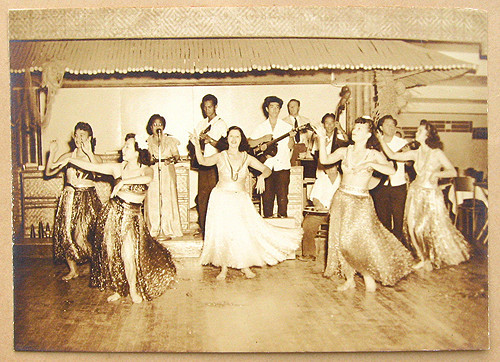
Dancers are from the Dan Wallace Hula Studio in the Royal Hawaiian Hotel-(HSA)-1950s-PP-33-5-023
Royal_Hawaiian-(HSA-Matson-HHF)-1927
Royal_Hawaiian_oceanside_construction-(HSA-HHF)-1926
Seaside_Hotel-noted-(Moana_Hotel-Apuakehau_Stream-marshland_behind)-1920
Waikiki scene arial view of moana & RH

Filed Under: Economy, Buildings Tagged With: Matson, Royal Hawaiian Hotel, Helumoa, Seaside Hotel, Hawaii, Waikiki

  • « Previous Page
  • 1
  • …
  • 33
  • 34
  • 35
  • 36
  • 37
  • …
  • 71
  • Next Page »

Images of Old Hawaiʻi

People, places, and events in Hawaiʻi’s past come alive through text and media in “Images of Old Hawaiʻi.” These posts are informal historic summaries presented for personal, non-commercial, and educational purposes.

Info@Hookuleana.com

Connect with Us

  • Email
  • Facebook
  • LinkedIn
  • Twitter
  • YouTube

Recent Posts

  • Memorial Day
  • Mailable Matter
  • Hole Hole Bushi
  • Insane Asylum
  • Sneyd-Kynnersley
  • Pele’s Hair
  • Waialua High and Intermediate School

Categories

  • Economy
  • Voyage of the Thaddeus
  • Mayflower Summaries
  • American Revolution
  • General
  • Ali'i / Chiefs / Governance
  • Buildings
  • Missionaries / Churches / Religious Buildings
  • Hawaiian Traditions
  • Military
  • Place Names
  • Prominent People
  • Schools
  • Sailing, Shipping & Shipwrecks

Tags

Albatross Al Capone Ane Keohokalole Archibald Campbell Bernice Pauahi Bishop Charles Reed Bishop Downtown Honolulu Eruption Founder's Day George Patton Great Wall of Kuakini Green Sea Turtle Hawaii Hawaii Island Hermes Hilo Holoikauaua Honolulu Isaac Davis James Robinson Kamae Kamaeokalani Kameeiamoku Kamehameha Schools Lalani Village Lava Flow Lelia Byrd Liberty Ship Liliuokalani Mao Math Mauna Loa Midway Monk Seal Northwestern Hawaiian Islands Oahu Papahanaumokuakea Marine National Monument Pearl Pualani Mossman Quartette Thomas Jaggar Volcano Waikiki Wake Wisdom

Hoʻokuleana LLC

Hoʻokuleana LLC is a Planning and Consulting firm assisting property owners with Land Use Planning efforts, including Environmental Review, Entitlement Process, Permitting, Community Outreach, etc. We are uniquely positioned to assist you in a variety of needs.

Info@Hookuleana.com

Copyright © 2012-2024 Peter T Young, Hoʻokuleana LLC

Loading Comments...