Images of Old Hawaiʻi

  • Home
  • About
  • Categories
    • Ali’i / Chiefs / Governance
    • American Protestant Mission
    • Buildings
    • Collections
    • Economy
    • Missionaries / Churches / Religious Buildings
    • General
    • Hawaiian Traditions
    • Other Summaries
    • Mayflower Summaries
    • Mayflower Full Summaries
    • Military
    • Place Names
    • Prominent People
    • Schools
    • Sailing, Shipping & Shipwrecks
    • Voyage of the Thaddeus
  • Collections
  • Contact
  • Follow
You are here: Home / Categories

March 13, 2026 by Peter T Young Leave a Comment

Kaukahoku

“Kamehameha III, By the Grace of God, King of the Hawaiian Islands, by this Royal Patent, makes known, unto all men, that he has for himself and his successors in office, this day granted and given, absolutely, in Fee Simple unto John George Lewis, his faithful and loyally disposed subject for the consideration of Eight Hundred Dollars”.

Thus, in 1848, through Royal Patent No. 97, John George Lewis acquired 8.92-acres of land in the ili of Kaukahoku (the stars have arisen.) In the 1840s the land was separated from the city by nearly two miles of open land and tropical forest.

It was through this land that Kamehameha the Great marched during what would become the Battle of the Nu‘uanu in April 1795 (the last major battle before the unification of the Hawaiian Islands.)

(Coincidently, Kamehameha was aided by foreigners, including John Young and Isaac Davis, who provided the cannons and tactical know-how used in the battle.)

This land, a portion of a grant known as Kaukahoku was originally designated as Fort Land; that is, it was set apart for the use of the Fort, probably as agricultural land.

Sometime in the 1840s Kekūanāoʻa, Governor of the island of Oahu, leased this land to Henry A Peirce, an American merchant who had established a thriving business in the Hawaiian Islands. He named the property ‘Beleview.’ Peirce, however, soon left the Islands and the land was leased to Lewis. (Rivera)

In September 1843 Lewis notified the Hawaiian Government that at the end of the year he desired to buy the Government interest in the land for $500. The Government, however, set the price at $800 plus interest, which Lewis presumably paid. (HABS)

John Lewis, the son of Isaiah and Polly (Holmes) Lewis, was born in Hawaii and was a successful dry goods importing merchant in Honolulu. Lewis & Co later became Mitchell & Fales, Ship Chandlers, on Nuʻuanu street at Merchant street (Lewis left to become a Real Estate Broker and General Agent.) (Thrum)

Tradition claims that Lewis built the house at Kaukahoku in 1847. (HABS)

It was modeled in the Greek Revival style. It has a formal plan arrangement, wide central hall, high ceilings and floor-length hinged, in-swinging shuttered casement window.

It is one-story, over a basement, and measures about 73-feet by 51-feet. The roof is hipped over the main portion of the home and gabled over the rear lanai that was converted to a room.

Around 1850, Lewis went to Boston and engaged in business there. Before leaving, he sold the land to John Young II (Keoni Ana) for $6,000. (Young was son of John Young who assisted Kamehameha in his final battles for unification, including Nuʻuanu.)

Young gave the name Hānaiakamālama to the house (“foster child of the God Kamalama,” one of the ancestral gods his mother, a Hawaiian high Chiefess, Mary Kuamoʻo Kaoanahaeha, a niece of King Kamehameha I (Lit., the foster child of the light (or moon) – also the name given to the Southern Cross.))

John Young II was an uncle to Emma Rooke who became Queen of the Hawaiian Islands at the time of her marriage to King Kamehameha IV in 1856.

Young gave the young royal couple the use of the home in Nuuanu Valley and they found it a pleasant respite from court life at ʻIolani palace.

At his death in 1857, Young willed the property to his niece, Queen Emma, and thus Hanaiakamalama came into her possession.

She and her family continued to enjoy the home for another five years until the death of her young son, and then her husband.

Queen Emma continued to use the home as a summer house until her death in 1885. Hānaiakamālama became a center of social activity as well as a restful country retreat. (HABS)

When the Duke of Edinburgh visited the Hawaiian Islands as part of the itinerary of a round-the-world tour, Queen Emma “gave an impromptu entertainment to a large number of guests at her residence in Nuʻuanu Valley.”

“The guests enjoyed themselves at croquet and other outdoor sports on the lawn until evening when the fine room prepared for the entertainment of the Duke of Edinburgh was thrown open and dancing commenced and was kept up until about 9 o’clock”. (Hawaiian Gazette, March 2, 1870)

Queen Emma left her property after her death to Colonel Cresswell Rooke of Broomhill, Colchester, Essex, England, a nephew of her hānai father, Dr TCB Rooke, and to Queen’s Hospital.

Col. Rooke visited Hawai’i in 1903 to settle the estate. When the property was divided, the Colonel waived back rents due him, which had been given to Queen’s Hospital (in exchange for several keepsakes.) (Hackler)

In 1890, Alexander Cartwright, executor of the estate testified that Queen Emma’s old home was “in need of extensive repairs, is old and untenantable, has been unoccupied for past five years.” The land and house were put at auction and were bought by the Hawaiian Government on August 27, 1890.

When the government tried to sell the property in 1906, strong public objections to the sale were made, many suggesting that the land be set aside as a park. The government reconsidered. (HABS)

A later concurrent resolution from the legislature was adopted in 1911, “that ‘The Queen Emma Place’ in Nuʻuanu Valley, City and County of Honolulu … be set aside and reserved as a Park, to be known as ‘Nuʻuanu Park’ …”

“… and that the Governor or other proper authorities of the Territory of Hawaii are hereby requested to take, without delay, the necessary legal steps to put into force and effect the purposes of this Concurrent Resolution.”

Hānaiakamālama was later saved from demolition by the Daughters of Hawaiʻi. Today, the Daughters preserve and maintain this residence and the Huliheʻe Palace in Kailua-Kona as museums open to the public.

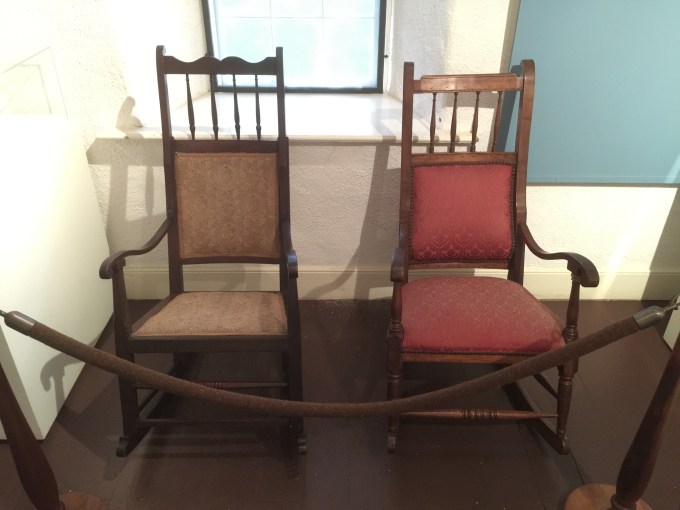
The restored and furnished home of Queen Emma and King Kamehameha IV offers a glimpse into the lifestyle of the Hawaiian monarchy.

The Daughters of Hawai‘i was founded in 1903 by seven women who were daughters of American Protestant missionaries. They were born in Hawai‘i, were citizens of the Hawaiian Kingdom before annexation and foresaw the inevitable loss of much of the Hawaiian culture.

They founded the organization “to perpetuate the memory and spirit of old Hawai‘i and of historic facts, and to preserve the nomenclature and correct pronunciation of the Hawaiian language.” (My mother was a Daughter.)

© 2026 Hoʻokuleana LLC

Filed Under: Place Names, Buildings Tagged With: Hawaii, Oahu, Nuuanu, Queen Emma Summer Palace, Hanaiakamalama, Daughters of Hawaii, Kaukahoku, John Lewis

March 12, 2026 by Peter T Young 6 Comments

Alsoberry Kaumualiʻi Hanchett

“The object of the Harvard Club of Hawaiʻi as stated in its constitution is ‘to extend the influence of Harvard University in Hawaiʻi and to foster closer relations between the Harvard men in Hawaiʻi and other Harvard Alumni.’”

“Toward carrying out the program involved, the question of assisting worthy young men financially in going to Harvard was brought up …”

“… and after a full discussion it was ‘Voted that it be the policy of the Club to help boys to go to Harvard; that one boy be helped each year by a loan of an amount not to exceed $200 per year’”.

“AK Hanchett, a graduate of the Kamehameha Schools, now a senior in Oʻahu College, was chosen as the first recipient.”  (Harvard Graduates’ Magazine, 1907)

Born in Lihuʻe, Kauai, November 16, 1885, Alsoberry Kaumualiʻi Hanchett was the son of Salem Panole Hanchett and Julia Malaea (Palaile) Hanchett.

His grandfather, Salem Hanchett of Massachusetts, went to sea as a teenager aboard a Pacific whaler, and settled on Kauai during the reign of King Kaumualiʻi; he married Aluhua Aka, a descendent of Kaumualiʻi.

In 1848, he was granted citizenship in the Kingdom of Hawaiʻi, and seven years afterward, he obtained a license to operate a Wailua River ferry at a time when no bridges spanned the river. (Soboleski)

AK Hanchett received his early education in Honolulu at the Kamehameha. Following his graduation from Kamehameha, he went on to excel at Oʻahu College. President Arthur F Griffiths noted:

“Hanchett is a part Hawaiian of the best type. He is a graduate of the Kamehameha Schools and of Oahu College. He is steady, reliable and conscientious. As a student, he has good ability which compares with the best”.

Hanchett applied for Harvard in the spring of 1907 with strong letters of support from President Arthur F Griffiths of Oʻahu College and President Perley Horne of the Kamehameha Schools. (Aki; OHA)

He received an AB degree at Harvard University in 1911, and, continuing his studies in the medical college of the same institution, earned his MD degree in 1914.

“This Hawaiian boy will graduate in this coming June, and will intern for two years at one of the Famous Hospitals of America to advance his abilities in the medical field, and at the completion of his stay at the Hospital, then he will select where he will practice his calling.”

“We hope that he will come back to Hawaiʻi nei to practice this greatest of occupations in which he trained, and be the first Hawaiian to practice medicine in here in Hawaiʻi.” (Ka Hoku o Hawaii, June 21, 1914)

“(I)n an examination of the medical students in Boston, in order to enter one of the Hospitals of the City, and from amongst a 100 students, the Hawaiian boy ranked 3rd …”

“… and because this Hawaiian Boy wanted to once again test his competence, his Medical abilities were tested once again at a big Hospital in Providence in the State of Rhode Island, and what was revealed in that examination was that amongst 50 students who took the test, to the Hawaii boy went ‘Number One.’” (Ka Hoku o Hawaii, June 21, 1914)

Dr Hanchett abbreviated his name to A Kaumu, discovering that Alsoberry Kaumualiʻi was altogether too long for a doctor’s shingle. (Episcopal Church)

During World War I, Major Hanchett served in the Medical Corps at Schofield Barracks and Fort Shafter, and later entered private practice with Dr Pekelo in an office on the corner of Beretania and Punchbowl.

Hanchett and Mary Hazel McGuire – a nurse at Queens Hospital – were married in Honolulu in 1917 and had eight children. (Soboleski)

Alsoberry Kaumualiʻi Hanchett, was the first person of Hawaiian ancestry to graduate from Harvard Medical College; the first doctor of Hawaiian descent to practice in the Islands; first City-County physician in Honolulu and first doctor at the Shingle Memorial Hospital, Molokai. (Episcopal Church)

© 2026 Hoʻokuleana LLC

Filed Under: Prominent People Tagged With: Harvard, Alsoberry Kaumualii Hanchett, Hawaii

March 11, 2026 by Peter T Young 3 Comments

Evelaina

“We have received from Captain Hart of the Achilles an extract from the log of that ship signed by the captain, officers and cabin passengers of the vessel containing a full and interesting account of the loss of the Mastiff by fire as viewed from the Achilles.” (Hawaiian Gazette, November 18, 1910)

“By the arrival of the British ship Achilles, which anchored off this port yesterday afternoon, we have news of the burning of the clipper ship Mastiff, on the route from San Francisco to Hongkong, via Honolulu.”

“The ship Mastiff, under command of Wm O Johnson, Esq, sailed from San Francisco, Saturday, Sept. 10th, having on board, twenty-six men, officers and crew” (and 175 Chinese between decks.) The ship was bound to Hongkong”.

“On Tuesday, the 13th, we raised a ship right ahead, which afterward proved to be the British ship Achilles, and continued in company with her until Thursday, at 4 PM, wind being very light”.

“At this time, the Achilles, being on our lee quarter, and about 5 miles distant, the second mate, Mr. Johnson, descried smoke coming out of the ventilators, which were situated in the after part of the ship, and immediately communicated the fact to the Captain and passengers, who were on the quarter deck.”

“At six and half o’clock, the flames burst out at all points, and the ship was left to her fate, Capt Johnson being the last man to leave, and having the satisfaction of knowing that but one life was lost, that of a Chinaman who went below, to get the key of his iron chest which he had got on deck; he was smothered.” (Pacific Commercial Advertiser, September 28, 1859)

Wait … this story isn’t about the destruction of the Mastiff, this is about the dedication of a mastiff to his master.

Evelaina was the English mastiff of Kamehameha III.

She originally was a gift to the king. She understood commands in both Hawaiian and English. (Hawaiian History & Culture)

Kamehameha III died on December 15, 1854.

I’ll let the February 19, 1857 story in the Pacific Commercial Advertiser tell the rest of the story …

“Among the instances of strong attachment of dogs to their masters, many interesting tales have been recorded, but we do not recollect one where more endurance and constancy has been displayed than in an instance which many have witnessed here during the past two years.”

“When the remains of our late beloved King, Kamehameha III, were deposited in the sepulchre, many were the sad mourners who watched night and day, lamenting in heart-rending wailing the death of their King, friend and benefactor.”

“Weeks wore on, and human grief was moderated, if not assuaged; the mourners quietly departed and returned to their homes and occupations.”

“Not so the late King’s favorite mastiff.”

“When the body was deposited in its last resting place, ‘Evelaina’ took his station outside the door of the tomb, and there commenced his weary watch.”

“For many weeks he would not leave the spot.”

“After a time, food was not taken to him, and at last, driven by hunger and thirst, he was compelled to leave; but, having satisfied these wants, he returned to his post, and has thus kept watch for nearly two years.”

“Of late his keepers have tried to confine him, but he is frequently missing, and, if searched for, will be found guarding the mortal remains of him he loved so well.” (Pacific Commercial Advertiser, February 19, 1857)

The dutiful dog passed away some seven years after Kamehameha III and the then-Prince and Interior Minister Lot Kapuāiwa Kamehameha had the dog put in a coffin and buried in Waikiki.

When Prince Lot ascended the throne as Kamehameha V and began to transfer the bodies of the late sovereigns from Pohukaina to Mauna ʻAla in 1865.

He also ordered the body of Evelaina to be buried at Mauna ʻAla under a tree behind the main chapel so she could continue to guard her beloved master. (Hawaiian History & Culture) (The dog here is representative, not Evelaina.)

© 2026 Hoʻokuleana LLC

Filed Under: Ali'i / Chiefs / Governance Tagged With: Hawaii, Kamehameha III, Evelaina, Mastiff

March 10, 2026 by Peter T Young Leave a Comment

About 250 Years Ago … Common Friends to Mankind

On April 19, 1775, the Battles of Lexington and Concord were the first military engagements of the American Revolutionary War.  The battles marked the outbreak of open armed conflict between the Kingdom of Great Britain and its thirteen colonies of British North America.

Following this, the Continental Congress adopted the Declaration of Independence and it was signed by 56-members of the Congress (1776.)

The next eight years (1775-1783) war was waging on the eastern side of the continent.  The main result was an American victory and European recognition of the independence of the United States.

It was the turning point in the future of the continent and an everlasting change in the United States.

At this same time, there was a turning point in the future of the Islands.

Captain James Cook’s third and final voyage (1776-1779) of discovery was an attempt to locate a North-West Passage, an ice-free sea route which linked the Atlantic to the Pacific Ocean.  Cook commanded the Resolution while Charles Clerke commanded Discovery.  (State Library, New South Wales)

In the dawn hours of January 18, 1778, British explorer Cook first sighted apparently uncharted islands in the middle of the Pacific.

“They were named by Captain Cook the Sandwich Islands, in honour of the Earl of Sandwich, under whose administration he had enriched geography with so many splendid and important discoveries.” (Captain King’s Journal; Kerr)

Hawaiian lives changed with sudden and lasting impact, when western contact changed the course of history for Hawai‘i.

At the time of Cook’s arrival (1778-1779), the Hawaiian Islands were divided into four kingdoms: (1) the island of Hawaiʻi under the rule of Kalaniʻōpuʻu, who also had possession of the Hāna district of east Maui; (2) Maui (except the Hāna district,) Molokai, Lānai and Kahoʻolawe, ruled by Kahekili; (3) Oʻahu, under the rule of Kahahana; and at (4) Kauai and Niʻihau, Kamakahelei was ruler.

Throughout their stay, the ships were plentifully supplied with fresh provisions which were paid for mainly with iron, much of it in the form of long iron daggers made by the ships’ blacksmiths on the pattern of the wooden pāhoa used by the Hawaiians.

After a month’s stay, Cook got under sail again to resume his exploration of the Northern Pacific. Shortly after leaving Hawaiʻi Island, the foremast of the Resolution broke.  They returned to Kealakekua.

That night a skiff from the Discovery had been stolen. “Our unfortunate Commander, the last time he was seen distinctly, was standing at the water’s edge, and calling out to the boats to cease firing, and to pull in.”

“If it be true, as some of those who were present have imagined, that the marines and boat-men had fired without his orders, and that he was desireous of preventing further bloodshed, it is not improbable that his humanity, on this occasion, proved fatal to him.”

“For it was remarked, that whilst he faced the natives, none of them had offered him any violence, but that having turned about to give his orders to the boats, he was stabbed in the back, and fell with his face in the water.”  (Voyages of James Cook)  On February 14, 1779, Cook was killed.

At this same time, recall that back in the Atlantic, the American Revolutionary War was still ongoing with the Americans (with support from the French) fighting the British.

At Canton, King learned that the the American and French governments had issued a directive to all French sea captains exempting Cook from military action on his way back to England.

“Not long after Captain Cook’s death, an event occurred in Europe, which had a particular relation to the voyage of our Navigator, and which was so honourable to himself, and to the great nation from whom it proceeded”. (King)

On March 10, 1779, Benjamin Franklin, who at age seventh-three, had himself issued a similar directive to the captains of American ships,

“A Ship having been fitted out from England before the Commencement of this War, to make Discoveries of new Countries, in Unknown Seas, under the Conduct of that most celebrated Navigator and Discoverer Captain Cook …”

“… an Undertaking truely laudable in itself, as the Increase of Geographical Knowledge, facilitates the Communication between distant Nations, in the Exchange of useful Products and Manufactures, and the Extension of Arts …”

“… whereby the common Enjoyments of human Life are multiplied and augmented, and Science of other kinds encreased to the Benifit of Mankind in general.”

“This is therefore most earnestly to recommend to every one of you; that in case the said Ship which is now expected to be soon in the European Seas on her Return, should happen to fall into your Hands …”

“… you would not consider her as an Enemy, nor suffer any Plunder to be made of the Effects contained in her, nor obstruct her immediate Return to England, by detaining her or sending her into any other Part of Europe or to America …”

“… but that you would treat the said Captain Cook and his People with all Civility and Kindness, affording them as common Friends to Mankind …”

On March 19th, 1779, just a few days after Franklin’s, Monsieur Sartine, secretary of the marine department at Paris, sent to all the commanders of French ships the following statement/directive:

“Captain Cook, who sailed from Plymouth in July, 1776, on board the Resolution, in company with the Discovery, Captain Clerke, in order to make some discoveries on the coasts, islands, and seas of Japan and California …”

“… being on the point of returning to Europe, and such discoveries being of general utility to all nations, it is the king’s pleasure that Captain Cook shall be treated as a commander of a neutral and allied power …”

“… and that all captains of armed vessels, etc., who may meet that famous navigator, shall make him acquainted with the king’s orders on this behalf, but at the same time let him know that on his part he must refrain from all hostilities.”

“By the Marquis of Condorcet we are informed that this measure originated in the liberal and enlightened mind of that excellent citizen and statesman, Monsieur Turgot.”

“Whilst great praise is due to Monsieur Turgot for having suggested the adoption of a measure which hath contributed so much to the reputation of the French government, it must not be forgotten that the first thought of such a plan of conduct was probably owing to Dr. Benjamin Franklin.”

Franklin’s gesture of good will toward Cook was not least among the honors he brought to his fledgling country. On the return of the Discovery and Resolution, they met neither French nor American ships on the way home. (Captain Cook Society)

For more, Click the following link:

https://imagesofoldhawaii.com/wp-content/uploads/Common-Friends-to-Mankind.pdf

© 2026 Hoʻokuleana LLC

Filed Under: American Revolution, General, Prominent People, Sailing, Shipping & Shipwrecks Tagged With: Revolutionary War, American Revolution, American Revolutionary War, America250, James Cook

March 9, 2026 by Peter T Young Leave a Comment

Battery French

On February 6, 1901, the US Army artillery corps divided into separate field and coast artillery components by General Order 9, War Department, implementing the Army Reorganization Act.

Artillery districts, each consisting of one or more forts and accompanying mine fields and land defenses, were established to protect the Atlantic and Pacific coasts of the United States and the coasts of Hawai‘i and Puerto Rico.  (US Archives)

In January 1905, President Teddy Roosevelt instructed Secretary of War William H Taft to convene the National Coast Defense Board (Taft Board) “to consider and report upon the coast defenses of the United States and the insular possessions (including Hawai‘i.)”

In 1906 the Taft Board recommended a system of Coast Artillery batteries to protect Pearl Harbor and Honolulu.  Between 1909-1921, the Hawaiian Coast Artillery Command had its headquarters at Fort Ruger and defenses included artillery regiments stationed around the Island.

The Army mission in Hawai‘i was defined as “the defense of Pearl Harbor Naval Base against damage from naval or aerial bombardment or by enemy sympathizers and attack by enemy expeditionary force or forces, supported or unsupported by an enemy fleet or fleets.”

In 1918, President Woodrow Wilson designated 322 acres in the central portion of Kāne‘ohe’s Mōkapu Peninsula as the Army’s Kuwa‘ahohe Military Reservation. Deactivated at the end of World War I, the reservation was leased for ranching until 1939, when it was reactivated as Fort Kuwa‘aohe.

In December 1940, Fort Kuwa‘aohe was renamed Fort Hase, in honor of Major General William F Hase, who served as Chief of Staff of the Army’s Hawaiian Department from April 1934 to January 1935. It served as headquarters of the Harbor Defenses of Kāne‘ohe Bay.

On the western side of the peninsula, Naval Air Station Kāne‘ohe was established in 1939; a base for squadrons of seaplanes to support the Pearl Harbor fleet was developed.

The work included dredge and fill operations that added 280 acres to the Kāne‘ohe Bay side of the peninsula, as well as filled low-lying areas for runway and hangar construction.

The great bulk of all reef material dredged in Kāne‘ohe Bay was removed in connection with the construction at Mōkapu of the Kāne‘ohe Naval Air Station (now Marine Corps Base Hawai‘i) between 1939 and 1945.

Dredging for the base began on September 27, 1939, and continued throughout World War II.  A bulkhead was constructed on the west side of Mōkapu Peninsula, and initial dredged material from the adjacent reef flat was used as fill behind it.

In November 1939, the patch reefs in the seaplane take-off area in the main Bay basin were dredged to 10-feet (later most were taken down to 30-feet.)

It appears that a fairly reliable total of dredged material is 15,193,000 cubic yards. (Do the Math … Let’s say the common dump truck load is 10 cubic yards … that’s a million and a half truckloads of dredge material.)

The Air Station’s runway was about half complete at the time of the Japanese attack on December 7, 1941. Construction was begun on a modern-design gun battery located on a bluff above North Beach.

Battery Construction Number 301 was a single bombproof reinforced-concrete structure that housed projectile and powder rooms with an earth/sand cover. The plotting room, generator, and storage rooms were also contained within the structure.

This structure of steel reinforced concrete was covered with several feet of earth and was partially dug into the crest of the bluff.  It was set atop the bluffs overlooking the beach.  Located below the bluff to the front of the battery were the dormitory, mess-hall, recreation rooms, and latrine. 

Battery 301’s guns covered the seaward approaches to Kāne‘ohe Bay from this location, 100 yards inland from the Mōkapu shoreline. It was one of the three initial batteries authorized for the Permanent Harbor Defense Project approved for Kāne‘ohe Bay.

Armament consisted of two 6-inch shield barbette carriage long-range guns. The guns were spaced some 210 feet apart and camouflaged with a steel-lattice rooftop appearing structure that rotated with the guns. The range was about 15 miles or 27,000 yards.

The battery’s exterior walls were 6 feet thick, interior wall was 18 inches. The Battery Commander’s structure was built directly on the roof of the main structure between both gun emplacements. The roof was built with two slabs totaling nine feet in thickness, and has a downward stairway leading into the battery and an upward stairway leading to the Commander’s station.

The radar room was located in the Commander’s station with the antenna mounted on the roof of the station. This antenna was disguised as a water tank for concealment. The radar was used to provide range and elevation for targets.

The fire control system for Battery 301 consisted of three stations: Podmore Fire Control Center on Kaiwa Ridge; Station “J” on the west rim of Ulupau Crater; and Heeia Fire Control Center on Puu Maelieli.

The final target practice of Battery 301 was conducted on November 22, 1944, when a regular day target practice was fired expending sixteen rounds. Battery 301 was then placed in a reduced manning status through the end of the war.

In 1946, the battery was designated in General Order Number 96 of the War Department as Battery French in honor of Colonel Forrest J French, who died on March 8, 1944. When Fort Hase was inactivated following the war and placed in caretaking status, Battery French’s guns were placed in experimental ‘mothballs.’

Following the disarming of the battery and its abandonment in the late 1940s, the magazine service structure was taken over by the US Navy for use as a laboratory. (Gaines)

The facility now serves WETS (Wave Energy Test Site).  The Naval Facilities Engineering and Expeditionary Warfare Center manages WETS. Established in 2004, WETS is located off the coast of Marine Corps Base Hawai‘i. WETS provides developers a critical real world environment for testing and advancing marine energy systems.

Key features at WETS include the 30-meter test site, deepwater wave energy test sites (comprised of 60 meter and 80 meter berths), Heeia Kea Small Boat Harbor, Dedicated Vessel Approved Mooring Area, Pyramid Rock, Battery French and the MCBH Fuel Pier. (Sea Engineering)

In 2024, marine hydrokinetics pioneer, Ocean Energy USA LLC (part of Ocean Energy Group Ireland), announced that it had successfully deployed its 826-ton wave energy convertor buoy, the OE-35, at the Wave Energy Test Site of the Marine Base (it was touted as “the world’s first electricity grid-scale wave energy device”). (Lots here is from John Bennett, William Gaines, Tomonari-Tuggle & Arakaki)

© 2026 Ho‘okuleana LLC

Filed Under: Military Tagged With: Hawaii, Marine Corps Base Hawaii, Mokapu, Battery French

  • « Previous Page
  • 1
  • …
  • 9
  • 10
  • 11
  • 12
  • 13
  • …
  • 669
  • Next Page »

Images of Old Hawaiʻi

People, places, and events in Hawaiʻi’s past come alive through text and media in “Images of Old Hawaiʻi.” These posts are informal historic summaries presented for personal, non-commercial, and educational purposes.

Info@Hookuleana.com

Connect with Us

  • Email
  • Facebook
  • LinkedIn
  • Twitter
  • YouTube

Recent Posts

  • Oklahoma
  • May Day
  • US Marine Hospital
  • By Horse, Car & Plane
  • John Rollin Desha
  • Rycroft
  • ‘Killed By Indians’

Categories

  • General
  • Ali'i / Chiefs / Governance
  • Buildings
  • Missionaries / Churches / Religious Buildings
  • Hawaiian Traditions
  • Military
  • Place Names
  • Prominent People
  • Schools
  • Sailing, Shipping & Shipwrecks
  • Economy
  • Voyage of the Thaddeus
  • Mayflower Summaries
  • American Revolution

Tags

Albatross Al Capone Ane Keohokalole Archibald Campbell Bernice Pauahi Bishop Charles Reed Bishop Downtown Honolulu Eruption Founder's Day George Patton Great Wall of Kuakini Green Sea Turtle Hawaii Hawaii Island Hermes Hilo Holoikauaua Honolulu Isaac Davis James Robinson Kamae Kamaeokalani Kameeiamoku Kamehameha Schools Lalani Village Lava Flow Lelia Byrd Liberty Ship Liliuokalani Mao Math Mauna Loa Midway Monk Seal Northwestern Hawaiian Islands Oahu Papahanaumokuakea Marine National Monument Pearl Pualani Mossman Quartette Thomas Jaggar Volcano Waikiki Wake Wisdom

Hoʻokuleana LLC

Hoʻokuleana LLC is a Planning and Consulting firm assisting property owners with Land Use Planning efforts, including Environmental Review, Entitlement Process, Permitting, Community Outreach, etc. We are uniquely positioned to assist you in a variety of needs.

Info@Hookuleana.com

Copyright © 2012-2024 Peter T Young, Hoʻokuleana LLC


Loading Comments...