Images of Old Hawaiʻi

  • Home
  • About
  • Categories
    • Ali’i / Chiefs / Governance
    • American Protestant Mission
    • Buildings
    • Collections
    • Economy
    • Missionaries / Churches / Religious Buildings
    • General
    • Hawaiian Traditions
    • Other Summaries
    • Mayflower Summaries
    • Mayflower Full Summaries
    • Military
    • Place Names
    • Prominent People
    • Schools
    • Sailing, Shipping & Shipwrecks
    • Voyage of the Thaddeus
  • Collections
  • Contact
  • Follow

January 19, 2017 by Peter T Young 2 Comments

First Sight of Land

“As we kept our Christmas here, I called this discovery Christmas Island. … Christmas Island, like most others in this ocean, is bounded by a reef of coral rocks, which extends but a little way from the shore. Farther out than this reef, on the west side, is a bank of sand, extending a mile into the sea.”

In January 1778, Captain James Cook aboard the Resolution and Captain Charles Clerke aboard the Discovery were sailing from the Society Islands to the Northwest coast of North America on Cook’s Third Expedition of the Pacific Ocean. The following or excerpts from their journals:

“We continued to see birds every day …; sometimes in greater numbers than others; and between the latitude of 10° and 11° we saw several turtle. All these are looked upon as signs of the vicinity of land.”

“However, we discovered none till day-break, in the morning of the 18th, when an island made its appearance, bearing northeast by east; and, soon after, we saw more land bearing north, and entirely detached from the former.”

“Both had the appearance of being high land. At noon, the first bore north-east by east, half east, by estimation about eight or nine leagues distant; and an elevated hill, near the east end of the other, bore north, half west. Our latitude, at this time, was 21°12’ N.; and longitude 200° 41’ E.”

“We had now light airs and calms, by turns; so that at sunset, we were not less than nine or ten leagues from the nearest land.”

“On the 19th, at sunrise, the island first seen, bore east several leagues distant. This being directly to windward, which prevented our getting near it, I stood for the other, which we could reach; and not long after discovered a third island in the direction of west north-west, as far distant as land could be seen.”

“We had now a fine breeze at east by north; and I steered for the east end of the second island; which at noon extended from north, half east, to west northwest, a quarter west, the nearest part being about two leagues distant.”

“At this time, we were in some doubt whether or not the land before us was inhabited; but this doubt was soon cleared up, by seeing some canoes coming off from the shore, toward the ships, I immediately brought-to, to give them time to join us.”

“They had from three to six men each; and, on their approach, we were agreeably surprised to find, that they spoke the language of Otaheite (Tahiti,) and of the other islands we had lately visited.”

“It required but very little address, to get them to come alongside ; but no intreaties could prevail upon any of them to come on board. I tied some brass medals to a rope, and gave them to those in one of the canoes, who, in return, tied some small mackerel to the rope as an equivalent.”

“This was repeated; and some small nails, or bits of iron, which they valued more than any other article, were given them. For these they exchanged more fish, and a sweet potatoe; a sure sign that they had some notion of bartering; or, at least, of returning one present for another.”

“They had nothing else in their canoes, except some large gourd shells, and a kind of fishing-net; but one of them offered for sale the piece of stuff that he wore round his waist, after the manner of the other islands.”

“These people were of a brown colour; and, though of the common size, were stoutly made. There was little difference in the cast of their colour, but a considerable variation in their features; some of their visages not being very unlike those of Europeans.”

“The hair of most of them was cropt pretty short; others had it flowing loose; and, with a few, it was tied in a bunch on the crown of the head.”

“In all, it seemed to be naturally black; but most of them had stained it, as is the practice of the Friendly Islanders, with some stuff which gave it a brown or burnt colour. In general they wore their beards.”

“They had no ornaments about their persons nor did we observe that their ears were perforated; but some were punctured on the hands, or near the groin, though in a small degree; and the bits of cloth which they wore, were curiously stained with red, black, and white colours.”

“They seemed very mild; and had no arms of any kind, if we except some small stones, which they had evidently brought tor
their own defence; and these they threw overboard, when they found that they were not wanted.”

“Seeing no signs of an anchoring place at this eastern extreme of the island, I bore away to leeward, and ranged along the south east side, at the distance of half a league from the shore.”

“As soon as we made sail, the canoes left us; but others came off, as we proceeded along the coast, bringing with them roasting pigs, and some very fine potatoes, which they exchanged, as the others had done, for whatever was offered to them.”

“Several small pigs were purchased for a sixpenny nail; so that we again found ourselves in a land of plenty; and just at the time when the turtle, which we had so fortunately procured at Christmas Island, were nearly expended.”

“We passed several villages; some settled near the sea, and others farther up the country. The inhabitants of all of them crowded to the shore, and collected themselves on the elevated places to view the ships.”

“The land upon this side of the island rises in a gentle slope, from the sea to the foot of the mountains, which occupy the centre of the country, except at one place near the east end, where they rise directly from the sea, and seemed to be formed of nothing but stone, or rocks lying in horizontal strata.”

“We saw no wood, but what was up in the interior part of the island, except a few trees about the villages; near which, also, we could observe several plantations of plantains and sugar-canes, and spots that seemed cultivated for roots. …”

“… I dispatched one of (the boats) to lie in the best anchoring-ground; and as soon as she had got to this station, I bore down with the ships, and anchored in twenty-five fathoms water; the bottom a fine grey sand.”

“The east point of the road, which was the low point before mentioned, bore S. 51° E; the west point, N. 65° W; and the village, behind which the water was said to be, NE by E, distant one mile.”

“But, little more than a quarter of a mile from us, there were breakers, which I did not see till after the Resolution was placed. The Discovery anchored to the eastward of us, and farther from the land. …”

“It is worthy of observation, that the islands in the Pacific Ocean, which our late voyages have added to the geography of the globe, have been generally found lying in groups or clusters …”

“… the single intermediate islands, as yet discovered, being few in proportion to the others; though, probably, there are many more of them still unknown, which serve as steps between the several clusters.”

“Of what number this newly-discovered Archipelago consists, must be left for future investigation. We saw five of them, whose names, as given to us by the natives, are Woahoo (O‘ahu,) Atooi (Kauai,) Oneeheow (Ni‘ihau,) Oreehoua (Lehua) and Tahoora (Kaula.)”

… Contact …

(The entire text here is from ‘The Voyages of Captain James Cook.’)

Follow Peter T Young on Facebook 

Follow Peter T Young on Google+ 

Follow Peter T Young on LinkedIn  

Follow Peter T Young on Blogger

© 2017 Hoʻokuleana LLC

Moment_of_Contact-(HerbKane)

Filed Under: Place Names, Prominent People, Sailing, Shipping & Shipwrecks, Economy Tagged With: Hawaii, Captain Cook, Kauai, Contact

November 21, 2015 by Peter T Young 3 Comments

Ka Laʻi Loa Ia Kamaluohua

“Kauai, its government and chiefs, had been living apart, or not mingled much with the chiefs or events on the other islands. …“

“But the war with the Hawaii chief … as well as (Kauai Chief) Kukona’s generous conduct towards the Oahu, Molokai, and Maui chiefs … brought Kauai back into the family circle of the other islands, and with an éclat and superiority which it maintained to the last of its independence. (Fornander)

Kalaunuiohua (of Hawaiʻi Island) became very powerful, he had only to point with his hand and direct war against another country and that country would be at his mercy.

Kalaunuiohua began to wage war against Kamaluohua, king of Maui, and he defeated him and added Maui to his possession. Kamaluohua was not put to death, but appointed governor of Maui under Kalaunuiohua.

After that, Kalaunuiohua pointed to Molokai; and he made war on Kahakuohua, and, having defeated him, he appointed Kahakuohua governor of Molokai under himself.

The hand of Kalaunuiohua next pointed at Oahu, and he made war on Hua-i-pou-leilei and overcame him, after which he made that king governor of Oahu.

His hand pointed next towards Kauai, and he waged war against that island, a war which was called Ka-welewele-iwi.

When Kalaunuiohua sailed on his campaign against Kauai to wage war upon Kukona, the king of that island, he was accompanied by Kamaluohua (of Maui,) Kahakuohua (of Molokai,) and Huakapouleilei (of Oʻahu) (chiefs subject to him.)

After the arrival of Kalaunuiohua at Kauai the deity (good luck) deserted that king’s hand and took possession of Kauliʻa, a man of Kauai. The hand of Kalaninuiohua lost the magic power it once had when it pointed.

In the battle with Kukona, king of Kauai, Kalaunuiohua was defeated, but his life and the lives of his allies, the Huas, were spared.

Kalaunuiohua and the other Huas lived peacefully on Kauai with Kukona and were treated by him with all kindness. One time when Kukona was spending the day apart from his own people with these captive Huas about him, he was taken with a desire for sleep.

He rolled himself in his blanket and lay down, but did not fall asleep – he was setting a trap for them – and was all the time alert and watching them from beneath his covering.

Kalaunuiohua and his fellow captives supposed that Kukona had really gone to sleep, and they began to grumble and find fault with Kukona and to plot against his life, at which they of Oahu, Molokai, and Hawaii nodded assent, agreeing that they should turn upon Kukona and put with to death.

But Kamaluohua, the king of Maui, said, “Let us do no hurt to Kukona, because he has been kind to us. Here we are in his hands, but he has not put us to death. Let us then treat him kindly.”

Just then, Kukona rose up and said to them, “What a fine dream I’ve just had while sleeping! I dreamed all of you were muttering and plotting my death, but that one pointing to Kamaluohua, defended me and preserved my life.”

They all acknowledged the truth of his accusations.

“Because, however, of Kamaluohua’s kindness,” continued Kukona, “and because of his determination that no evil should be done to me; because he appreciated that life and the enjoyment of peace were great blessings, I will not trouble you.”

Because Kamaluohua did right, I now declare all of you free to return to your homes with the honors of war (me ka lanakila) , taking your own canoes with you. Do not think I shall oppress you in your own lands. Your lands shall be your own to live in as before.”

So KaIaunuiohua returned home to Hawaii, Huaipouleilei to Oahu, Kahakuohua to Molokai, Kamaluohua to Maui; and they lived peacefully in their own homes.

This peace was called Ka Laʻi Loa Ia Kamaluohua, the long peace of Kamaluohua. (All information here is from Fornander and Malo.) The image shows ahupuaʻa of Kauai (ahamoku.)

Follow Peter T Young on Facebook 

Follow Peter T Young on Google+ 

Follow Peter T Young on LinkedIn  

Follow Peter T Young on Blogger

© 2015 Hoʻokuleana LLC

Kauai_Island-ahupuaa-ahamoku

Filed Under: Ali'i / Chiefs / Governance Tagged With: KaIaunuiohua, Ka Lai Loa Ia Kamaluohua, Hawaii, Kauai, Kukona, Kamaluohua, Kahakuohua

April 11, 2015 by Peter T Young Leave a Comment

Benjamin Douglas Baldwin

Benjamin Douglas Baldwin (grandson of the Rev Dwight Baldwin) was born at Kohala, Hawaii, April 12, 1868, son of David D and Lois M Baldwin. He attended Fort Street School and Oʻahu College (Punahou.)

He married Louise Theresa Voss in Honolulu on April 11, 1893; they had three sons, Douglas Elmer, Paul Frederick and Cedric Benjamin. (Nellist)

Baldwin began his career in the sugar cane industry on Haiku Sugar Co plantation, Hamakuapoko, Maui, on January 1, 1889.

Then, “Mr Benjamin D Baldwin, head luna of Hamakuapoko plantation has accepted the position of assistant manager of the Hawaiian Commercial Company, thus filling the vacancy caused by the death of Mr. David Center.”

“Mr. Baldwin and family will remove to Spreckelsville during the first part of April upon the return of Manager HA Baldwin from California.” (Pacific Commercial Advertiser, March 26, 1901)

Then on January 15, 1903, he  headed to Kauai. “Benjamin D Baldwin, formerly assistant manager of Puʻunene, is now permanently settled as manager of Makaweli plantation of Kauai. Mr and Mrs Baldwin will be much missed by Maui friends.” (Hawaiian Gazette, May 19, 1903)

“Makaweli is the banner plantation of Kauai since the Olokele ditch system enabled it to put a large additional area under cultivation.”

The Hawaiian Sugar Company, Ltd was headquartered at Makaweli, where the first cane was planted. The total land area was 7,000-acres held under lease from Gay & Robinson, extending from Waimea gulch to Hanapepe valley, a distance of several miles.

“The water supply for irrigation purposes is obtained from the Olokele and Hanapepe valley streams, the water flowing to all of the lands by gravity.”

“Work upon the Olokele ditch, which is the largest engineering scheme of the kind ever undertaken in the Islands, was begun for the Hawaiian Sugar Company by MM O’Shaughnessy and his assistants, Mr McLennan, HC Smalley and Guy P Rankin in 1902 and was completed in 1904.” (Evening Bulletin, March 25, 1909)

By the end of Baldwin’s management, in 1928, the annual yield increased to 27,057-tons of raw sugar and the company was noted as one of the most profitable and progressive in the Territory. (Faye)

“In the development of the property 2,250 skilled and unskilled laborers are employed who occupy several camps adjacent to their work. Better houses and better camps than are found on main plantations for the accommodation of men and their families have been erected.”

“The laborers receive in addition to their wages, which averages $20 per month, house room, fuel, water and medical attendance and have little patches of land where they raise vegetables.”

“The labor incident to the successful operation of this plantation is handled under two systems, one-third of the labor working under a or profit sharing system, and known as company men or contractors, the balance are day laborers, paid a regular rate per month of twenty-six working days.” (Evening Bulletin, March 25, 1909)

The Makaweli management takes much interest in the sports of the employes. A baseball diamond and land for tennis courts are provided. The Makaweli baseball team, by the way, secured the 1911 Kauai championship and in so doing gained three cups.”

“A club house for the skilled employes, which is equipped and supplied with reading matter and appliances, and a billiard and pool table, is supported by the company.” (Wright, Mid-Pacific Magazine, June 1914)

Baldwin died on April 27, 1928; a decade later, a substantial monument was erected by Makaweli Japanese sugar workers and dedicated to the memory of Baldwin, a highly respected plantation manager.

There are two circular metal medallions embedded in the column. The upper medallion has a bust of Baldwin surrounded by the words ‘Benjamin Douglas Baldwin 1867 – 1928,’ and the lower medallion has the words ‘Erected In Loving Memory by the Makaweli Japanese 1938.’ (Dorrance)

Baldwin was not just a sugar planter; he was commissioned as a major in the Hawaii National Guard (3rd Battalion, 4th Regiment) on Kauai and also commanded the Third Battalion of the Fifth Division during World War I. (Nellist) He was also postmaster at Makaweli.

A World War II ammunition magazine was located next to the monument (1942-1945.) Called ‘Battery Monument,’ it was armed with two old 7-inch/45 naval guns on pedestal mounts capable of hurling a 165-pound shell 16,500 yards (9.4 mi.) at 15° elevation. (Bennett)

Follow Peter T Young on Facebook 

Follow Peter T Young on Google+ 

Follow Peter T Young on LinkedIn  

Follow Peter T Young on Blogger

© 2015 Hoʻokuleana LLC

Ben D Baldwin-(EveningBulletin-1909)
Ben D Baldwin-(Men of Hawaii)
Benjamin Douglas Baldwin Monument-Faye
Managers Residence (Faye)
DE_Baldwin-(Faye)
DE_Baldwin-(Faye)
CB_Baldwin_and_Luna-(Faye)
CB_Baldwin-(Faye)
CB_Baldwin-(Faye)
Benjamin Douglas Baldwin Monument-Eleele
Benjamin Douglas Baldwin Monument-Dorrance; Bennett
USGS-Hanapepe-1963-portion-Baldwin Monument
USGS-Hanapepe-1996-portion-Baldwin Monument
Benjamin Douglas Baldwin grave marker

Filed Under: Economy, Prominent People Tagged With: Sugar, Kauai, Benjamin Douglas Baldwin, Makaweli, Hawaii, Maui

February 3, 2015 by Peter T Young Leave a Comment

Colonel Zephaniah Swift Spalding

“(He) was most emphatic in his conviction – the conviction of personal experience, that Sherman’s verdict, ‘War is Hell’ is the nearest thing to an adequate characterization of it that can happen.”

“‘In all reverence, War is hell – nothing else, and no effort to prevent war can be too assiduous or too costly.  The supreme effort of every people should be not to get out of war, but to keep out; – not to win a war, but to prevent it.’”  (Spalding, The Garden Island, June 1, 1920)

Colonel Zephaniah (Zeph) Swift Spalding fought in the US Civil War.  “The Colonel was in command of the famous Seventh New York Regiment, which was the second to reach Washington, even before the regular mobilization of the union troops. … “

“They found that Washington was practically a Southern city in sentiment and population – there were more Southerners than Union men there…”  (The Garden Island, June 1, 1920)

Spalding first enlisted in the 7th New York City Regiment. Within forty days, he had received a commission as a major in the 27th Ohio Regiment and held the rank of Lieutenant Colonel in that regiment at conclusion of that war.

It was reported that, because of his service record with the 27th Ohio during that war, he gained the favor and recommendation of Ohio Governor, David Todd, and, in 1867 was appointed by President Andrew Johnson to serve as American Consul to the Kingdom Hawaiʻi in Honolulu.

Spalding, born at Warren, Ohio, near Akron, September 2, 1837, was son of Rufus Paine Spalding – Representative and Speaker of the House of the Ohio Legislature, Justice of the Supreme Court of the State of Ohio and member of the US Congress.  Spalding was named after his father’s mentor, Zephaniah Swift, Chief Justice of Connecticut, whose daughter, Lucretia, was Zeph’s mother.

Shortly after the war, Zeph was tasked by Secretary of State William H Seward to serve as a ‘secret agent’ in Hawaiʻi (December 1867) to gauge “what effect the reciprocity treaty would have on future relations of the United States and Hawaiʻi.”  (They were weighing reciprocity versus annexation.)

His mission was said to have been known only to his father, Congressman RP Spalding, to Secretary Seward and to Senator Grimes of Iowa. His reports were made in the form of letters to his father, who delivered them to Seward.

Spalding was strongly opposed to the reciprocity treaty, and was in favor of annexation, which he thought would be hastened by rejection of the treaty. (Kuykendall)  That treaty, under consideration over 3-years (1867-1870) failed to pass.

On July 25, 1868 Andrew Johnson in a message to the US Senate nominated “Zephaniah S. Spalding, of Ohio, to be consul of the United States at Honolulu, in place of Morgan L. Smith, resigned.”  (US Senate Journal) He served as such until June 1, 1869, when President Ulysses S Grant suspended Spalding and nominated Thomas Adamson, Jr to replace him.

Soon after leaving the consulate in Honolulu, Spalding associated himself with Kamehameha V, Minister Hutchison and Captain James Makee in a sugar venture on the island of Maui.

Spalding’s association and work with the West Maui Sugar Association apparently caused a personal change of heart, transforming him into a strong supporter of reciprocity, and, in 1870, he wrote to President Grant suggesting …”

“… ‘to admit duty free Sugar’ and other articles from Hawaiʻi, in exchange that the Hawaiian Government grant or lease “sufficient land and water privileges upon the Island of Oahu near the port of Honolulu … to establish a Naval Depot”.  (Papers of Ulysses S Grant, September 27, 1870)

On July 18, 1871, Spalding married Wilhelmina Harris Makee, first-born daughter of Captain James Makee, at McKee’s Rose Ranch in Ulupalakua, Maui.  In that same year, Makee’s eldest son, Parker, took over management of the West Maui Sugar Association.

Zephaniah and Wilhelmina had five children: Catharine “Kitty” Lucretia Spalding; Rufus Paine Spalding; Julia “Dudu” Makee Spalding; Alice “Flibby” Makee Spalding and James “Jimmy” Makee Spalding.

The Treaty of Reciprocity finally passed in 1875, eliminating the major trade barrier to Hawai‘i’s closest and major market.  The US negotiated an amendment to the Treaty of Reciprocity in 1887 giving the US exclusive right to establish and maintain a coaling and repair station at Pearl Harbor.

In 1876, Captain Makee and Col. ZS Spalding purchased Ernest Krull’s cattle ranch in Kapaʻa, intending to start a sugar plantation and mill.  After a brief stay in San Francisco (1875-1878) Spalding returned to the Islands, living on Kauai. Where Makee was already operating the Makee Sugar Company and mill at Kapaʻa.

King Kalākaua and others formed a hui (partnership) to raise cane.  About the first of August, 1877, members of Hui Kawaihau moved to Kauai.  Makee had an agreement to grind their cane.

Upon Makee’s death in 1879, Spalding took over management of the new sugar venture.  Spalding also started the neighboring Keālia Sugar Plantation, in which King Kalākaua had a 25% interest. The Kapaʻa mill was closed in 1884, and all processing was done at Keālia. (In 1916, Colonel Spalding sold a majority of his holdings to the Līhuʻe Plantation Company, which kept the Keālia mill in operation until 1934, when it was dismantled and sent by rail to Lihue to become Mill “B”.)

 In the 1880s, Spalding built the “Valley House,” a Victorian-style wooden mansion, one of the finest on the island.

From 1877 to 1881, Hui Kawaihau was one of the leading entities on the eastern side of the Island of Kauaʻi, growing sugar at Kapahi, on the plateau lands above Kapaʻa.  (In 1916, Colonel Spalding sold his holdings to the Līhuʻe Plantation Company.)

On October 30, 1889, having traveled to Paris as the appointed representative of the Hawaiian Government, Spalding was presented the French order and ribbon of the Legion of Honor (Chevalier) during 1889 Universal Exposition in Paris.

Prior to the turn of the 19th century, Spalding had already developed a unique diffusion process for the refining of sugar at the Keālia Mill and was processing 24-hours a day. In 1900, with the construction of a new mill from Australia, sugar production was greatly increased.

Spalding expanded his business interests in Hawaiʻi, US and Europe.  In 1895, the idea of a Pacific communication cable caught his interest.

He formed the Pacific Cable Company of New Jersey and on August 12, 1895, he entered into agreement with the Republic of Hawaiʻi “to construct or land upon the shores of the Hawaiian group a submarine electric telegraph cable or cables to or from any point or points on the North American Continent or any island or islands contiguous thereto.”  (Congressional Record)

However, a rival company, Pacific Cable Company of New York formed to compete with him.  Congress split its support, the Senate favored Spalding and the House favored his rival.  In the end the two projects killed each other off.  (Pletcher)

“I tried to bring it about some years ago. We had a concession from the Hawaiian Government which we proposed to turn over to any company that might be formed under the auspices of the United States, but we could not get the aid of the United States in building the cable, and, of course, there was not enough business to attempt it without that.”  (Congressional Record)

(Ultimately, in 1902, the first submarine cable across the Pacific was completed (landing in Waikīkī at Sans Souci Beach; the first telegraph message carried on the system was sent from Hawaiʻi and received by President Teddy Roosevelt on January 2, 1903 (that day was declared “Cable Day in Hawaiʻi.”))

Spalding expanded his business interests in Hawaiʻi, US and Europe. During part of this time, Spalding moved his family to Europe to provide his children with a European education and Wilhelmina, “an accomplished musician,” who had suffered a debilitating stroke, with access to “concerts, opera and other musical events.” (Diffley)

In 1924, due to his failing health, Spalding left Kauai for California, to live with his son, James Makee Spalding, in the family home on Grand Avenue in Pasadena.  The last few years of his life were spent in California due to failing health, and he died in Pasadena on June 19, 1927 at the age of 89.

On the afternoon of April 20, 1930, a monument was dedicated to Col ZS Spalding, built by his Keālia Japanese friends. It is located at the corner of what was then known as Main Government Road and Valley House Road, a high point within the lands of the Makee Sugar Plantation. (Garden Island April 22, 1930)  (Lots of information also from Tyler.)

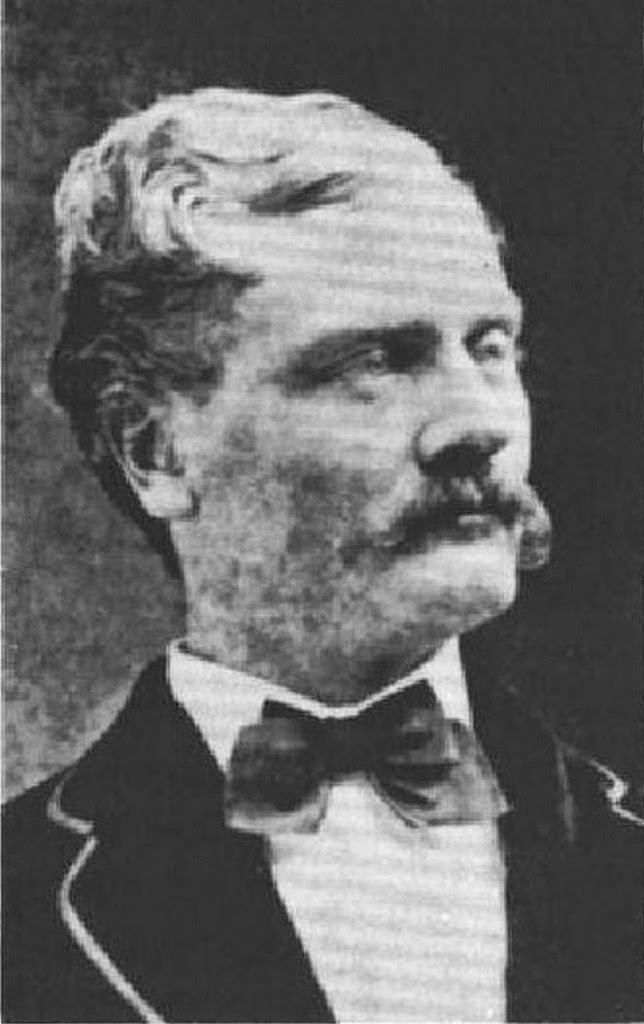
The image shows Zephaniah Swift Spalding.   In addition, I have included more related images in a folder of like name in the Photos section on my Facebook and Google+ pages.

Follow Peter T Young on Facebook 

Follow Peter T Young on Google+ 

Follow Peter T Young on LinkedIn   

© 2015 Hoʻokuleana LLC

Filed Under: Prominent People Tagged With: Hawaii, King Kalakaua, Kauai, James Makee, Kawaihau, Trans-Pacific Cable, Rose Ranch, Zephaniah Swift Spalding

September 3, 2014 by Peter T Young Leave a Comment

The Stitching

Since I started these summary posts, I have received a variety of questions and comments (from many) asking about this or that.

One such included a call from someone at Punahou School who had received the stitching noted in the image; someone saw it for sale in a store on the continent, bought it and gave it to Punahou.

They felt there were Punahou ties.  They asked me what I thought.

First, the center poem: “Friends are like melons; shall I tell you why? To find one good, you must one hundred try.”

I found it was written by Claude Mermet, a French poet who was born in Saint-Rambert-en-Bugey a little before 1550 and died in Saint-Rambert en Bugey in 1620.  (Obviously this is about friends and friendship, but no obvious Hawaiʻi tie … but is there?)
 
Then, the names … who is listed, who put this together and why was it done?

Some obvious Hawaiʻi ties come up – and lots of association back to Kauai with the likes of Rice, Wilcox and Isenberg … including their connections to Punahou.

It is still an untold story.

So, through this, hopefully more can be known of the Who, Why and When of the piece.  Let us know what you know about this.

It’s interesting … someone finds a piece of stitchery on the continent, sees connections to the Islands, but a mystery remains as to Who, Why and When ….

Here’s a summary and interconnecting linkages between the people noted on the stitchery we have seen thus far:

Wm H Rice
William Hyde Rice (born at Punahou,) son of William Harrison Rice (October 12, 1815-May 27, 1862) (business manager of Punahou School) and Mary Sophia Hyde Rice; husband of Mary Waterhouse Rice)

Mary W Rice
(Mary Waterhouse (July 26, 1846-June 28, 1933;) married William Hyde Rice; Punahou 1861 and 1862) John Thomas Waterhouse Sr., father of Mary.

Mary E Scott
(Mary Eleanor Rice (November 25, 1880-January 22, 1923;) daughter of William Hyde Rice and Mary Waterhouse Rice; married Walter Henry Scott

Anna C Wilcox
(Anna Charlotte Rice (1882- 😉 daughter of William Hyde Rice and Mary Waterhouse Rice; married Ralph Lyman Wilcox (son of Samuel Whitney Wilcox and Emma Washburn Lyman Wilcox))

Emily D Rice
(Emily Dole Rice (May 1844 – June 14, 1911;) daughter of William Harrison Rice (1813–1863), and Mary Sophia Hyde; married George De la Vergne) (Punahou 1863 and 1864)

R L Wilcox
(Ralph Lyman Wilcox (1876–1913;) son of Samuel Whitney Wilcox and Emma Washburn Lyman Wilcox;) married Anna Charlotte Rice)

Dora R Isenberg
(Mary Dorothea “Dora” Rice (1862-1949) Maria Rice, sister of William Hyde Rice married Paul Isenberg; Paul and Maria Isenberg had two children, Mary Dorothea Rice Isenberg and Daniel Paul Rice Isenberg (1866-1919).

Emma Wilcox
(Emma Washburn Lyman (September 16, 1849 – July 28, 1934;) daughter of David Belden Lyman (1803–1868) and Sarah Joiner (1806–1885;) married Samuel Whitney Wilcox) (her son, Ralph Lyman Wilcox, married Anna Charlotte Rice)

Susan S Fisher
Harry Fisher (1903-1905) (?)

Rebecca W Watt
Rebecca Waterhouse (?)
Rebecca Wilcox (?)
Rebecca Watt (1803-1915)

It’s ‘all in the family,’ kind of; and, it’s interesting how a piece of fabric can start to call attention to and remind us of stories about people and life in the Islands, especially on Kauai and at Punahou … but, there is still more to be known about the piece.

I have already done some posts on some of the people noted here, and will be doing some more in the future.  There is an obvious link to Punahou and Kauaʻi.

Any help others can provide on Who, Why and When (or anything more) this was done is appreciated.

The image shows the stitching.  In addition, I have added other images in a folder of like name in the Photos section on my Facebook and Google+ pages.

Follow Peter T Young on Facebook  

Follow Peter T Young on Google+    

Follow Peter T Young on LinkedIn   

© 2014 Hoʻokuleana LLC

Filed Under: Schools, Missionaries / Churches / Religious Buildings Tagged With: Hawaii, Oahu, Punahou, Kauai, John Thomas Waterhouse, William Hyde Rice, David Lyman, Isenberg

  • « Previous Page
  • 1
  • …
  • 16
  • 17
  • 18
  • 19
  • Next Page »

Images of Old Hawaiʻi

People, places, and events in Hawaiʻi’s past come alive through text and media in “Images of Old Hawaiʻi.” These posts are informal historic summaries presented for personal, non-commercial, and educational purposes.

Info@Hookuleana.com

Connect with Us

  • Email
  • Facebook
  • LinkedIn
  • Twitter
  • YouTube

Recent Posts

  • Early Days at Kamehameha Schools
  • ʻĪmaikalani
  • About 250 years Ago … Give Me Liberty, Or Give Me Death
  • Herbert, William & Jack
  • Lake Waiau
  • Silva’s Stores
  • Jones Act

Categories

  • Voyage of the Thaddeus
  • Mayflower Summaries
  • American Revolution
  • General
  • Ali'i / Chiefs / Governance
  • Buildings
  • Missionaries / Churches / Religious Buildings
  • Hawaiian Traditions
  • Military
  • Place Names
  • Prominent People
  • Schools
  • Sailing, Shipping & Shipwrecks
  • Economy

Tags

Albatross Al Capone Ane Keohokalole Archibald Campbell Bernice Pauahi Bishop Charles Reed Bishop Downtown Honolulu Eruption Founder's Day George Patton Great Wall of Kuakini Green Sea Turtle Hawaii Hawaii Island Hermes Hilo Holoikauaua Honolulu Isaac Davis James Robinson Kamae Kamaeokalani Kameeiamoku Kamehameha Schools Lalani Village Lava Flow Lelia Byrd Liberty Ship Liliuokalani Mao Math Mauna Loa Midway Monk Seal Northwestern Hawaiian Islands Oahu Papahanaumokuakea Marine National Monument Pearl Pualani Mossman Quartette Thomas Jaggar Volcano Waikiki Wake Wisdom

Hoʻokuleana LLC

Hoʻokuleana LLC is a Planning and Consulting firm assisting property owners with Land Use Planning efforts, including Environmental Review, Entitlement Process, Permitting, Community Outreach, etc. We are uniquely positioned to assist you in a variety of needs.

Info@Hookuleana.com

Copyright © 2012-2024 Peter T Young, Hoʻokuleana LLC

Loading Comments...