Images of Old Hawaiʻi

  • Home
  • About
  • Categories
    • Ali’i / Chiefs / Governance
    • American Protestant Mission
    • Buildings
    • Collections
    • Economy
    • Missionaries / Churches / Religious Buildings
    • General
    • Hawaiian Traditions
    • Other Summaries
    • Mayflower Summaries
    • Mayflower Full Summaries
    • Military
    • Place Names
    • Prominent People
    • Schools
    • Sailing, Shipping & Shipwrecks
    • Voyage of the Thaddeus
  • Collections
  • Contact
  • Follow

August 11, 2025 by Peter T Young Leave a Comment

Kamalō

“As agriculture developed, the landscape began to transform and has undergone alterations throughout its history of human settlement. Polynesian voyagers stocked their canoes with pigs, chickens, and dogs as well as crops needed for colonization.”

“The native lowland forests were cleared and replaced with taro, sweet potato, yam, banana, sugarcane, breadfruit, and coconut. The land was modified with advanced farming practices that included irrigation from streams, terracing, mulching, and use of green manure.”

“Slash and burn techniques were used to clear land for crops and to encourage the growth of pili grass used in house thatching.” (Kakahai‘a NWR, FWS)

The arrival of Europeans in the 1770s brought the introduction of goats, horses, cattle, and sheep.  The Duke of Edinburgh had deer transported from Japan to Molokai as a gift to Kamehameha V in 1870.

The growing herds quickly increased and endemic plants quickly declined, leaving vast areas barren due to soil compaction that increased runoff and accelerated erosion. (Kakahai‘a NWR, FWS)

“As foreign vessels began to visit the Islands the number of imported cultivated plants and domesticated animals increased rapidly. … Provisioning of ships gave the first foreign stimulus to Hawaiian agriculture.”

“Ships stopping at the Islands during the four decades following discovery were mainly engaged in fur and sandalwood trade

between the Pacific Northwest, China, and Hawaii. … “

“Provisioning of ships gave the first foreign stimulus to Hawaiian agriculture. Ships stopping at the Islands during the four decades following discovery were mainly engaged in fur and sandalwood trade between the Pacific Northwest, China, and Hawaii.”  (Philipp)

Sugar cultivation on Molokai began commercially with the founding of the Kamalō Sugar Plantation in 1873. John C. McColgan established the plantation, leasing land from the estate of King Kamehameha V.  Shortly thereafter came Moanui Sugar Mill and Plantation (established in 1875) and Kalae Sugar Plantation (established in 1876).

The Hawaiian Gazette ran a story in 1873, “New Sugar Plantation. The steamer, on her last trip to windward, landed at Molokai seventy head of bullock, belonging to Mr. J. McColgan, who proposes to start a sugar plantation on land which he has lately leased from the administrators of the late King’s estate.”

“The tract, which Is located between Kaunakakai and Kaluaaha, comprises about four thousand acres [Kamalo Sugar Company controlled the coast from Kamalō to Mapulehu (USGS)] …

“… stretching from the sea to the mountains, and is known as Kamaloo. Of this about one hundred and fitly acres are low land, and believed to be adapted to cane growing.”

“The cane will be cultivated by a farmer who has already gone to work. The mill is the same as that used on Mr McColgan’s Ewa plantation, and will be set up in time to take off the crop, which will be ground on shares. This system divides the risk and the

profit between the planter and manufacturer.” (Hawaiian Gazette, July 23, 1873)

John C McColgan (also known in the Islands as John Kamanoulu and sometimes referred to as John H McColgan) was born in Ireland on December 24, 1814. In 1849, McColgan moved to California to work in the gold mines and, on November 26, 1849, he sailed from San Francisco, California, aboard the American ship Elizabeth Ellen. He arrived in Honolulu on December 13, 1849.

Shortly after his arrival in the Hawaiian Islands, McColgan started work as a tailor. He is credited with bringing the first sewing machines to Hawai‘i on September 12, 1853, and his skill and expertise led to his becoming the personal tailor for King Kamehameha III & IV. (Lynn Kananiu Daue)

“He set up a household, part Hawaiian, part haole style. His wife was a handsome large Hawaiian woman named Kala‘iolele … [they] had 16 children in all. … The fourteenth of these hapa-haole (half white) children was Jennie, whom in Hawaiians called Kini. She grew up to be a famous hula dancer and to marry John H Wilson, mayor of Honolulu.” (Clarice Taylor)

As an infant, Ana Kini Kapahukulaokamāmalu Ku‘ululani McColgan Huhu (aka Kini Kapahu – Jennie Wilson) was adopted by Kapahukulaokamāmalu, who was an expert chanter, hula performer, and friend of Queen Kapi‘olani.  She and her adoptive mother lived on a property adjacent to the royal palace. (Imada)

By 1873, John McColgan owned a sugar cane plantation in ʻEwa on Oʻahu. Later that year, in July, he leased land from the late King Kamehameha V’s estate on Molokai to start a sugar cane plantation which would use the same milling technology employed at the ʻEwa plantation.

In about 1877, John moved to Kamalō on Molokai. His sugar cane plantation, the Kamalo Plantation, did well, producing “rattoons, six months old, from the same place, which measured eight feet in length and nine inches in circumference … “ and “stalks of cane … eleven months old, and measured 10 to 12 feet in length.” (Lynn Kananiu Daue)

In 1878 Kamalo Plantation harvested its first crop. Located on the southern slopes of the island, 44 laborers cultivated about 100 acres of cane. Its mill struggled to produce 250 tons of sugar in any one year.  (Dorrance)

By 1880, John’s cousin Daniel McCorriston (1840-1927) managed the Kamalo Plantation, and his cousin Hugh McCorriston (1836-1926) refined the sugar while John acted as the agent in Honolulu. (Lynn Kananiu Daue)

In the 1880s, nearby sugar planters would load sugarcane onto a small flatbed barge and tow the cargo by draft animals along the shallow shoreline to the mill at Kamalo. (Kakahai‘a NWR, FWS)

By 1884, the Kamalo Plantation was doing well enough to engage in the exportation of refined sugar to the United States, helping lay the foundation for the sugar partnership between California and Hawaii that exists today as C&H Sugar. (Lynn Kananiu Daue)

In 1891 the plantation harvested its last crop. (Dorrance) Kamalo Sugar Plantation, under manager Patrick McLane and Agent, Frank Hustace, started in 1899; it was short-lived and closed in 1900 – signaling the end of sugarcane plantations on Molokai. (Dorrance)

© 2025 Ho‘okuleana LLC

Filed Under: Prominent People, Economy, General, Place Names Tagged With: Frank Hustace, Hawaii, Patrick McLane, Molokai, Sugar, Kini Kapahu, Kamalo, Kohn McColgan, Jeannie Wilson, Daniel McCorriston, Hugh McCorriston

August 10, 2025 by Peter T Young Leave a Comment

Saimin

“The word ‘saimin’ comes from the Chinese sai (thin) and mein (noodles). But trying to claim its name origin makes it a Chinese dish is perhaps too narrow a view.”

“Saimin was born from the so-called ‘mix plate’ culture of Hawaii’s sugar plantations in the late-nineteenth century and draws influence from Chinese, Japanese, Okinawan, Portuguese and Filipino cuisine.” (life&thyme)

Saimin is basically three things: noodles, broth and toppings. (Avilla)

“As plantation laborers returned home to their families at night, each family would begin cooking dinner. Sometimes, such meals became communal as a means of saving money. Every family would offer an ingredient they were able to spare.”

“The Filipino family might have some extra green onions growing in their yard, the Portuguese family might have leftover sausage, the Hawaiian family’s chickens might have laid a couple extra eggs, the Korean family might have won bok unused from making kimchee.”  (Hawaii Kotohira Jinsha – Hawaii Dazaifu Tenmangu)

“They would all throw their ingredients into the pot and share. It was through these communal meals that ‘Pidgin’ was developed so they could all understand one another, borrowing words and phrases from each others’ language and piecing them together.”

“In some ways, saimin gave birth to Hawaii’s notoriety as a haven of multicultural harmony today.  Saimin was first popularized as a fast food dish at Honolulu Stadium on King and Isenberg streets.”

“As local residents watched Babe Ruth, Joe DiMaggio or their favorite high school football teams, fans rushed to the snack stands for a warm bag of boiled peanuts and a cup of hot saimin. For the first time, hot dogs and hamburgers were beat out at an American ballpark as the choice spectator snack.”  (Hawaii Kotohira Jinsha – Hawaii Dazaifu Tenmangu)

Saimin’s “popularity increased broadly after it became the specialty fast food at Honolulu Stadium. Barbecue sticks are another big Hawaiian favorite, with roots in both Filipino and Japanese cooking.” (Society of American Baseball Research)

“In the beginning, saimin was a cheap, simple dish just about anyone could throw together for a quick and easy bite. Boil some shrimp shells or kombu for the soup base, toss in a handful of noodles, and depending on what was growing in the garden, maybe seasonal garnishes as well.”

“The first places that started selling saimin were little snack stands that catered to busy plantation workers. In the mid-twentieth century, saimin restaurants became a pathway to entrepreneurship for the children and grandchildren of the original plantation workers.”

“Eventually, every neighborhood had at least one diner or fountain that featured saimin at the core of its menu.” (life&thyme)

“McDonald’s, based in Oak Brook, Illinois, became alerted of the saimin phenomenon in the islands in the late 1960s. Maurice Sullivan, legendary owner of Foodland Super Market purchased and opened the first McDonald’s restaurant in Hawaii in 1968 at his grocery store.”

“Sullivan wanted to serve his favorite meal, saimin, at his McDonald’s restaurants knowing all too well that his restaurants would boom with its introduction to the menu.”

“Sullivan invited owner Ray Kroc and executives from MacDonald’s corporation for dinner at Washington Saimin and Boulevard Saimin. “

“That night, Sullivan convinced Kroc to expand Macdonald’s menu for the first time in its corporate history to include an ethnic dish.” (Hawaii Kotohira Jinsha – Hawaii Dazaifu Tenmangu)

“Clarence Yutaka Shimoko … was an inventive and visionary entrepreneur … The most notable invention by Shimoko was developing the idea of freezing saimin noodles. In 1963, he and his Wife Masuzu, founded S&S Saimin.” (Adv, Mar 16, 2009)

In 2006, the James Beard Foundation honored the iconic Kauai restaurant, Hamura’s in the America’s Classics segment of its prestigious awards in New York City.

Hamura’s was one of eight eateries around the country honored for excellence and ‘preserving America’s culinary heritage and diversity’ at what many consider the Academy Awards for chefs. (SB, Apr 30, 2006)

“’Good food is not exclusive to fine dining,’ said James Beard spokesperson Melanie Young … A committee of educators and journalists select winners in the America’s Classics category …”

“… often small, family-owned restaurants ‘beloved in their communities for their food and ambiance.’ (Helena’s Hawaiian Foods in Kalihi was recognized in 2000 and Sam Choy’s Kaloko in Kailua-Kona in 2004.)” (SB, Apr 30, 2006)

© 2025 Ho‘okuleana LLC

Filed Under: General, Economy Tagged With: Hawaii, Saimin

August 8, 2025 by Peter T Young Leave a Comment

Kanakaleonui

Mauna Kea, like Hawai‘i’s other older volcanoes, Hualālai and Kohala, has evolved beyond the shield-building stage, as indicated by:

  • the very low eruption rates compared to Mauna Loa and Kīlauea;
  • the absence of a summit caldera and elongated fissure vents that radiate its summit;
  • steeper and more irregular topography (for example, the upper flanks of Mauna Kea are twice as steep as those of Mauna Loa); and
  • different chemical compositions of the lava. (USGS)

Mauna Kea’s peaceful appearance is misleading. The volcano is not dead. It erupted many times between 60,000 and 4,000 years ago, and some periods of quiet during that time apparently lasted longer than 4,000 years. Given that record, future eruptions seem almost certain. (USGS Volcano Watch)

Pu‘u Kanakaleonui is one of the younger cones of the Laupāhoehoe Volcanics and is less than 13,000 years in age. (USGS)  Kanaka-Leo-Nui (loud-voiced person) “was the name of a retainer of ʻUmi-a-Līloa, a chief who is said to have had a house at the top of Mauna Kea with doors facing each of the six districts of Hawaiʻi.”

“If the chief wanted the Hilo people to bring supplies, he called from the Hilo door to Kanaka-leo-nui, who shouted out the orders from the top of the hill bearing his name.” (Hawaiian Place Names)

About the time Columbus was crossing the Atlantic, ʻUmi a Līloa (‘Umi, son of Līloa), was famous in Hawaiian history for being the first aliʻi (chief) to unify Hawaiʻi Island under a singular rule.

ʻUmi was a religious chief and was known to have erected a number of ahu (shrines) throughout the ʻāina mauna (mountain lands) to make offerings to the akua. After unifying the island, ʻUmi a Līloa chose to live in the ʻāina mauna with his people rather than returning to the lower ahupuaʻa (land divisions) where kānaka typically lived.

“Umi was a trail builder …. Where the a-a was level, his men marked their way across it by smooth going. Where there were depressions in it, they were filled up to the general level, much as a modern engineer would fill them.”

“Where there were hillocks to be crossed, these were cut away if not too high and passed over in a straight line if their altitude forbade grading.” (Sol Sheridan, Mid Pacific Magazine, Oct 1912)

Pu‘u Kanakaleonui is one of the younger cones of the Laupāhoehoe Volcanics and is less than 13,000 years in age. The dark-colored deposit partly surrounding and mantling Pu‘u Kanakaleonui consists of tephra and ejecta blocks of lava mostly 10 to 50 cm in diameter but as large as 3 m long.

Some of the ejecta are from underlying lava flows that were erupted more than 65,000 years ago from the Hāmākua Volcanics. The light-colored surface below the cone consists of lava flows that are not mantled by the explosive tephra and blocks. (USGS)

The next eruption could take place anywhere on the upper flanks of the volcano. As Mauna Kea evolved from its early shield stage (equivalent to Kīlauea and Mauna Loa today) to its present post-shield stage, the volcano lost its rift zones. Consequently, the post-shield eruptions are not concentrated along narrow zones but instead are scattered across the mountain.

A prominent cinder cone will probably be constructed at each vent. The cinder cones responsible for the ‘bumpy’ appearance of Mauna Kea’s surface. The cones were built during the latest eruptive period 6,000-4,000 years ago. The next eruption will likely produce a similar cone.

For example, the most recent eruptive period, 6,000-4,000 years ago, involved eight vents on the south flank of the volcano between Kala‘i‘eha cone (near Humu`ula) and Pu‘ukole (east of Hale Pōhaku). During this same period, eruptions took place on the northeast flank at Pu‘u Lehu and Pu‘u Kanakaleonui.

Lava from Pu‘u Kanakaleonui flowed more than [12 miles] northeastward, entering the sea to form Laupāhoehoe Point. (USGS Volcano Watch)

“[Right back [of the double Hill Holei Kanakaleonui], there is a Hawaiian graveyard. They used to bury there. When they go up and make their adze, and the Hawaiians die up there, they had a little … above Kanakaleonui, in between Red Hill and Kanakaleonui.” (John “Johnny” Ah San Oral History Interview with Kepā Maly)

With the exception of the possible adze maker interments, the apparent restriction of the higher elevation burials to the apex of cinder cones is in sharp contrast to many of the burials found at Kanakaleonui, a well-known burial center located not too far outside of the Science Reserve, just below Pu‘u Mākanaka and the summit plateau.

On current evidence there are more burials in the general environs of Kanakaleonui than probably exist higher on the mountain, possibly on all of the summit plateau.  (AIS Mauna Kea Science Reserve)

The disproportionate number of burials in the environs of Kanakaleonui suggests that the edge of the plateau might have been a major social boundary, with the area below reserved for commoners and the plateau for persons of higher social status (chiefs and priests).

If the very top of the cones were reserved for higher status individuals and the ground below for commoners, then Kanakaleonui must have both.  (AIS Mauna Kea Science Reserve)

Laupāhoehoe is the true ‘Umi’s Trail. ‘Umikoa one, that’s when they go up and they turn around, and they meet ‘Umi Trail. (Mr. Ah San noted that Laupähoehoe-Waipunalei Trail runs up the mountain from near the heiau of ‘Umi – recorded as being named Mämala or Ha‘akoa.)

The trail runs mauka past Ke-ana-kolu (The-three-caves), which was a known resting spot on the trail up the mountain. The caves are approximately one-mile mauka from the old Keanakolu ranch house. (Maly)

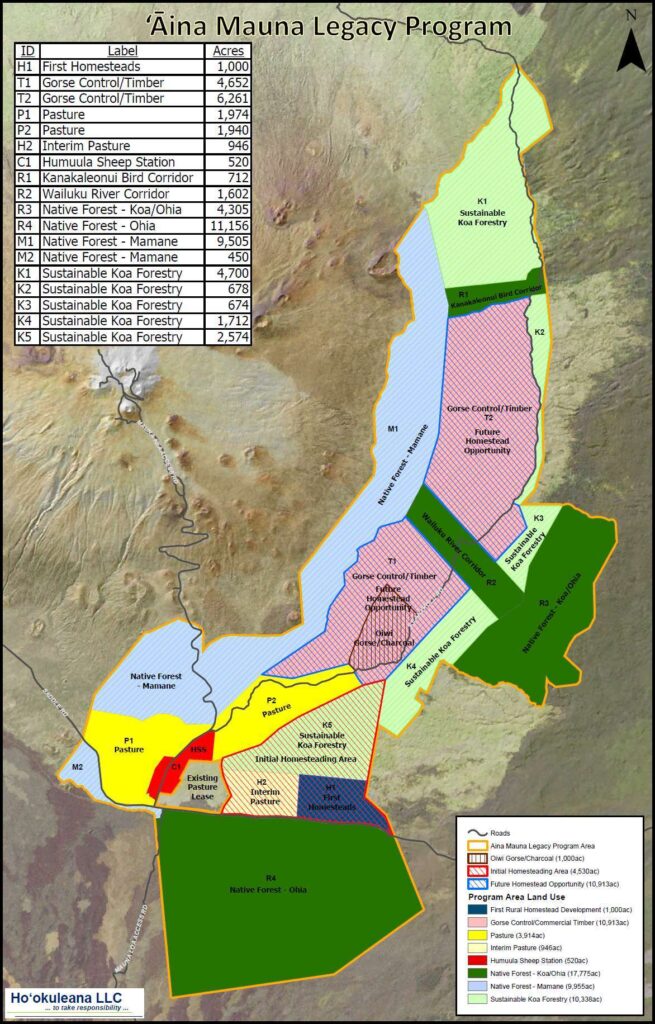
Kanakaleonui Bird Corridor (KBC), located on the east slope of Mauna Kea, is a unique transition zone from a Tropical Montane Cloud Forest to a colder, drier subalpine forest.  (Pigao)

The KBC corridor is a continuous uphill slope that currently represents a gradient of woodland to grassland. The dry subalpine landscapes show sharp climate changes with small elevational changes that are easily distinguishable by the amount and type of vegetation present.

Kanakaleonui Corridor is on Department of Hawaiian Home Lands land between Mauna Kea Forest Reserve and Hakalau Forest NWR).  It has many forest birds, especially ‘i‘iwi, ‘apapane, ‘amakihi, ‘elepaio, ‘akiapōlā‘au, and ‘io.

These species (and juveniles of these) are known to travel between wet forests and subalpine māmane forests during the bloom.  The Kanakaleonui Bird Corridor is an interconnecting corridor for this travel. (Hawaii’s Comprehensive Wildlife Conservation Strategy)

© 2025 Ho‘okuleana LLC

Filed Under: Economy, General, Hawaiian Traditions, Place Names Tagged With: Hawaii, Mauna Kea, Forest Birds, Kanakaleonui

August 6, 2025 by Peter T Young Leave a Comment

Kimis

William James Kimi was born on January 10, 1898, in Hilo, Hawaii; his father, Sapau James Kimi Fong, was 41 and his mother, Maria da Conceicao Cozy Deniz, was 19. He married Matilda Elizabeth Wassman on May 28, 1920, in Hilo.

“Kimi had a long and varied career. He and the late State Sen. William H. (Doc) Hill began their political careers together in 1928 when both were elected to the Territorial House as Republicans. Kimi served in the Senate in the 1935 and 1937 legislatures, switched to the Democratic Party in 1938 and in 1959 rejoined the GOP.”

“The kamaaina had served as liquor commissioner, County Building Inspector and a variety of other appointments. His business career was widely varied from cane grower, to housing developer (Kimiville [a low rent housing development in Hilo])”. (HTH, Aug 20, 1971)

One of Kimi’s sons, Richard Wassman Kimi (born Feb 3, 1925), “had to learn at a young age whatever skills it took to help put food on the family table. As his father was quite the entrepreneur.”

“Richard worked hard at their drive-in diner at nights, Hilo’s only roller skating rink on weekends, the circus when it came to town, and waking up at 2 am every morning to make ice cream that he would sell at chicken fights and pay days in the Hamakua Coast plantation camps.”

He “yearned and learned to be a salesman. His education [was on] the streets rather than the classroom. At age 8, because of family hardships, he lived in Kamuela with his hanai Uncle and Aunty and learned cattle raising and building roads on their ranch.”

“Right after the Pearl Harbor attacks, he enlisted to serve our country in the U.S. Army; where his leadership skills earned him his Sergeant stripes at age 19, the youngest Sergeant in the U.S. Army at the time. When the war ended he chose to return home to help his family business”.

That business “was now selling Army surplus goods (over-supplies like clothing, tents, shovels, canteens, trucks, bull-dozers, electric and plumbing fixtures) at his father’s store near Hilo airport; where Hilo Seaside Hotel is today.”

“As the business kept struggling, he turned to the construction business with the surplus equipment he could not sell. He and his brothers built Kimiville … Soon, his successful sales skills sold all the surplus store inventory; except for an old dump truck, a bulldozer, some lumber, roofing and a steam-roller.”

“He was 29 by then, but wanted a life for his family that made money while you were sleeping and decided to build a hotel where the surplus store was. All the ‘experts’ he consulted thought he was crazy yet the contrarian that he was he saw an opportunity the war had ended and prosperity was in the air why not build a hotel that was affordable to the average person?” (Legacy Obituary)

“Alan Kimi, Richard’s son and president of Seaside Hotels Hawaii, said his father never wanted to build large hotels. He said his father’s main objective was to serve local residents and budget-minded visitors.

“‘People traveled by boats in those days and the ones that traveled by plane were rich,’ Alan Kimi said ‘So his idea was, as the airplanes became bigger, what about the average guy?’”

“‘What about the local traveler, people that lived in Kona, but that wanted to go to Hilo for a couple of days but couldn’t afford it? That’s how it started.’” (Adv, Feb 1, 2009)

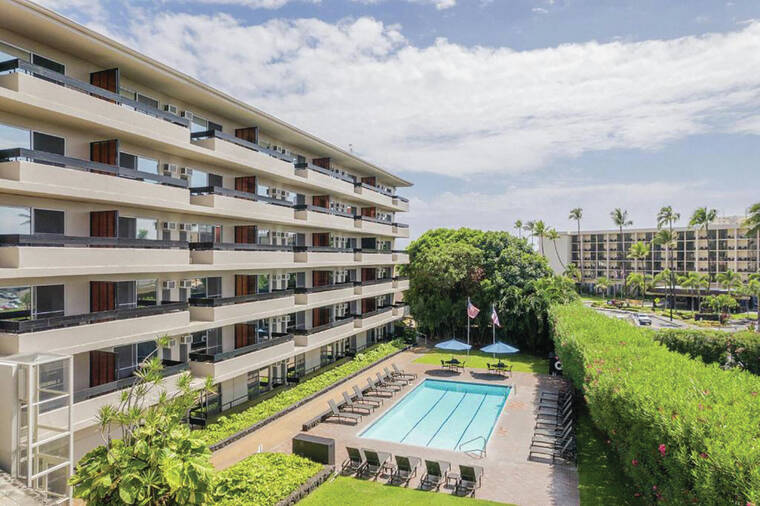
“So he built the 30-room Hotel Hukilau, and soon it was always busy; so he built more rooms there. As smaller propeller planes became larger jet planes; travel to Hawaii became more affordable for the masses. What about building a hotel in Kailua-Kona, so visitors could spend one week on the Big Island? (Kona Hukilau now known as Kona Seaside Hotel opened with 44 rooms in 1960.)”

“As vacations became longer guests wanted to see Maui. So the family moved to Kahului and built the Maui Hukilau (Maui Seaside Hotel today) in 1962. Jet planes became jumbo jets but could only land in Honolulu. … [He] bought the Waikiki Biltmore Hotel [now, the site of Hyatt Regency Waikiki] in 1965.”

“He was a legend in Hawaii tourism a pioneer of the kamaaina rate; air, hotel and car packages for locals, reservations by toll-free phone lines, then fax lines, and now on-line bookings. His vision was affordable and friendly hotels. Today they are known as the Seaside Hotels Hawaii. It is the only Hawaiian owned and operated family hotel chain in the world.”

“He enjoyed teaching sales, marketing and business to hundreds of students; and always favored the under-dog and the little guy. One of his students, Robert Kiyosaki, author of Rich Dad, Poor Dad books, recognized Richard Kimi as his original ‘Rich Dad’ and continues sharing his lessons to the world.” (Legacy Obituary) Richard Kimi died on December 19, 2008, in Honolulu.

Another son of William James Kiki Sr was William ‘Uncle Billy’ James Kimi, Jr (born Nov 6, 1922), Richard’s older brother. Like his younger brother, Uncle Billy was “One of the island’s most well-known residents, [who] had a number of landmark businesses, including the Uncle Billy’s Kona Bay Hotel in Kailua-Kona and Uncle Billy’s Hilo Bay Hotel. He also managed Uncle Billy’s Fish and Steakhouse for 45 years”.

In 1978, “three main partners – real estate agent Kenneth Fujiyama, transportation kingpin Chiaki Matsuo and hotelman Billy Kimi” acquired and converted the Kona Inn hotel into the Kona Inn Shopping Village (that opened as the shopping center in July 1980). (Adv, Aug 3, 1980) (Fujiyama later sold his interest in the property.) (Star Bulletin, Sep 4, 1981)

“[H]is resume would fill pages: entrepreneur, importer, financier, retailer, wholesaler, developer, accountant and farmer, innkeeper, restaurant owner, art dealer, shopping center owner and more,” the citation read in recognition of the businessman.”

“‘This is where it all started for my family,’ [Kimi] said. ‘I just wanted to have a business where my kids could work and build their families without having to leave home.’”

“Kimi was also involved in the Occupational Skills Program at Konawaena High School, which taught special education students work skills at the shopping village and hotel during the 1980s. They worked every weekday but Wednesday, in areas such as retailing, sales, cooking, laundry work, maintenance, housekeeping and construction work.”

“Kimi said at the time he helps because he ‘prefers to train people that don’t know anything’ about the hotel business and wanted to help people improve their careers. He said he’s the same with his other employees, supporting them anytime they can better themselves,’ even if that means leaving his business.

“His 70 years of entrepreneurial creativity, work and vision have provided jobs for hundreds of people in a multitude of businesses, as well as improving the Hilo and Kona communities. He has worked diligently to improve education and health care for the children of Hawaii.” (HTH, Feb 2, 2016) Uncle Billy died Feb 19, 2016.

© 2025 Ho‘okuleana LLC

Filed Under: Economy, Buildings, Prominent People Tagged With: Billy Kimi, Richard Kimi, Seaside Hotels, Hukilau Hotel, Kona Inn Shopping Village, Waikiki Biltmore, Hawaii, Kona Inn

August 4, 2025 by Peter T Young Leave a Comment

Making Sugar

In pre-contact times, sugarcane was not processed as we know sugar today, but was used by chewing the juicy stalks.  Its leaves were used for inside house thatching, or for outside (if pili grass wasn’t available.) The flower stalks of sugar cane were used to make a dart, sometimes used during the Makahiki games. (Canoe Crops)

The first written record of sugarcane in Hawaiʻi came from Captain James Cook, at the time he made initial contact with the Islands.  On January 19, 1778, off Kauai, he notes, “We saw no wood, but what was up in the interior part of the island, except a few trees about the villages; near which, also, we could observe several plantations of plantains and sugar-canes.”  (Cook)

Cook notes that sugar was cultivated, “The potatoe fields, and spots of sugar-canes, or plantains, in the higher grounds, are planted with the same regularity; and always in some determinate figure; generally as a square or oblong”.  (Cook)

Sugarcane, a tall perennial grass, is grown in tropical and semitropical climates. (USDA)

To plant it, short sections of sugar cane plant stalk containing one or more node are first planted in soil which has been deep-plowed and formed into furrows that follow the contour of the land. In about 24 months a mass of vegetation (up to 10-feet high) has developed and is ready for harvest.

There are two factors that distinguish cane sugar production in Hawaii from cane sugar production in other parts of the world. First, growers do not harvest Hawaiian sugarcane until it is an average of two years old. In most other areas, sugarcane is harvested after one year of growth. (EPA)

Prior to World War II, almost all cane was cut by hand and transported to the sugar mills through an extensive network of water flumes. When water flumes did not exist, mule-drawn wagons carried the cane to rail roads for transport.

Following World War II, mechanical harvesting completely replaced the hand cutting of cane.  The most common method of harvesting is to snap off the cane at ground level with a bulldozer-type push rake on a large standard tractor. (EPA)

 Sugar cane is processed at two facilities: processing starts at a raw sugar factory and finished at a sugar refinery. The following address raw sugar processing. (Sugar Association)

When harvested, the root structure is left intact so that a second, third, or even fourth crop of sugar cane may be produced from suckers which grow from the root structure of old harvested plants. This process is known as ‘ratooning.’

Bulldozers then rake the cane into piles for cranes, equipped with special grabs, to load the cane into special cane haulers usually consisting of an enormous truck-tractor unit and semi-trailer. (EPA)

The operations necessary for making raw cane sugar are as follows :

  1. The extraction of the juice.
  2. The purification of the juice.
  3. The evaporation of the juice to syrup point.
  4. The concentration and crystallization of the syrup.
  5. The preparation of the crystals or grains for the market by separating them from the molasses. (Rolph)

The cane initially moves to a feeder table, up a conveyor, and then contacts a drum which spreads it out into a thin even blanket. Next it passes over a set of rollers which acts as a primary rock extractor. From there it falls into a flotation bath where rocks and other heavy foreign matter settle in the tank and are carried away.  (EPA)

Following the flotation bath, the cane proceeds up a conveyor where heavy washing begins. Next it passes over drums to be shaken and leveled. The root structure holding the stalks together is then broken and here also final washing occurs.

The cane then moves over trash extractors (oppositely spinning rollers) which grab and strip leaves from the stalks. The resulting trash is conveyed away from the cleaning plant. A series of knives then cut the cane into small lengths for crushing by a pair of corrugated rollers.

Typically, the milling is through a tandem of three rollers, and the chopped cane passes through each mill in succession to remove the sugar cane juice. Either three, four, or five mills in a series are employed to squeeze the juice out of the cane stalks.  (EPA)

Following extraction, sugar cane juice is sent through a clarifier;  after leaving the clarifier, the juice enters a multi-effect steam evaporator from which it emerges with greater density as ‘syrup.’

The syrup then enters vacuum pans where it is converted into molasses. In the pans, sugar crystals are also formed from the syrup by the process of evaporation to saturation. At the end of this operating cycle, the crystals are centrifuged to remove the molasses.

The sugar from the first pan operation is of commercial raw sugar quality and is ready for shipment to a mainland refinery. The molasses remaining from centrifuge of the first boiling operation is called ’A’ molasses. This is returned directly to the pans for a second cycle.

The material from the second pan operation is centrifuged and the sugar produced is also of commercial quality. The molasses remaining from the second pan operation is called ‘B’ molasses. ‘B’ molasses is of low quality sugar content and must be specially processed before additional sugar can be produced.  (EPA)

The raw sugar is then sent in bulk to refineries (C&H) for finishing, packaging and marketing/shipping. The initial step in cane sugar refining is washing the sugar, called affination, with warm, almost saturated syrup to loosen the molasses film.

There are a variety of steps of heating, separation of sugar crystals (in centrifuges), screening, washing and clarification. Two clarification methods are commonly used: pressure filtration and chemical treatment.

To produce refined granulated sugar, white sugar is transported by conveyors and bucket elevators to the sugar dryers. The most common sugar dryer is the granulator, which consists of two drums in series. One drum dries the sugar and the other cools the dried sugar crystals.

In addition to granulated sugar, other common refined sugar products include confectioners’ (powdered) sugar, brown sugar, liquid sugar, and edible molasses. (Food and Agricultural Industry; EPA) (The color and flavor of brown sugar come from the residual molasses left in the crystals during the refining process.)

Several waste products are produced by the sugar industry in raw sugar processing – one was bagasse, and the mills would flume it out of the mill and simply dump it in the ocean.

Later, some of the bagasse was made into canec.  In 1929, Hawaiian Cellulose Ltd, a subsidiary of the Waiākea Mill Company applied for a patent for the manufacture of it.  (County of Hawai‘i)  They made ‘canec.’

Canec was originally the brand name for pressed fiber board made by Hawaiian Cane Products, Ltd., but it has become commonly used to refer to all pressed board of this type.

Also, later, “After passing through the last mill, as much cane pulp (bagasse) as needed is fed into the mill fireroom for use as fuel.”  (EPA)  The bagasse was pelletized and fueled the boiler.

In 1906, the California and Hawaiian Sugar Refining Company (C&H) began refining pure cane sugar in the small town of Crockett, California, near San Francisco. As cargo ships offloaded raw cane sugar from the Hawaiian Islands, the refinery employed 490 people and produced 67,000 tons of refined cane sugar.

© 2025 Ho‘okuleana LLC

Filed Under: General, Economy Tagged With: Hawaii, Sugar, Bagasse

  • « Previous Page
  • 1
  • …
  • 25
  • 26
  • 27
  • 28
  • 29
  • …
  • 238
  • Next Page »

Images of Old Hawaiʻi

People, places, and events in Hawaiʻi’s past come alive through text and media in “Images of Old Hawaiʻi.” These posts are informal historic summaries presented for personal, non-commercial, and educational purposes.

Info@Hookuleana.com

Connect with Us

  • Email
  • Facebook
  • LinkedIn
  • Twitter
  • YouTube

Recent Posts

  • About 250 Years Ago … Benedict Arnold
  • Papa Koa Lumber Company
  • About 250 Years Ago … Battles of Saratoga
  • ‘A Swarm of B’s Has Come’
  • About 250 Years Ago … US Constitution
  • Hiram Bingham: I – IV
  • Haui ka Lani

Categories

  • Ali'i / Chiefs / Governance
  • Buildings
  • Missionaries / Churches / Religious Buildings
  • Hawaiian Traditions
  • Military
  • Place Names
  • Prominent People
  • Schools
  • Sailing, Shipping & Shipwrecks
  • Economy
  • Voyage of the Thaddeus
  • Mayflower Summaries
  • American Revolution
  • General

Tags

Albatross Al Capone Ane Keohokalole Archibald Campbell Bernice Pauahi Bishop Charles Reed Bishop Downtown Honolulu Eruption Founder's Day George Patton Great Wall of Kuakini Green Sea Turtle Hawaii Hawaii Island Hermes Hilo Holoikauaua Honolulu Isaac Davis James Robinson Kamae Kamaeokalani Kameeiamoku Kamehameha Schools Lalani Village Lava Flow Lelia Byrd Liberty Ship Liliuokalani Mao Math Mauna Loa Midway Monk Seal Northwestern Hawaiian Islands Oahu Papahanaumokuakea Marine National Monument Pearl Pualani Mossman Quartette Thomas Jaggar Volcano Waikiki Wake Wisdom

Hoʻokuleana LLC

Hoʻokuleana LLC is a Planning and Consulting firm assisting property owners with Land Use Planning efforts, including Environmental Review, Entitlement Process, Permitting, Community Outreach, etc. We are uniquely positioned to assist you in a variety of needs.

Info@Hookuleana.com

Copyright © 2012-2024 Peter T Young, Hoʻokuleana LLC

Loading Comments...