Images of Old Hawaiʻi

  • Home
  • About
  • Categories
    • Ali’i / Chiefs / Governance
    • American Protestant Mission
    • Buildings
    • Collections
    • Economy
    • Missionaries / Churches / Religious Buildings
    • General
    • Hawaiian Traditions
    • Other Summaries
    • Mayflower Summaries
    • Mayflower Full Summaries
    • Military
    • Place Names
    • Prominent People
    • Schools
    • Sailing, Shipping & Shipwrecks
    • Voyage of the Thaddeus
  • Collections
  • Contact
  • Follow

January 21, 2015 by Peter T Young Leave a Comment

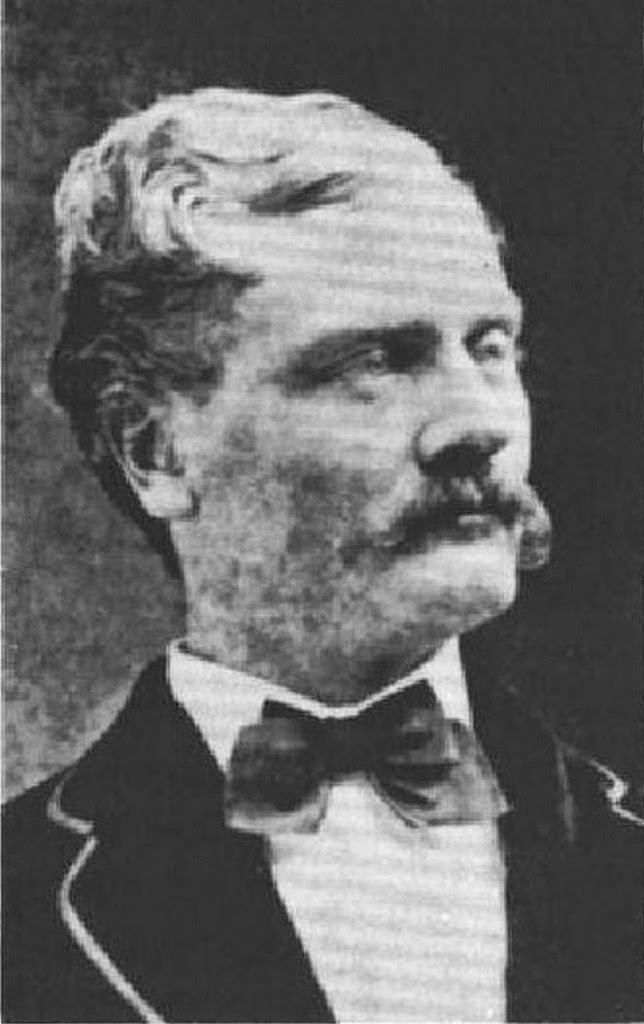
Charles John Wall

Charles John Wall was born in Dublin, Ireland, on December 23, 1827.  He married Elizabeth Evans (Miller) Wall; they had 10-children: Thomas E Wall; Emily Wall; Charles Wall; William Albert Wall; Henry Wall; Walter (Walt) Eugene Wall; Arthur Frederick Wall; Alford Wall; Ormand E Wall and Alice Wall

In 1880, the family came to Honolulu by way of California.  Wall (and some of his children) left some important legacies in Hawaiʻi.  Charles was an important nineteenth century Honolulu architect, some of the buildings he designed are still here; several have been lost, but not forgotten.

Charles J Wall participated, or led the design of ʻIolani Palace, Kaumakapili Church, Lunalilo Home and the Music Hall/Opera House.

ʻIolani Palace

The design and construction of the ʻIolani Palace took place from 1879 through 1882; three architects were involved: Thomas J Baker, Charles J Wall and Isaac Moore. The Baker design generally held in the final work.

A quarrel broke out between Baker, Samuel C Wilder (Minister of the Interior) and the Superintendent of Public Works.  Shortly after the cornerstone was laid on December 31, 1879; Baker apparently ended his connection with the Palace.

He was succeeded by Wall, who had recently arrived in the Islands and was “employed to make the detail drawings from the first architect’s plans.”

According to the March 31, 1880 Hawaiian Gazette, Wall had “skillfully modified and improved” some of the objectionable features of the original design.  (Peterson)  Wall was succeeded by Isaac Moore after about nine months.

ʻIolani Palace was the official residence of both King Kalākaua and Queen Lili‘uokalani. After the overthrow of the monarchy, ʻIolani Palace became the government headquarters for the Provisional Government, Republic, Territory and State of Hawai‘i.

During WWII, it served as the temporary headquarters for the military governor in charge of martial law in the Hawaiian Islands.  Government offices vacated the Palace in 1969 and moved to the newly constructed capitol building on land adjacent to the Palace grounds.

Click HERE for a Link to additional information on ʻIolani Palace:

Kaumakapili Church

Starting in 1837, “the common Hawaiian folk of Honolulu” started petitioning Rev. Hiram Bingham, head of the Hawaiian Mission, to establish a second church or mission in Honolulu (Kawaiahaʻo being the first.)

It started as a thatched-roof adobe structure erected in 1839 on the corner of Smith and Beretania Streets.  The adobe building was torn down in 1881 to make way for a new brick edifice.

King Kalākaua took great interest in the church and wanted an imposing church structure with two steeples.  His argument was, “…that as a man has two arms, two eyes, two ears, two legs, therefore, a church ought to have two steeples.”

The cornerstone for the new church was laid on September 2, 1881 by Princess Liliʻuokalani (on her birthday.)  Seven years later the new building was completed.

It was an imposing landmark, first of its kind, and visible to arriving vessels and land travelers.  It was dedicated on Sunday, June 10, 1888.  In January, 1900, disaster struck.  The Chinatown fire engulfed the entire building leaving only the brick walls standing.

On May 7, 1910, the congregation broke ground for the third church building.  It was dedicated on June 25, 1911, the same day in which the 89th Annual Conference of the Hawaiian Evangelical Association (ʻAha Paeʻaina) was hosted by the church.

Click HERE for a Link to additional information on Kaumakapili Church:

Lunalilo Home

The coronation of William Charles Lunalilo took place at Kawaiahaʻo Church in a simple ceremony on January 9, 1873. He was to reign as King for one year and twenty-five days, succumbing to pulmonary tuberculosis on February 3, 1874.

His estate included large landholdings on five major islands, consisting of 33 ahupuaʻa, nine ‘ili and more than a dozen home lots. His will established a perpetual trust under the administration of three trustees to be appointed by the justices of the Hawaiian Supreme Court.

Lunalilo was the first of the large landholding aliʻi to create a charitable trust for the benefit of his people.  The purpose of his trust was to build a home to accommodate the poor, destitute and infirm people of Hawaiian (aboriginal) blood or extraction, with preference given to older people.

In 1879 the land for the first Lunalilo Home was granted to the estate by the Hawaiian government and consisted of 21 acres in Kewalo, near the present Roosevelt High School.

The construction of the first Lunalilo Home at that site was paid for by the sale of estate lands. The Home was completed in 1883 to provide care for 53 residents. An adjoining 39 acres for pasture and dairy was conveyed by the legislative action to the Estate in 1888.

After 44 years, the Home in Kewalo (mauka) had deteriorated and became difficult and costly to maintain. The trustees located a new 20-acre site in Maunalua on the slopes of Koko Head.

Click HERE for a Link to additional information on Lunalilo:

Music Hall – Opera House

In 1881, a Music Hall was built across the street from ʻIolani Palace, where Ali‘i regularly joined the audiences at performances. Queen Lili‘uokalani is even said to have written her own opera.  (Ferrar)  It was built by the Hawaiian Music Hall Association.

The building was first called the Music Hall, but shortly after its transfer to new owners, the name was changed to the Royal Hawaiian Opera House.  (Daily Bulletin, February 12, 1895)

Despite its name, the Opera House was not primarily a venue for classical entertainment. Many of its bookings were melodramas and minstrel shows, two very popular forms of theater at the time.  Then, it was the first house to show moving pictures in Hawaiʻi.

The building was of brick 120 by 60 feet on the ground floor and walls forty feet high and twenty inches thick. The front door was ten feet wide, opening into a vestibule 16 by 27 feet. The seating capacity of the house was 671 persons. The stage was forty feet deep and provided with a complete set of scenery, traps and all necessary paraphernalia. (Hawaiian Star, February 12, 1895)

“Originally there were two (private) boxes. One on the right of the stage looking out was regarded as the property of the late King Kalākaua, who had subscribed liberally to the stock of the Association.  The box on the opposite side was owned by the present proprietors, Messrs. Irwin & Spreckels. About two years ago two boxes wore opened above those mentioned for letting to whomever first applied for thorn on any occasion.”  (Daily Bulletin, February 12, 1895)

Click HERE for a Link to additional information on the Opera House:

Wall died at Honolulu on December 26, 1884.

The image shows some of Wall’s designs – ʻIolani Palace, Kaumakapili Church, Lunalilo Home and the Opera House.  In addition, I have added others similar images in a folder of like name in the Photos section on my Facebook and Google+ pages.

Follow Peter T Young on Facebook  

Follow Peter T Young on Google+ 

Follow Peter T Young on LinkedIn  

© 2015 Hoʻokuleana LLC

Filed Under: Buildings, Prominent People, Economy Tagged With: Lunalilo Home, Iolani Palace, Charles Wall, Lunalilo, Hawaii, Kaumakapili, Oahu, Opera House, Liliuokalani, Kalakaua, King Kalakaua, Hiram Bingham, Music

December 19, 2014 by Peter T Young Leave a Comment

Founder’s Day

The following is an address delivered on Founder’s Day at Kamehameha Schools by Charles R Bishop – published in Handicraft.

The trustees of the estate of the late Hon. Bernice Pauahi Bishop, deeming it proper to set apart a day in each year to be known as Founder’s Day, to be observed as a holiday by those connected with the Kamehameha Schools, and a day of remembrance of her who provided for the establishment of these schools, have chosen the anniversary of her birth, the 19th of December, for that purpose, and this is the first observance of the day.

If an institution is useful to mankind, then is the founder thereof worthy to be gratefully remembered. Kamehameha I by his skill and courage as a warrior, and his ability as a ruler, founded this nation.

Kamehameha II abolished the tabu and opened the way for Christianity and civilization to come in. Kamehameha III gave to the people their kuleana and a Constitutional Government, and thus laid the foundation for our independence as a nation.

Kamehameha IV and Queen Emma were the founders of the Queen’s Hospital. Kamehameha V was a patriotic and able sovereign, and Lunalilo was the founder of the Home which hears his name. All these should be held in honored remembrance by the Hawaiian people.

Bernice Pauahi Bishop, by founding the Kamehameha Schools, intended to establish institutions which should be of lasting benefit to her country; and also to honor the name Kamehameha, the most conspicuous name in Polynesian history, a name with which we associate ability, courage, patriotism and generosity.

The founder of these schools was a true Hawaiian. She knew the advantages of education and well directed industry. Industrious and skillful herself, she respected those qualities in others. Her heart was heavy, when she saw the rapid diminution of the Hawaiian people going on decade after decade, and felt that it was largely the result of their ignorance and carelessness.

She knew that these fair islands, which only a little more than a century ago held a population of her own race estimated at 300 000 or more would not be left without people; that whether the Hawaiians or not, men from the East and from the West would come in to occupy them: skilful, industrious, self-asserting men, looking mainly to their own interests.

The hope that there would have come a turning point, when, through enlightenment, the adoption of regular habits and Christian ways of living, the natives would not only hold their own in numbers, but would increase again like the people of other races, at times grew faint, and almost died out.

She foresaw that, in a few years the natives would cease to be much if any in the majority, and that they would have to compete with other nationalities in all the ways open to them for getting an honest living; and with no legal preferences for their protection, that their privileges, success and comfort, would depend upon their moral character, intelligence and industry.

And so, in order that her own people might have the opportunity for fitting themselves for such competition, and be able to hold their own in a manly and friendly way, without asking any favors which they were not likely to receive, these schools were provided for, in which Hawaiians have the preference, and which she hoped they would value and take the advantages of as fully as possible.

Could the founder of these schools have looked into the future and realized the scenes here before us this day, I am sure it would have excited new hopes in her breast, as it does in my own.

If the Hawaiians while continuing friendly and just toward all of those of other nationalities, are true to themselves, and take advantage of the opportunities which they have, and are governed by those sound principles and habits in which they have been instructed, and in which these youths now present are here being taught day by day both in precept and example, there is no reason why they should not from this time forth, increase in numbers, self-reliance and influence.

But on the other hand, if they are intemperate, wasteful of time, careless of health and indifferent as to character; and if they follow those evil examples, of which there are so many on every side, then, nothing can save them from a low position and loss of influence, in their own native-land, or perhaps from ultimate extinction as a race.

But let us be cheerful and hopeful for the best, and see to it that from these schools as well as from the other good schools – shall go out young men fitted and determined to take and maintain, a good standing in every honest industry or occupation in which they may engage.

These schools are to be permanent and to improve in methods as time goes on. They are intended for capable, industrious and well-behaved youths; and if Hawaiian boys of such character fail to come in, other boys will certainly take their places.

We look to those who may be trained in the Kamehameha Schools to honor the memory of the founder and the name of the schools by their good conduct, not only while in school, but in their mature lives as well.

So long as we are in the right, we may reasonably trust in God for his help; let us always try to be in the right.

Bishop Memorial Chapel-(KSBE)-1897
Charles_Reed_Bishop_and_Bernice_Pauahi_Bishop_in_San_Francisco-September_1876
First Graduating Class of the Kamehameha School for Boys-(KSBE)-1891
First Graduating Class of the Kamehameha School for Girls-(KSBE)-1897
Kamehameha School for Boys campus-(KSBE)-before 1900
Kamehameha_School_for_Girls-(KSBE)
Plan_For_Kamehameha_School-DAGS-Reg1452-1888
Preparatory_Department-(KSBE)-1888
Preparatory_Department-students_and_teacher-(KSBE)-1888
School_for_Boys-L_to_R- Dormitory A, Dormitory B, the Dining-Kitchen-Classroom Building, Dormitory C-(KSBE)

© 2015 Hoʻokuleana LLC

Filed Under: Prominent People Tagged With: Kamehameha Schools, Hawaii, Bernice Pauahi Bishop, Charles Reed Bishop, Founder's Day

September 16, 2014 by Peter T Young 5 Comments

Tauʻā

William Ellis (August 24, 1794 – 1872) applied to train as a Christian missionary for the London Missionary Society and was accepted to the school.  After attending Homerton College he was ordained in 1815; later that year, he married Mary Mercy Moor (November 9, 1815.)  He served the London Mission in the Society Islands, Hawaiian Islands and Madagascar.

From 1816, when he first entered on his missionary career, until 1825, he devoted himself to “service of the Lord as a missionary” among the South Pacific Islands.

“It was the morning of the Sabbath when we embarked.  Our friends in Gosport were preparing to attend public worship, when we heard the report of a signal-gun. The sound excited a train of feeling, which can be understood only by those who have been placed in similar circumstances. It was a report announcing the arrival of that moment which was to separate, perhaps for ever, from home and all its endearments, and rend asunder every band which friendship and affection had entwined around the heart.”  (Ellis on departing for the South Pacific)

First landing in Eimeo (Moorea,) and travelling throughout the area, he served the London Mission for the next 6-years in the Society Islands (so named by Captain James Cook in honor of the ‘Royal Society,’ “as they lay contiguous to one another.”)

After an initial brief visit in 1822 to Hawaiʻi, arrangement were made between the American Board of Commissions for Foreign Mission, London Missionary Society and local chiefs, Ellis returned to Hawaiʻi to join the American mission there.

On April 16, 1822, the schooner Mermaid, arrived at Honolulu from Tahiti; on board were Ellis, other English missionaries and Auna and Matatore, Tahitian chiefs and teachers. After providing support for a few months to the American missionaries in the Islands, they returned to Tahiti, giving up their original plan of visiting the Marquesas Islands.

February 4, 1823, Ellis returned to the Islands, bringing his wife with him as well as Tahitian teachers, including Tauʻā. (Ellis remained at this time for about eighteen months; then returned to England, with his family.)

Tauʻā, originally known as Matapuupuu, was born in about 1792 and was by birth a raʻatira or landowner.  He had been a principal Arioi (secret religious order of the Society Islands,) and succeeded his elder brother as chief priest of Huahine.  (Gunson)

In August 1813 he joined John Davies’s school at Papetoʻai, and later accompanied Ellis to Huahine, where he became a prominent church member and was appointed deacon. He was also appointed first Secretary of the Huahinean Missionary Society.  His speeches at prayer meetings and May meetings were reported with some pride.  (Gunson)

Shortly after Ellis and Tauʻā arrived in Hawaiʻi, the Second Company of American missionaries arrived, bringing the Reverend William Richards and the Reverend Charles Stewart (April 1823.)

About this time, Queen Mother Keōpūolani (mother of Kamehameha II and III) began to accept many western ways.  She wore western clothes, she introduced western furniture into her house and she took instruction in Christianity.

But her health began to fail, and she decided to move her household from the pressures of the court circle in Honolulu to the tranquility of Waikīkī. With her she took Hoapili (her husband) and Nahiʻenaʻena (her daughter.)

Each Sunday the missionaries walked across the hot plain from Honolulu to Waikīkī to hold divine service and to instruct the Queen Mother in Christian doctrine. Keōpūolani decided, however, that these Sunday meetings did not suffice; she asked that a religious instructor be attached to her household. Her choice was Tauʻā; the mission approved.  (Sinclair)

In May of 1823, Keōpūolani decided to make her last move, this time back to the island of her birth, Maui.  She chose Lāhainā, with its warm and sunny climate – another place traditionally a favorite with the chiefs.  (Sinclair)

Before leaving, Keōpūolani requested the Americans to assign teachers to go with her. She wanted a mission established in Lāhainā, and further instruction in reading and writing for herself; she also wished to have a man of God to pray with her. The Honolulu mission selected Charles Stewart and William Richards to accompany the queen.  (Sinclair)

Immediately on their arrival in Lāhainā, she requested them to commence teaching, and also said, “It is very proper that my sons (meaning the missionaries) be present with me at morning and evening prayers.”

They were always present, and sung a hymn in the Hawaiian language.  Often in conversation she would introduce the subject which had been discussed, and ask important questions respecting it.  (Memoir of Keōpūolani)

She became more attentive to the Gospel as she was resting. It was Tauʻā who became the teacher she relied on as perhaps they were able to converse with each other in the Polynesian language.  (Mookini)

Tauʻā proved a faithful teacher, and he did much to establish her in the Christian faith.  He answered several of her questions on the subject of Christianity.

She said to Tauʻā, “My heart is much afraid I shall never become a Christian.” He replied, “Why, what is in the way?”  She said, “I think I am likely to die soon.”  He replied, “Do you not love God?” She answered, “O yes, I love – I love him very much.”  Tauʻā then communicated farther instruction to her. At the close of the conversation she said, “Your word, I know, is true.  It is a good word; and now I have found, I have obtained a Saviour, and a good King, Jesus Christ.”

She asked him for advice about her having two husbands (at the time she was married to Kalanimōku and Hoapili.) Tauʻā  answered: “It is proper for a woman to have one husband, man to have one wife.”   She then said: “I have followed the custom of Hawaiʻi, in taking two husbands in the time of our dark hearts. I wish now to obey Christ and to walk in the right way. It is wrong to have two husbands and I desire but one. Hoapili is my husband, hereafter my only husband.”  (Memoir of Keōpūolani)

To Kalanimōku she said: “I have renounced our ancient customs, the religion of wooden images, and have turned to the new religion of Jesus Christ. He is my King and my Savior, and him I desire to obey. I can have but one husband. Your living with me is at an end. No more are you to eat with my people or lodge in my house.”  (Mookini)

She was asked, “How do you feel, as you are about leaving the world?”  She answered, “I remember what my teachers told me.  I pray much to Jesus Christ to be with me and take me to himself.  I am now about to leave my three children, my people and my teachers.  But it is not dark now.  It would have been, had I died before these good times.  You must pray for me, and all the missionaries must pray for me. I love you. I love them. I think I love Jesus Christ, and I trust he will receive me.”  (Memoir of Keōpūolani)

In Keōpūolani’s earnest inquiries after truth, and the increasing experience of its power on the heart, Mrs. Ellis had, in common with other members of the Mission, ever taken a lively interest, and she shared with her companions at Lāhainā in the hallowed joy which was felt by the growing meetness for heaven which the first convert in Hawaiʻi had manifested, as the signs of her approaching dissolution became more frequent and decisive.  (Mary Mercy Ellis Memoir)

In the presence of the royal family and the chiefs, Ellis delivered a short address to explain the meaning of baptism; he sprinkled Keōpūolani with water in the name of God – Ellis administered the rite of baptism to Keōpūolani. She had earlier chosen Harriet, the name of Mrs. Stewart, to be her baptismal name.  (Sinclair)

The King (Liholiho, her son) and all the heads of the nation listened with the most profound attention, and when they saw that water was sprinkled on her in the name of God, they said, “Surely she is no longer ours, she formerly gave herself to Jesus Christ.  We believe she is his, and will go to dwell with him.”  (Memoir of Keōpūolani)

The ceremony was performed at five in the afternoon of September 16, 1823; at six o’clock the Queen was dead.

The funeral ceremonies, after the Christian manner, were held two days later with chiefs, missionaries and foreigners surrounding the corpse. (Mookini)

It was a season of much spiritual enjoyment to all present, it was peculiarly solemn and impressive; especially from the number of native chiefs and others who were present, some of whom were among the most earnest inquirers after truth, and all of whom seemed much affected, and anxious to ask the meaning of an observance to them so new and strange.  (Mary Mercy Ellis Memoir)

After her death, Tauʻā joined the household of Hoapilikane and remained with that chief until his death in 1840. He then joined the household of Hoapiliwahine.  (Tauʻā died in about 1855.)

The image shows the initial burial tomb for Keōpūolani; she was later reburied there in Waineʻe Church cemetery (now known as Waiola Church) in Lāhainā.

Follow Peter T Young on Facebook  

Follow Peter T Young on Google+    

Follow Peter T Young on LinkedIn   

© 2014 Hoʻokuleana LLC

Filed Under: Ali'i / Chiefs / Governance, Missionaries / Churches / Religious Buildings, Prominent People Tagged With: Maui, Lahaina, Kamehameha III, Waiola, Wainee, William Richards, Nahienaena, Hoapili, Charles Stewart, Taua, Keopuolani, Hawaii, Kamehameha II

August 30, 2014 by Peter T Young 1 Comment

Alfred Stedman Hartwell

“Who would be free themselves must strike the blow…. I urge you to fly to arms and smite to death the power that would bury the Government and your liberty in the same hopeless grave. This is your golden opportunity.” (Frederick Douglass; NPS)

“Organization directed by cautious aggression and manly defense will do for the race infinitel more than the policy of eternally stretching forth our hands without doing anything toward filling them, and of complaining because others are not watching our interest while we are asleep.”  (Washington Bee, April 1, 1899)

The American Civil War (1861-1865) started because of uncompromising differences between the free and slave states over the power of the national government to prohibit slavery in the territories that had not yet become states.

The event that triggered war came at Fort Sumter in Charleston Bay on April 12, 1861. Claiming this United States fort as their own, the Confederate army on that day opened fire on the federal garrison and forced it to lower the American flag in surrender.

The real fighting began in 1862.  For three long years, from 1862 to 1865, Robert E Lee’s Army of Northern Virginia staved off invasions and attacks by the Union Army of the Potomac commanded by a series of ineffective generals until Ulysses S Grant came to Virginia from the Western theater to become general in chief of all Union armies in 1864.     (McPherson)

In the early years, African Americans were not permitted to fight in the war.  In early 1863, President Lincoln wrote to Andrew Johnson (military governor of Tennessee and later Lincoln’s vice president) that, “The colored population is the great available yet unavailed of force for restoring the Union.”

“The bare sight of fifty thousand armed and drilled black soldiers upon the banks of the Mississippi would end the rebellion at once; and who doubts that we can present that sight if we but take hold in earnest.”

Two months later, War Department General Order #143 sanctioned the creation of the United States Colored Troops (USCT,) and African American units began to be integrated into the Union Army.   (civilwar-org)

In Massachusetts, on January 26, 1863, Governor John Albion Andrew received permission to begin recruitment of African-Americans to man regiments of volunteer infantry. The 54th Massachusetts Volunteer Infantry was formed; because of excessive enlistments, a second regiment, the 55th, was formed.

The USCT were commanded by white officers.  Captain Alfred Stedman Hartwell was assigned to the 54th Massachusetts Volunteer Infantry; when the 55th was formed, Hartwell was made its lieutenant colonel.  In the fall of 1863, Hartwell earned the rank of colonel of the 55th.

Hartwell was born at Dedham, Massachusetts.  He graduated from Harvard in 1858; was a tutor at Washington University, St Louis, 1858-61, and in the latter year enlisted in the Army.

The 55th fought in many battles, serving primarily in South Carolina and Florida.  However, throughout his leadership, Hartwell had growing concern about the inadequacy of pay given to the African American soldiers.

“They felt their manhood was at stake. They were regarded as good enough to be killed and wounded, and to work in the trenches side by side with white soldiers, so they said they would wait until they got their dues.”  (Hartwell; Soodalter)

Hartwell pressured his superiors on behalf of his troops. “I can hardly write, talk, eat or sleep,” he wrote, “I am so anxious and indignant that pay is not forthcoming … for my men. Can anything be done to hasten this thing? No man staying at home can imagine how great and terrible is the wrong done these men, and the distress they suffer.”  (Soodalter)

Finally, on August 22, 1864 the War Department sent word that all African American troops would be compensated with equal pay, retroactive to their date of enlistment.  That year, when he was twenty-eight years old, Hartwell was brevetted for gallantry and promoted to Brigadier-General.

Hartwell was wounded three times and had his horse blown out from under him. He was removed from the field, treated and sent home to recuperate.  He rejoined his regiment in January of 1865 and served for the remainder of the war. (Fisher)

By the spring of 1865, all the principal Confederate armies surrendered, and when Union cavalry captured the fleeing Confederate President Jefferson Davis in Georgia on May 10, 1865, resistance collapsed and the war ended. The long, painful process of rebuilding a united nation free of slavery began.   (McPherson)

By the end of the Civil War, roughly 179,000 black men (10 percent of the Union Army) served as soldiers in the US Army, and another 19,000 served in the Navy.  (National Archives)

When the war was over, Hartwell left the Army and returned to Harvard where he received his law degree the following year. He then began private practice in Boston.

In 1868, King Kamehameha V was offered Hartwell the position of “First Associate Justice of the Supreme Court and Vice Chancellor of the Kingdom of the Hawaiian Islands.”

“After some weeks of deliberation I decided to come, and on August 15, 1868 started on the long trip, intending an absence of two or three years only, to obtain the new experience, not then knowing that I was making a permanent change of my home.”  (Hartwell)

“After we had rounded Diamond Head and were beginning to take in the wonderful beauty of Honolulu, ever fresh and young … As we neared the wharf, we saw the crowd which was waiting to greet friends returning from abroad.”  (Hartwell )  He arrived in the Islands on September 30, 1868.

“I began at once to study the Hawaiian language with such success that in holding the circuit court at Lahaina at the December term of 1868 I charged the native jury in their own language, briefly to be sure, but I believe they understood the charge, which is more than can always be said of the juries who listen to the elaborate present day instructions.”

“…  the charm of the semi-tropical life was in the hospitality and friendliness of the people, native as well as foreign, shown to the stranger within their gates no less than to each other.”

“On January 10, 1872, my wedding day (to Miss Charlotte Elizabeth Smith, daughter of James W Smith of Kauaʻi,) my father died, but I did not know of his death until we got to San Francisco in the latter part of February, on our wedding journey to South Natick.”    (On June 11, 1872, his birthday, his sister died.)

The Hartwells had seven daughters and one son: Bernice Hartwell, Mabel Rebecca Hartwell, Edith Millicent Hartwell, Madeline Perry Hartwell, Charlotte Lee Hartwell, Juliette Hartwell, Charles Atherton Hartwell and Alice Dorothy Hartwell.

He served as editor of the Hawaiian Gazette, member of the Board of Trustees for the Planters’ Labor and Supply Company, and president of the Pacific Cable Company. He supported the idea that the United States should acquire a permanent lease with Hawaiʻi for a naval base at Pearl Harbor.

After the overthrow of the Hawaiian monarchy in January of 1893, Hartwell served on the Annexation Commission. When Hawaiʻi was annexed by the US on July 7, 1898, he traveled to Washington to advise Secretary of State John Hay regarding Hawaii’s future.

On June 15, 1904, he was appointed Associate Chief Justice of the Supreme Court of Hawaii. He served in that capacity until August 15, 1907 when he was sworn in as Chief Justice.

In February 1911, he resigned and set sail for Europe. His vacation was cut short by illness and he returned to Hawaiʻi. He died at his home in Honolulu on August 30, 1912. His grave is the westernmost grave of a Civil War general on American soil (at Oʻahu Cemetery.) (Fisher)

The image shows Alfred Stedman Hartwell in his US Army uniform.  In addition, I have included other related images in a folder of like name in the Photos section on my Facebook and Google+ pages.

Follow Peter T Young on Facebook  

Follow Peter T Young on Google+    

Follow Peter T Young on LinkedIn   

© 2014 Hoʻokuleana LLC

Filed Under: Prominent People Tagged With: Hawaii, Aliiolani Hale, Abraham Lincoln, Civil War, Alfred Hartwell

August 25, 2014 by Peter T Young Leave a Comment

Kīlauea

 “A little farther on we entered groves of hala, through which we continued to ride for the rest of our journey. We turned from the road to see the falls of the Kāhili River.”

“Though not large they are beautiful. Here the river falls in a jet of foam over a precipice of about 40 feet into a broad clear basin below….”  (Alexander, 1849; (Kīlauea Stream is universally referred to as “Kāhili Stream;”) Cultural Surveys)

Pukui suggests “Kīlauea means “spewing, much spreading;” associated references relate to volcanic eruptions at the place of like name on the Island of Hawaiʻi – typically referring to the rising smoke clouds.

Wichman explains the name as referring to “spewing many vapors” and traces it rather generically to the streams of Kīlauea that flow between the Makaleha Mountains and the Kamo‘okoa Ridge. The name may have originally been in reference to Kīlauea Falls itself.  (Cultural Surveys)

The relatively large volume of water flowing over a relatively wide and high drop against the prevailing trade winds (blowing approximately straight up the lower stretch of the valley) can create a large volume of diffuse mist that may have inspired the name of the land.  (Cultural Surveys)

In the Māhele, all of Kīlauea ahupuaʻa was retained as government lands; apparently no claims were made by native tenants, although there were several in a low, wide terrace along the stream in the adjoining Kāhili ahupuaʻa.

In January 1863, the approximate 3,016-acres of the Kīlauea ahupuaʻa were purchased by a former American whaler named Charles Titcomb.  Titcomb already had land holdings at Kōloa and Hanalei.  He was cultivating silkworm, coffee, tobacco, sugarcane and cattle.

Adding other leased land, he and partners Captain John Ross and EP Adams formed the Kilauea Plantation (1863,) and by 1877 the started a sugar plantation, “one of the smallest plantations in the Hawaiian Islands operating its own sugar mill”.  (Cultural Surveys)

Hawaiʻi’s earliest history with railroads is often credited to Kīlauea Plantation, whose first system opened in 1881 on three miles of narrow-gauge track to haul sugar cane.  Princess Lydia Kamakaeha (Lili‘uokalani) drove in the first spikes for the railroad bed. The plantation infrastructure grew over the next twenty years.

“The transportation system consists of twelve and a half miles of permanent track, five miles of portable track, 200 cane cars, six sugar cars and four locomotives.”

“(Kīlauea) is situated three miles from the landing at Kāhili, with which it is connected by the railway system. Sugar is delivered to the steamers by means of a cable device at the rate of from 600 to 800-bags an hour.”  (San Francisco Chronicle, July 18, 1910) The town of Kīlauea originated as the center of the sugar plantation operation; Kīlauea Sugar Plantation closed in 1970.

The Kīlauea School was founded in 1882 as an ‘English School.’  Its 54-pupils were primarily workers’ children from Kīlauea Sugar Plantation.  As the Board of Education of the Kingdom of Hawaiʻi owned no land in the district, school was held in a Protestant Church and partly in an old building that belonged to the Board.

In 1894, the Board of Education of the Republic of Hawaiʻi was able to obtain a two-acre parcel of land from the plantation and a two-room school and teacher’s cottage were erected (it was situated near Kūhiō Highway and Kalihiwai Road.)

By 1920, the educational facilities were greatly strained as the school boasted 239-students and 7-teachers for grades one through eight.  At the end of 1921, Kauai County purchased the present school site and the new school opened September 11, 1922; it has been in use since that time.  (NPS)

By the 1890s, much of the old kalo-growing areas of this portion of Kaua‘i were now producing rice, farmed by Chinese immigrants. There were 55-acres of land in rice production in the Kīlauea-Kāhili area in 1892 and eventually a rice mill on Kīlauea Stream.

The mill is known to have been on the stream terrace east of Kīlauea Stream. Rice and vegetable cultivation was also noted along the banks of Kīlauea Stream, circa 1925.  (Cultural Surveys)

Built in 1913 as a navigational aid for commercial shipping, the Kīlauea Lighthouse was credited with saving lives, not only of countless sailors lost at sea, but of two fliers on a historic trans-Pacific flight.

When Lt Albert Hegenberger and Lt Lester Maitland were on the first trans-Pacific airplane flight in history (June 29, 1927,) they overshot their course to Oʻahu and became lost.

They heard a strange signal and interpreted it as a radio beacon originating in the Islands. They used the signal to calculate their exact position and made the necessary adjustments to put them on course, thus enabling them to land the ‘Bird of Paradise’ safely at Hickam Field on Oʻahu.  (NPS)

Kīlauea Point National Wildlife Refuge, surrounding the Lighthouse, was established in 1985 to preserve and enhance seabird nesting colonies and was expanded in 1988 to include Crater Hill and Mōkōlea Point.  The refuge is home to some of the largest populations of nesting seabirds in in the main Hawaiian Islands.

Nearby, Hawaiian Islands Land Trust (HILT) added to an existing preserved property to form the Kāhili Coastal Preserve.  The property provides public access to Kāhili Beach while safeguarding the shoreline ecosystem.  (HILT)

The image shows Kīlauea Falls, Kauaʻi.  In addition, I have added others similar images in a folder of like name in the Photos section on my Facebook and Google+ pages.

Follow Peter T Young on Facebook

Follow Peter T Young on Google+ 

Follow Peter T Young on LinkedIn   

© 2014 Hoʻokuleana LLC

Filed Under: General, Place Names, Prominent People Tagged With: Hawaii, Kilauea, Kauai, Kilauea Lighthouse, Charles Titcomb, Lester Maitland, Albert Hegenberger, Kilauea Plantation

  • « Previous Page
  • 1
  • …
  • 171
  • 172
  • 173
  • 174
  • 175
  • 176
  • Next Page »

Images of Old Hawaiʻi

People, places, and events in Hawaiʻi’s past come alive through text and media in “Images of Old Hawaiʻi.” These posts are informal historic summaries presented for personal, non-commercial, and educational purposes.

Info@Hookuleana.com

Connect with Us

  • Email
  • Facebook
  • LinkedIn
  • Twitter
  • YouTube

Recent Posts

  • Matsumoto Shave Ice
  • Kona Coast
  • Jeopardy! Reminds Us of #SharingTheSpiritOfAmerica
  • Claims to the Crown Lands
  • Pulu
  • Memorial Day
  • Mailable Matter

Categories

  • General
  • Ali'i / Chiefs / Governance
  • Buildings
  • Missionaries / Churches / Religious Buildings
  • Hawaiian Traditions
  • Military
  • Place Names
  • Prominent People
  • Schools
  • Sailing, Shipping & Shipwrecks
  • Economy
  • Voyage of the Thaddeus
  • Mayflower Summaries
  • American Revolution

Tags

Albatross Al Capone Ane Keohokalole Archibald Campbell Bernice Pauahi Bishop Charles Reed Bishop Downtown Honolulu Eruption Founder's Day George Patton Great Wall of Kuakini Green Sea Turtle Hawaii Hawaii Island Hermes Hilo Holoikauaua Honolulu Isaac Davis James Robinson Kamae Kamaeokalani Kameeiamoku Kamehameha Schools Lalani Village Lava Flow Lelia Byrd Liberty Ship Liliuokalani Mao Math Mauna Loa Midway Monk Seal Northwestern Hawaiian Islands Oahu Papahanaumokuakea Marine National Monument Pearl Pualani Mossman Quartette Thomas Jaggar Volcano Waikiki Wake Wisdom

Hoʻokuleana LLC

Hoʻokuleana LLC is a Planning and Consulting firm assisting property owners with Land Use Planning efforts, including Environmental Review, Entitlement Process, Permitting, Community Outreach, etc. We are uniquely positioned to assist you in a variety of needs.

Info@Hookuleana.com

Copyright © 2012-2024 Peter T Young, Hoʻokuleana LLC

Loading Comments...