Images of Old Hawaiʻi

  • Home
  • About
  • Categories
    • Ali’i / Chiefs / Governance
    • American Protestant Mission
    • Buildings
    • Collections
    • Economy
    • Missionaries / Churches / Religious Buildings
    • General
    • Hawaiian Traditions
    • Other Summaries
    • Mayflower Summaries
    • Mayflower Full Summaries
    • Military
    • Place Names
    • Prominent People
    • Schools
    • Sailing, Shipping & Shipwrecks
    • Voyage of the Thaddeus
  • Collections
  • Contact
  • Follow
You are here: Home / Categories

April 17, 2025 by Peter T Young Leave a Comment

Manago Hotel

“They came to America almost a century ago to marry men they only knew in photographs.”

“The picture bride movement, which allowed men to marry by proxy, became the only way members of the predominantly male Japanese population in the United States could find wives and start families.”

“According to some historians, the majority of Japanese born in the United States can trace their ancestry to a picture bride.”  (LA Times)  Between 1907 and 1923, over 14,000 picture brides arrived in Hawaiʻi from Japan.

One such picture bride became Osame.

As a child, Osame’s father told her, “You are only a farmer’s daughter.  What good does it do you to get more education for working in the fields or for business?  If you can sign your name, that’s enough.”

He allowed Osame to go through fifth grade, but said she would be a subject of laughter if she attempted high school.  (Sandra Wager-Wright)

At the age of seventeen, she left Japan and came to the Islands and married Kinzo Manago – settling in South Kona on the Island of Hawaiʻi.

A few years prior, Kinzo left Japan to go to Canada and learn English.  He and several friends departed for Honolulu, where they expected to board a boat for Canada.  One of the friends gambled away the money and they were stuck in the Islands.

Kinzo discovered that he had a relative on the island of Hawai`i, so he took a steamer to Kona.  Shortly thereafter, Kinzo began working as a cook, which is how he earned enough money for a picture bride.

At first, following a proxy ceremony in 1912, Osame stayed with her husband’s family in Japan until she could book passage on a ship to Honolulu.  The couple went through a second ceremony at a nearby Shinto temple.

The next day, they left for Kona on the cramped interisland steamer.  People, cattle, cargo – all together in the hold.  Many people put mats out on deck.  The boat landed at Kailua, and the couple took a cart up the rocky road to Captain Cook.    (Sandra Wager-Wright)

At first, Kinzo worked full time chopping firewood.  In 1917, he borrowed money from his former boss and purchased a two-room house, a cook stove and supplies.  The couple set aside one room for their own use.  In the other, Osame served homemade bread and jam to taxi drivers traveling from Kona to Hilo.

This marked the beginning of the Manago Hotel.

As they were able, the couple added rooms and a second floor while expanding food service to include full meals and sake.  For those who chose to spend the night, the Managos charged $1.00 to sleep on a tatami mat.

By the end of 1930, the couple had seven children, and the business brought in $20 per day.  (Sandra Wager-Wright)

During World War II, the military contracted Kinzo and Osame to feed the soldiers who, at the time, occupied Konawaena School.

The hotel was turned over to Harold and Nancy Manago, the 2nd generation, in 1942; after the war, Harold purchased the land beneath the hotel to expand in acreage and guest rooms.

Harold and Nancy managed the business for 42 years. Then in 1984, their youngest son Dwight and wife, Cheryl, took over the hotel.

Over the last 30 years, more and more tourists from the mainland and foreign countries have discovered Manago Hotel. When asked about the diverse clientele, Dwight said “At the same time, we’re lucky the same local working people keep coming. It’s a good mix, where we don’t just cater to one or the other.” (Manago Hotel)

The hotel has a low-key style that makes it a favorite with Island residents. They come for the simple but spotless rooms and rock-bottom prices. Old-timers will recall stopping by the original hotel and dusting off coffee-farm dirt. They’d wash their hands at the porcelain basin outside, before going in to eat.  (Manago Hotel)

Kinzo and Osame never dreamed that the original hotel with two cots plus futons would turn into 64 full rooms, and a new three-story wing overlooking Kealakekua Bay and the City of Refuge.

Manago Hotel has 42 rooms with private bathrooms, and 22 rooms with shared bathrooms. Rooms may be reserved for daily, weekly or monthly rates.

The Restaurant located within the hotel offers local and American foods at reasonable prices. The dining room setting is typical of old Hawaiʻi – family style.  One item of personal interest, Manago pork chops – ‘nuff said. (Lots of Information here from Manago Hotel and Sandra Wager-Wright.)

© 2025 Hoʻokuleana LLC


Filed Under: Economy, Buildings Tagged With: Hawaii, Hawaii Island, Kona, Manago Hotel, Picture Bride

April 16, 2025 by Peter T Young Leave a Comment

Kepuwahaʻulaʻula

“(S)everal islands were ruled by independent kings, who were frequently at war with each other, but more often with their own subjects. As one chief acquired sufficient strength, he disputed the title of the reigning prince.”

“If successful, his chance of permanent power was quite as precarious as that of his predecessor. In some instances the title established by force of arms remained in the same family for several generations, disturbed, however, by frequent rebellions … war being a chief occupation …”  (Jarves)

At the period of Captain Cook’s arrival (1778-1779), the Hawaiian Islands were divided into four kingdoms: (1) the island of Hawaiʻi under the rule of Kalaniʻōpuʻu, who also had possession of the Hāna district of east Maui; (2) Maui (except the Hāna district,) Molokai, Lānai and Kahoʻolawe, ruled by Kahekili; (3) Oʻahu, under the rule of Kahahana; and (4) Kauai and Niʻihau, Kamakahelei was ruler.

“At that time Kahekili was plotting for the downfall of Kahahana and the seizure of Oʻahu and Molokai, and the queen of Kauai was disposed to assist him in these enterprises. The occupation of the Hāna district of Maui by the kings of Hawaiʻi had been the cause of many stubborn conflicts between the chivalry of the two islands.”  (Kalākaua)

Following Kalaniʻōpuʻu’s death in 1782, the Hawaiʻi Island kingship was inherited by his son Kīwalaʻō; Kamehameha (Kīwalaʻō’s cousin) was given guardianship of the Hawaiian god of war, Kūkaʻilimoku.  Dissatisfied with subsequent redistricting of the lands by district chiefs, civil war ensued between Kīwalaʻō’s forces and the various chiefs under the leadership of Kamehameha.

In the first major skirmish, in the battle of Mokuʻōhai (a fight between Kamehameha and Kiwalaʻo in July, 1782 at Keʻei, south of Kealakekua Bay on the Island of Hawaiʻi,) Kiwalaʻo was killed.

With the death of his cousin Kiwalaʻo, the victory made Kamehameha chief of the districts of Kona, Kohala and Hāmākua, while Keōua, the brother of Kiwalaʻo, held Kaʻū and Puna, and Keawemauhili declared himself independent of both in Hilo.  (Kalākaua)

Back on Maui, Kahekili prepared for an invasion against Oʻahu and Kahahana.  He landed at Waikīkī in the beginning of 1783.  Kahekili, dividing his forces in three columns, marched from Waikīkī by Pūowaina (Punchbowl,) Pauoa and Kapena to battle Kahahana and his forces.

Kahahana’s army was routed, and he and his wife fled to the mountains.  For nearly two years or more they wandered over the mountains, secretly aided, fed and clothed by his supporters.  Kahekili’s warriors finally found and killed Kahahana.

In 1790, Kamehameha moved to take Maui – heading first to Hāna.  Hearing this, Kahekili sent Kalanikūpule back to Maui with a number of chiefs (Kahekili remaining on O‘ahu to maintain order of his newly conquered kingdom.)

Helping Kamehameha were foreigners, John Young and Isaac Davis.  John Young, a boatswain on the British fur trading vessel, Eleanora, had been stranded on the Island of Hawai‘i in 1790.  Because of his knowledge of European warfare, Young is said to have trained Kamehameha and his men in the use of muskets and cannons.

Isaac Davis arrived in Hawaii in 1790 as the sole survivor of the massacre of the crew of The Fair American.  Davis also brought western military knowledge; Young and Davis fought alongside Kamehameha in his battles.

Kahekili’s brother, Kamehamehanui (uncle to Kamehameha I,) lost Hāna, which was isolated from the rest of Maui.  Kamehameha then landed at Kahului and marched on to Wailuku, where Kalanikūpule waited for him.

The ensuing battle was one of the hardest contested on Hawaiian record.  The battle started in Wailuku and then headed up ‘l̄ao Valley – the Maui defenders being continually driven farther up the valley.

Kamehameha’s superiority in the number and use of the newly acquired weapons and canon (called Lopaka) from the ‘Fair American’ (used for the first time in battle, with the assistance from Young and Davis) finally won the decisive battle at ‘Īao Valley.

The Maui troops were completely annihilated, and it is said that the corpses of the slain were so many as to choke up the waters of the stream of ‘l̄ao – one of the names of the battle was “Kepaniwai” (the damming of the waters.)

Maui Island was conquered and its fighting force was destroyed – Kalanikūpule and some other chiefs escaped over the mountain at the back of the valley and made their way to Molokai, then to O‘ahu.  With Kalanikūpule was Kalola, daughter of King Kekaulike, sister to Kahekili and aunt of Kalanikūpule.  Kalola was also grandmother to Keōpūolani.

Kamehameha followed Kalola to Molokai and made a “request that she (Kalola) should confide her daughters and granddaughter to his care and protection. To which Kalola is said to have replied, ‘When I am dead, my daughters and granddaughter shall be yours.’” (Fornander)

Kamehameha camped on Molokai until Kalola died.  This “capture” of the women by Kamehameha, a conquering chief taking the widow and female relatives of his defeated rival, was politically important.  Taking Keōpūolani as his new wife, Kamehameha returned to Hawaiʻi Island.

The abrupt departure of Kamehameha and his fleet from Molokai and his return to Hawaiʻi took a great weight off the mind of Kahekili, and plans of vengeance occupied his thoughts and brightened his vision in the immediate future. He was doubtless encouraged by Kāʻeokūlani, who by this time had obtained the supremacy of Kauai, and who urged his brother to avenge the defeat of Kalanikūpule.  (Fornander)

Negotiations and preparations having been perfected between the Kauai and Oʻahu sovereigns during the winter months of 1790-91, Kāʻeokūlani left Kauai with a well-equipped fleet of war canoes, accompanied by a foreign gunner Mare Amara and arrived at Oʻahu in the spring of 1791.  (Fornander)

Kahekili decided that no better time could be chosen to attack Kamehameha.  The chiefs had massed their forces on Maui. Here Kāʻeokūlani, took the leadership role.  After a little rest, the Kauai fleet swept across the channel and passed down the eastern side of Hawaiʻi.  They ransacked villages along the way.  Finally Kamehameha’s canoes and ships caught up with them off Waimanu, not far from Waipiʻo.

In former years a naval battle meant the clash of canoe against canoe.  This battle was different.

Unlike the prior battle at ʻĪao, here both sides had modern firearms and people who knew how to use them (this battle was the first in Hawaiʻi that saw both sides have foreign gunners, Mare Amara with Kahekili, and Isaac Davis and John Young with Kamehameha.)

The people on the bluffs saw the red flashes of the guns and noted the increasing noise of the artillery until they could no longer hear the voices of men. As the clouds of smoke crept over the sea the battle became, in the view of the watchers, a fight between red mouthed guns, and they shouted one to another the news of the progress of the conflict according to the predominance of flashing muskets and cannon.

It was soon seen that the invaders were being defeated. The man who had the best arms and the best gunners won the victory.  The Kauai and Oʻahu Chiefs fled with their scattered fleets to Maui.

Kamehameha soon followed them, and during the next three years, step by step, passed over the islands until the kingdom was his.  (Westervelt)

The battle was so fierce that it was called Kepuwahaʻulaʻula (the Battle of the Red-Mouthed Gun.)  The image depicting the battle is artwork by Herb Kane (Kamehameha is in the Fair American.)

© 2025 Hoʻokuleana LLC

Filed Under: Ali'i / Chiefs / Governance, Place Names Tagged With: Kalaniopuu, Waimanu, Kalola, Hawaii, Kepuwahaulaula, Kamehameha, Battle of the Red-Mouth Gun, Iao, Kamakahelei, Kahahana, Kaeo, Kahekili, Kalanikupule, Kepaniwai, Keopuolani

April 15, 2025 by Peter T Young Leave a Comment

Banana Patch

Some of the surfers and hippies were intent on inventing a new culture. Others were simply escaping from Mainland restrictions during and after “the summer of love.”  (Youngblood)

It was part of the commune culture that started in the early-1960s on the continent, initially in the cities, then expanding into other areas, including Hawaiʻi.  By 1969, Newsweek estimated that there were 10,000 hippies in more than 500 communes.  (Miller)

On Maui, David Joseph made the Banana Patch available to them, “an Open Land community set in a valley of banana trees.”  It was called the Banana Patch (or simply the Patch.)

“Since (1964,) a dozen homemade houses had been built by young people … The owner, an older man … was a native Hawaiian who shared (the) big-hearted attitude towards the homeless”.  (Ramon; diggers)

“I was 21 years old when I came here.  I met a family on Maui.  Mr and Mrs Joseph extended an invitation to me to live on their Banana Patch in Haiku.”

“My boyfriend and I were homeless and without work at the time.  It was a wonderful opportunity for someone like me. … .  He loved to build shacks and let people live for free in them.”  (Reyes)  “There were only two rules: don’t touch the bananas and don’t strike your brothers.”  (Quayle)

Twenty-six houses were scattered across the floor and up both sides of the valley.  Ginger, taro, corn, okra, cucumbers, squash, broccoli, brussel sprouts, tomatoes, radishes, sweet potatoes, Irish potatoes, lima beans, black-eye peas, papayas, plums, mountain apples, grapes, oranges, bananas, lemons, passion fruit and blackberries were planted in small clearings.

Joseph “bought the land in 1950 from my father-in-law. It was a very lonesome spot. After 14 years these children came. They were peaceful and wanted no violence, were vegetarians and liked to live alone, exploring the world.”

“I talked to them and they were very good children. I invited them to the Patch and told them you must build a roof over your heads.  During the next five years, I met about 2,000 people in and out. I now have friends all over the world.”  (Joseph; Quaye)

The late-1960s saw an invasion of hippies, which came as “quite a shock to the local community.  There was a lot of conflict.” Problems included complaints from longtime residents that hippies were dirty, collected welfare and didn’t work.  (Maui News)

Nudity was the norm.  The strange newcomers clashed with the establishment and were accused of freeloading and stealing.   (Hurley)

There were two major encampments on Maui. One was in the kiawe scrub behind Oneloa Beach at Makena. The other was “Banana Patch” in Haiku, where a kindhearted landowner allowed the construction of a shanty town.  (Youngblood)

Local Police conducted raids at Banana Patch, as well as Makena and Honolua.  Charges ranged from indecent exposure, trespassing or both.  Sentences were up to 60-days in jail, but would be commuted if the person left Maui immediately.  (Schou)

“The County doesn’t like what I’m doing”, said Joseph, who has allowed all comers to live on his land and build their dwellings according to personal taste.

“The County Attorney’s office said Joseph was given the opportunity to comply with regulations and Joseph sought to show that the shacks were exempt from the codes because they were built in a farm zone.”

“He took an adamant stand, positive that he was ‘doing a good thing,’ and his lawyers argued during several hearings in Second Circuit Court that the County was acting against the Banana Patch because it disliked the inhabitants.”  (Honolulu Star-Bulletin; Quayle)

Faced with fines nearing $15,000 and two years in jail on 28 violations of building codes, land use laws and health regulations, Joseph felt it was time to sell.  His public defender attorney, Phil Lowenthal bought the property.

A deal was made between Joseph’s attorneys and the government.  “The deal, Joseph disclosed, involves the dropping of all charges against him if he tears down the Patch homes.”  (Quayle)

After a hepatitis outbreak at Banana Patch, state health workers quarantined the site.  (Schou)  The Patch was closed.  The 25 shacks in the banana patch that were in violation of County regulations were taken down and trees planted in their stead.  (Quayle)

Joseph described the closing of the Banana Patch as “an insane disgrace of political power on the part of the Mayor” and “a blow to freedom” which would “do more harm than good”.

With constant court battles since June, 1969, and personal appearances in court “about four times”, Joseph estimates it ”cost Maui County $100,000 easy” to prosecute the case.  (Quayle)

After leaving the Banana Patch, David Joseph went to live in Kokomo, Maui near Makawao. His Hawaiian wife Hanamaikai, from Hana, had a stroke and passed away.  Joseph passed away on July 6, 1981. (Quayle)  The image shows David Joseph in 1978 (Banana Patch Fantasy Productions.)

© 2025 Hoʻokuleana LLC

Filed Under: General Tagged With: Hawaii, Maui, Haiku, Banana Patch

April 14, 2025 by Peter T Young Leave a Comment

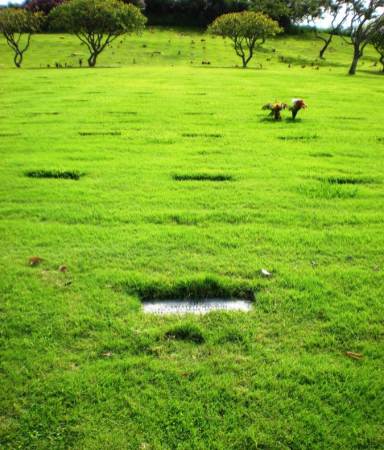
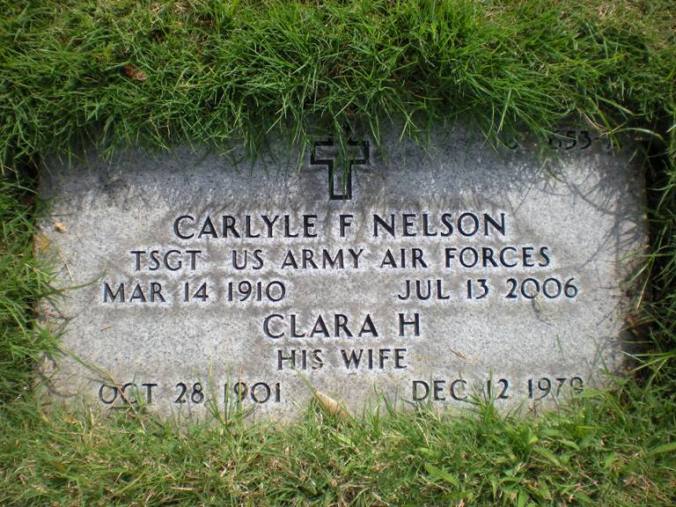
Hālawa Naval Cemetery

As a result of the December 7, 1941 attack on Pearl Harbor, there were 2,403 people killed and 1,178 wounded. Among the deceased were 2,008 Navy personnel, 109 Marine, 218 Army and 68 civilians.  (navy-mil)

World War II brought death to more than 300,000 Americans who were serving their country overseas.  While the war was on, most of these honored dead were buried in temporary US military cemeteries.

(Punchbowl was not a cemetery at that time.  In 1943, the governor of Hawaiʻi offered the Punchbowl for use as a national memorial cemetery; in February 1948 Congress approved funding and construction began.  The first interment at Punchbowl was made January 4, 1949.)

(Initially, the graves at National Memorial Cemetery of the Pacific were marked with white wooden crosses and Stars of David; however, in 1951, these were replaced by permanent flat granite markers.)

After the attack on Pearl Harbor December 7, 1941, the Navy selected Oʻahu Cemetery to bury the dead. At the time, only 300 plots at the cemetery were available for use.  Burials began there on December 8, 1941. (navy-mil)

“Historical records show that the Navy originally purchased plots in the cemetery October 9, 1919, and additional land was acquired in 1931. The current cemetery site was acquired April, 13, 1932.”  (NAVFAC)

Several temporary cemeteries were constructed – one was in lower Hālawa Valley, overlooking Pearl Harbor.

“On Dec. 9 it became evident that sufficient land was not available in Oʻahu Cemetery for this purpose.  By direction of the commandant (of the 14th Naval District), a site for a new cemetery was selected by the public works department. This site (Hālawa) was approved by the district medical officer and remaining burials were made in this new cemetery.”  (US Naval Hospital; Cole)

Over the course of about 4-years, about 1,500 graves were prepared (some containing multiple sets of remains.)  All bodies, except those of identified officers, were placed in plain wooden caskets. “Bodies of officers were placed in standard Navy caskets in order that they might later be disinterred and shipped home if desired.”

Two officers of the Chaplain Corps and two civilian priests from Honolulu rendered proper religious rites at the hospital and at the funeral ceremonies held each afternoon in the Oʻahu and Hālawa Cemeteries. The brief military ceremony held at the burial grounds included a salute fired by a Marine guard and the blowing of taps by a Marine bugler.  (navy-mil)

Following the war, Congress passed, and the President signed, a bill that authorized the War Department to take steps to provide a reverent final burial for those who gave the last full measure of devotion.

“A first step in determining the final resting place for Americans who died outside the continental United States during World War II will be taken this week, Col George E Hartman, commanding officer of the Schenectady General depot, US Army, announced yesterday. … letters will be sent to more than 20,000 next-of-kin of American dead now in 15 of 207 temporary cemeteries overseas.”

“Next-of-kin may choose to have remains of WWII armed forces personnel who dies overseas returned to the US for burial in a private cemetery; returned to the US for burial in a National Cemetery; buried in a permanent US military cemetery overseas; or buried in a private cemetery in a foreign country which is a homeland of the deceased or next-of-kin.”    (Schenectady Gazette, March 5, 1947)

In September 1947, the American Graves Registration Service (AGRS) disinterred and moved the remains to the Schofield Barracks Central Identification Laboratory (Schofield CIL), located at the AGRS Pacific Zone Headquarters, in order to effect or confirm identifications and return the men to their next of kin for burial.

Between August and September 1947, the US military exhumed 18 remains at Kāneʻohe Bay, 339 from Oʻahu Cemetery, and 1,516 at Hālawa, according to a 1957 government report.  (Cole)

What was the Hālawa Naval Cemetery is the vicinity of the Animal Quarantine and Hālawa Industrial Park.  (Currently, there are 135 Sailors, Marines and spouses interred in Oʻahu Cemetery.)

© 2024 Hoʻokuleana LLC

Filed Under: Military Tagged With: WWII, Punchbowl, Halawa, National Memorial Cemetery of the Pacific, Hawaii, Oahu, Pearl Harbor, Halawa Naval Cemetery

April 13, 2025 by Peter T Young Leave a Comment

Manjirō

Tokugawa Ieyasu (1542-1616) unified Japan by defeating his enemies at the Battle of Sekigahara in 1600. He was made Shōgun in 1603 and set up his headquarters at Edo (modern Tokyo.)  The Edo period is also known as the Tokugawa period; Japan was ruled by the Shōgun of the Tokugawa family.

For reasons of national security, from 1639 the Shōgunate ordered that contacts with the outside world be severely limited. Japan’s only regular contacts were with the Dutch, Chinese and Koreans.  (British Museum)

Fast forward through a couple centuries of Japan isolation to the mid-1850s … the US hoped Japan would agree to open certain ports so American vessels could begin to trade. In addition to interest in the Japanese market, America needed Japanese ports to replenish coal and supplies for the commercial whaling fleet.

On July 8, 1853, four black ships led by USS Powhatan and commanded by Commodore Matthew Calbraith Perry, anchored at Edo (Tokyo) Bay. The Japanese thought the ships were “giant dragons puffing smoke” (they had not ever seen steam ships with smoke from their stacks.)

“On that great historic event when the Perry Mission from the United States landed at Uraga (Japan) in 1853, Manjirō served as interpreter.  No more suitable person could have been found in all Japan.  Manjirō knew the American spirit and desires.”

“Any blunder on his part might have resulted in an international disaster.  As it was, the Perry mission was a great success.  In spite of the powerful conservatism of Japan’s ruling classes at that time, the country was opened to world-wide commerce.”  (Japanese Embassy; Millicent Library)

Let’s look back …

Manjirō was born January 23, 1827 in Nakahama, Kochi Torishima prefecture of Japan during the isolation period. He had a tough life as a young man, the death of his father at age 9 forced him to work to support his family.

By age 14 he was part of a five man fishing boat (Manjirō, Jūsuke, Denzō, Goemon and Toraemon.) During one trip in January 1841, they were caught in a storm and stranded on Torishima Island, off the coast of Japan.

Then, the log book of Captain William Whitfield on the ‘John Howland’ noted (June 27, 1841,) “This day light wind from S. E. Isle in sight at 1 P.M. Sent in two boats to see if there was any turtle, found 5 poor distressed people on the isle, took them off, could not understand anything from them more than that they was hungry.”  (Millicent Museum)

After 6-months at sea (arriving in Hawaiʻi,) Whitfield made Manjirō (now called ‘John Mung’ by the crew) an offer – stay in Hawaiʻi and find a ride home, or come with him to America and receive an education. Manjirō continued to the continent with Whitfield, arriving in New Bedford on May 3, 1843 (reportedly, the first Japanese person to live in the US.)

There, he joined the Whitfield household (the Captain had been a bachelor, but shortly after he married) and Manjirō moved with them to the Whitfield home in Fairhaven (as a foster son, not a servant.)

Not accepted at the Whitfield’s church, the family joined the Unitarian Church; a member of the congregation there was the Delano family (a grandson, Franklin Delano Roosevelt later became US president.)

In the following years the young foreigner became well known to the Fairhaven townspeople as Captain Whitfield treated him like a son. He went to his first school ever (the Old Stone School) after being tutored by Miss Allen, a local teacher and neighbor of the captain. He later learned higher level math, navigation and surveying at the Bartlett School.

Then, an opportunity to go to sea came up; the Captain was away, Mrs Whitfield gave her permission for Manjirō to go back to the Pacific and wrote a letter of introduction to a family friend, chaplain of the Seamen’s Bethel in Honolulu, Reverend Samuel C Damon.

He eventually returned to the Island and was repatriated with his friends (Jūsuke had died prior to Manjirō’s return.)  After three years at sea, he returned to New Bedford in 1849 (never making it back to his home in Japan – though he yearned to return.)

In October 1849, he got gold fever and rushed to California.  After only 70-days in the mines, he earned $600 – about the equivalent of 3-years wages as a whaler.  He then headed for Honolulu to encourage his 3 shipmates to return to Japan with him.

They found a ship (‘Sara Boyd’) headed for Shanghai; with the help of Damon and others, they raised enough funds to buy and provision a small boat (‘Adventure’) that they would store on the Sara Boyd and, when they were close to Japan, use it to make it to the islands.

Damon also obtained for Manjiro a US passport and helped him devise a plan to get safely back to his homeland.  Next they loaded the Adventure onto a larger American vessel which dropped the small boat off in the waters off present-day Okinawa.  (Yamamoto)

On February 3, 1851, 10-years after being shipwrecked, Manjirō, Denzō and Goemon landed on an Okinawan beach (Toraemon did not make the trip, he stayed in Honolulu.)  He eventually saw his mother, again.

The Japan leadership recognized the value Manjirō’s fluency in the English language; in addition, he was the only person in Japan who had extensive knowledge of English and American culture at the time.  Manjirō was raised to lower rank of samurai due to his usefulness to the Government.

Manjirō began to work for the Japan government; he was given a higher rank of samurai and retainer to the Shōgun, and, as such, he earned the right to carry a family name (he chose Nakahama as his surname, after his hometown.)

He became a teacher at the Tosa School, lecturing on American democracy, on freedom and equality, on the independent spirit, and on his travels on the world’s seas.  (Keio)

Manjirō tutored senior officers on the geography and history of the US, and the physical and mental characteristics of Americans.  He described American politics and American expectations from Japan and told them how to build and navigate western ships.

With Manjirō’s encouragement, the Shōgunate discarded the 200-years isolation and took the first step toward opening the country in his negotiations with Commodore Perry.  It is impossible to measure the service rendered by Manjirō in enabling Japan to accept the Japan-United States Friendship Treaty.

Manjirō’s contributions to the modernization of Japan were invaluable.  The Japanese relied heavily on his language skills and knowledge of the West.

America’s 30th president, Calvin Coolidge, later said, “When John Manjirō returned to Japan, it was as if America had sent its first ambassador. Our envoy Perry could enjoy so cordial a reception because John Manjirō had made Japan’s central authorities understand the true face of America.”  (Manjirō Society)

The Shōgunate sent a delegation to America in 1860 to exchange ratifications of the Japan-US Commercial Treaty. Manjirō boarded the ‘Kanrin-maru’ as instructor and translator.

The success of the Kanrin-maru voyage across the Pacific impressed the US side with the skill and abilities of the Japanese, and became a basis for the success of later bilateral diplomatic negotiations.  (Keio)  Manjiro later taught at Kaiser Gakko, forerunner of Toko Imperial University.  He died in 1898 at the age of 71.

Manjirō’s contributions to the modernization of Japan were invaluable.  He worked hard to establishing good communication between Japanese and Americans.

Both East and West recognized the importance of the friendship and faith Whitfield had in taking the young Manjirō into his home.  In 1987, Fairhaven and Tosashimizu, Japan formalized a sister city agreement (Crown Prince Akihito, now Emperor of Japan, visited Fairhaven at that time.)  (Fairhaven has a ‘Manjiro Trail,’ highlighting some of the sites, there.)

Gifts of samurai swords were given to the City of Fairhaven and Damon.  A short film ‘Friend Ships’ documents the relationship of Manjirō and Whitfield.  (Lots of information from Rosenbach Museum, Millicent Museum and Whitfield-Manjiro.)

© 2025 Hoʻokuleana LLC

Filed Under: General, Missionaries / Churches / Religious Buildings, Prominent People Tagged With: Manjiro, Hawaii, Samuel Damon, Matthew Calbraith Perry, Japanese, Fairhaven

  • « Previous Page
  • 1
  • …
  • 48
  • 49
  • 50
  • 51
  • 52
  • …
  • 668
  • Next Page »

Images of Old Hawaiʻi

People, places, and events in Hawaiʻi’s past come alive through text and media in “Images of Old Hawaiʻi.” These posts are informal historic summaries presented for personal, non-commercial, and educational purposes.

Info@Hookuleana.com

Connect with Us

  • Email
  • Facebook
  • LinkedIn
  • Twitter
  • YouTube

Recent Posts

  • Liberty Ship SS Quartette
  • Battle of Kuamo‘o
  • Duke Kahanamoku Beach
  • Drying Tower
  • Kamehameha’s Wives
  • About 250 Years Ago … Boston Tea Party
  • Kīkā Kila

Categories

  • General
  • Ali'i / Chiefs / Governance
  • Buildings
  • Missionaries / Churches / Religious Buildings
  • Hawaiian Traditions
  • Military
  • Place Names
  • Prominent People
  • Schools
  • Sailing, Shipping & Shipwrecks
  • Economy
  • Voyage of the Thaddeus
  • Mayflower Summaries
  • American Revolution

Tags

Albatross Al Capone Ane Keohokalole Archibald Campbell Bernice Pauahi Bishop Charles Reed Bishop Downtown Honolulu Eruption Founder's Day George Patton Great Wall of Kuakini Green Sea Turtle Hawaii Hawaii Island Hermes Hilo Holoikauaua Honolulu Isaac Davis James Robinson Kamae Kamaeokalani Kameeiamoku Kamehameha Schools Lalani Village Lava Flow Lelia Byrd Liberty Ship Liliuokalani Mao Math Mauna Loa Midway Monk Seal Northwestern Hawaiian Islands Oahu Papahanaumokuakea Marine National Monument Pearl Pualani Mossman Quartette Thomas Jaggar Volcano Waikiki Wake Wisdom

Hoʻokuleana LLC

Hoʻokuleana LLC is a Planning and Consulting firm assisting property owners with Land Use Planning efforts, including Environmental Review, Entitlement Process, Permitting, Community Outreach, etc. We are uniquely positioned to assist you in a variety of needs.

Info@Hookuleana.com

Copyright © 2012-2024 Peter T Young, Hoʻokuleana LLC


Loading Comments...